
The Shawl Everyone Buys and Almost No One Understands
Every tourist who walks through Leh’s Main Bazaar leaves with the same word ringing in their ears: pashmina. Shopkeepers say it before you’ve even stopped to look. Half the stalls in town claim to sell it. Almost none of what’s on offer at those prices actually is it.
To understand why a real pashmina shawl costs what it costs, and why the fake version is such an easy sell to someone who’s never touched the genuine article, you have to start with the goat.
What Pashmina Actually Is
Pashmina comes from the word pashm, meaning wool, and it refers to the undercoat fleece of the Changthangi goat, a breed that survives on the high plateaus of Ladakh’s Changthang region at elevations above 14,000 feet. Winters up there are brutal enough that the goats grow a secondary layer beneath their coarse outer hair, an insulating down so fine it measures between 12 and 16 microns in diameter, thinner than most human hair and finer than standard cashmere.
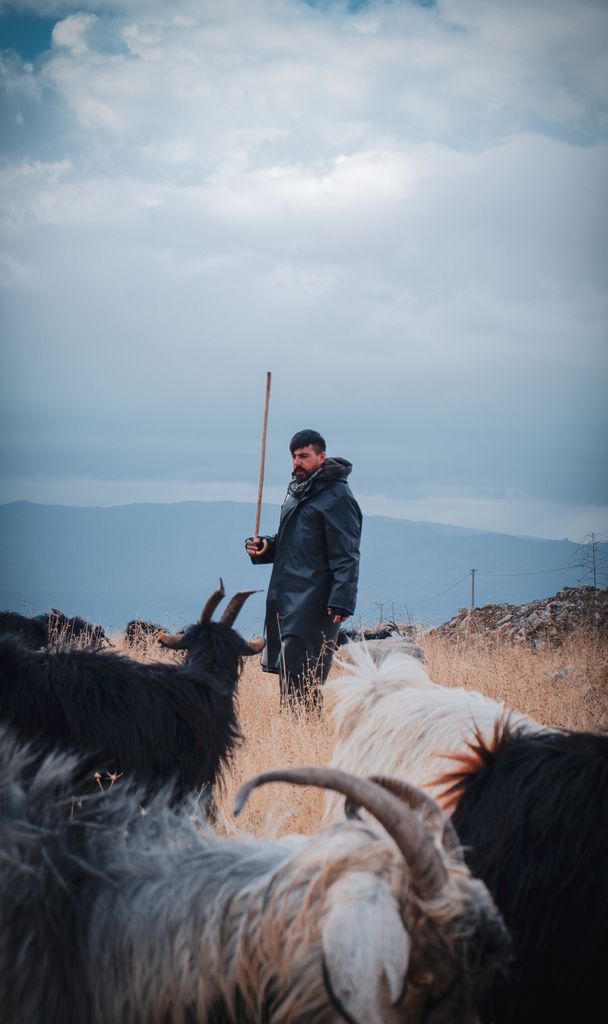
The Changpa nomads who herd these goats comb the undercoat out by hand each spring, once the worst of the cold has broken and the goats begin shedding naturally. No shearing, no machines. A single goat yields only a small amount of usable fiber each year, which is the first reason the math on a real shawl never gets cheap.
From there the fiber travels, historically and still today, to Kashmir, where it’s hand-sorted, hand-spun on traditional wooden charkhas, and woven thread by thread on handlooms. A plain handloom shawl takes several days of steady work. The elaborate stuff takes much longer. Kani weaving, one of the most prized techniques, uses no shuttle at all. Instead, hundreds of small wooden bobbins called kanis carry individual colored threads, following a pattern read from a coded manuscript called a talim, line by line, thread by thread. A master weaver can spend twelve to eighteen months on a single Kani shawl.
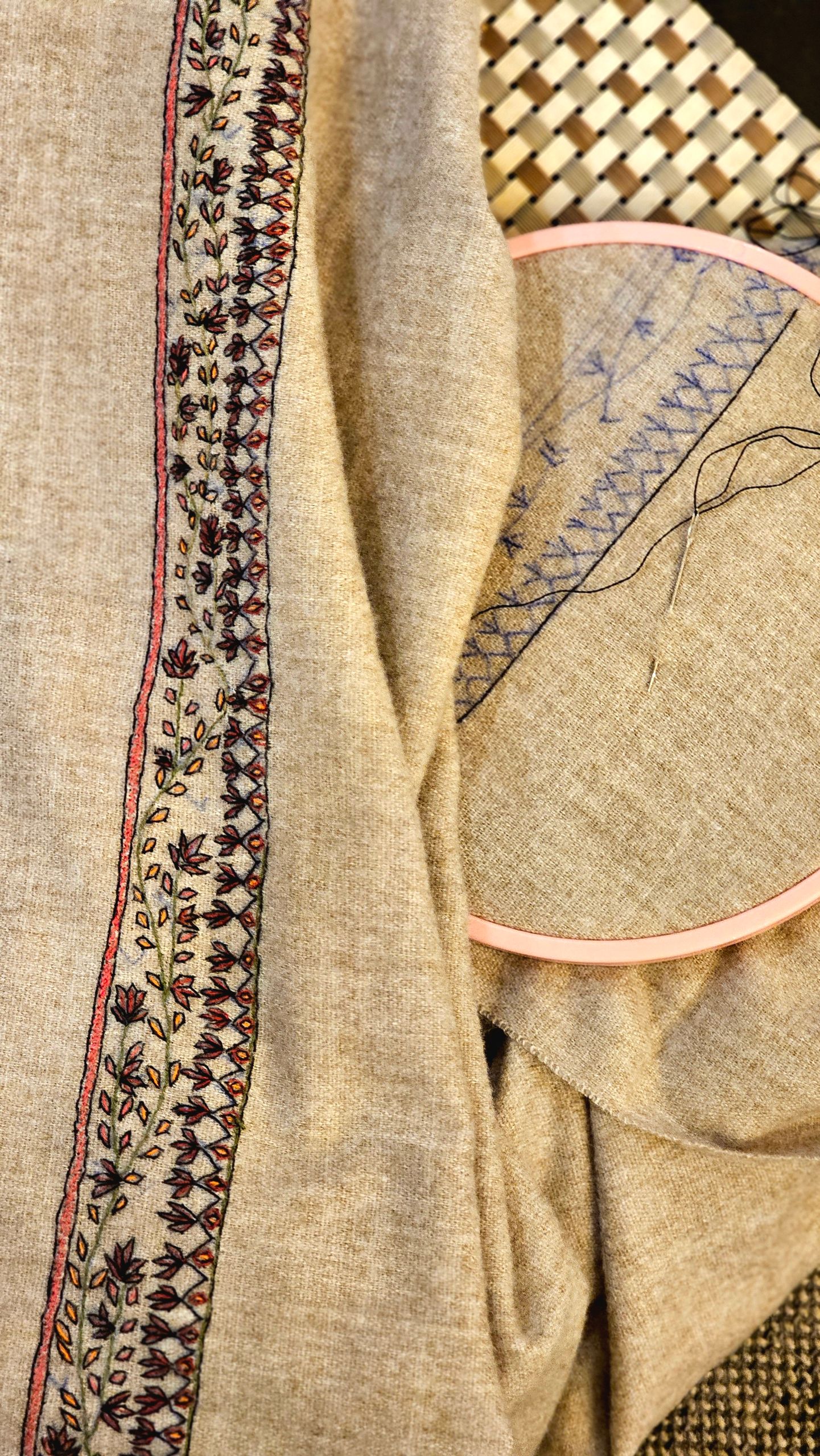
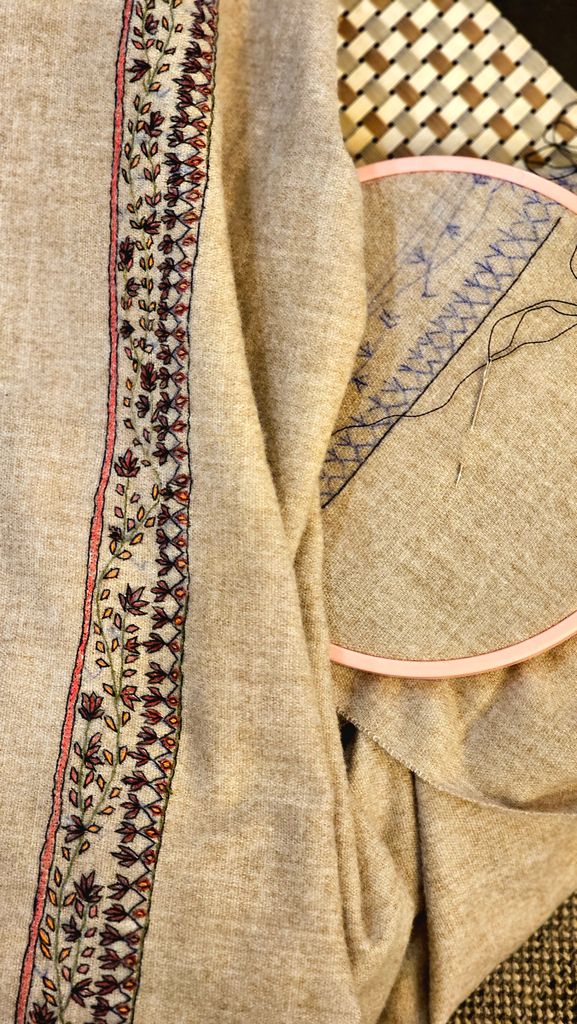
Sozni embroidery is its own discipline. A single needle, floral motifs stitched with such precision that a true master’s work shows no visible difference between the front and back of the fabric. This is the origin of the paisley pattern that eventually spread across Western textiles, though the boteh motif it came from carried centuries of Kashmiri design history before it ever reached a European loom.
None of this is decorative language. It’s the reason a real shawl behaves the way it does against skin: weightless, warm well beyond what its weight would suggest, and soft in a way synthetic blends can’t fake no matter how they’re marketed.
Why the History Matters to the Price
Pashmina wasn’t always a tourist souvenir. For centuries it functioned as a marker of status among Mughal emperors, Sikh maharajas, and eventually European aristocracy, who encountered it through trade routes running out of Kashmir and couldn’t get enough of it. The fiber’s rarity, combined with the sheer labor investment of hand-spinning and hand-weaving, made it a luxury item long before anyone in Leh’s Main Bazaar was hawking it to backpackers.
That history is also why the Geographical Indication tag matters if you’re buying one today. Kashmir’s GI certification exists specifically because the market has been flooded for decades with machine-made and blended imitations sold under the same name. A GI tag, or certification from a registered manufacturer, is the difference between paying for the actual centuries-old craft and paying inflated prices for factory wool with a good story attached.
What You’ll Actually Encounter in Leh
Walk through Leh’s Main Bazaar and you’ll find pashmina at every price point, which is itself a warning sign. Genuine handloom pieces generally start in the low thousands of rupees and climb steeply from there depending on weave complexity and embroidery. Heavily embroidered or Kani-woven shawls, the kind that take the better part of a year to produce, can run into the tens of thousands of rupees and beyond. Anything priced well below that range, sold with total confidence by a stall owner who’ll happily “prove” it’s real with a lighter, is almost certainly a blend.
The burn test that gets passed around as a foolproof authenticity check (real pashmina burns slowly and smells like burnt hair) is a real test, but it’s also one that experienced sellers of fake material have learned to stage convincingly. It’s a data point, not a guarantee.
For anyone who’d rather not gamble on a street stall, Leh has fixed-price alternatives but with a caveat that I will get to in a second from a real world visit. Cooperatives run by local weavers or women’s collectives sell certified pashmina without the back-and-forth of bargaining, and while the prices sit above what an aggressive haggle might squeeze out of a bazaar vendor, they remove the authenticity question entirely. You’re not getting the cheapest possible number. You’re getting a known one. But here’s the catch – I visited both women’s coops today. I told them I wasn’t buying and when I asked about the fixed price, the woman working in one of the cooperatives laughed behind her hand and then explained to me why. “We get a lot of Israeli backpackers, they simply won’t buy unless we haggle with them so we mark the price up 5%. Anyone who asks, we tell them that we’ve marked it up 5%.”
If you do choose to haggle in the open market – that’s a different story, the practical approach locals suggest is starting your counteroffer around 30 percent below the quoted price and working from there. Just go in with a reference point from a certified shop first, so you know roughly what real material actually costs before someone tries to talk you into a “special discount” on something that was never going to be genuine at that price to begin with.
What You’re Actually Buying
Strip away the market theater and what’s left is a fairly simple fact: a real pashmina shawl represents months of labor by people whose entire craft tradition survives on tourists and collectors choosing to pay for it honestly. The Changpa herders combing goat fleece at 14,000 feet, the spinners in Kashmir working wooden charkhas by hand, the embroiderers stitching patterns with a single needle over weeks, all of it is priced into that shawl whether or not the person selling it to you bothers to explain any of it.
Buy the cheap one and you’ve bought a scarf. Buy the real one and you’ve bought a piece of a trade route that’s been running since before the Mughals, still carried today by hands that learned it the same way their grandparents did.