
Otaru, the historic port city on Hokkaido’s western coast, rarely sits still. Between its canal-side warehouses, hillside streets, and cultural venues, the city maintains a steady rhythm of exhibitions, performances, markets, and community events. Autumn 2026 offers a particularly rich stretch, with overlapping programmes that blend industrial heritage, contemporary art, traditional performing arts, music, and everyday local gatherings
Ongoing art and heritage projects
One of the most substantial current offerings is the Coal Iron Port Art Project 2026, running from 13 September to 4 October. Linked to Japan’s nationally designated “Coal Iron Port” heritage, the project places contemporary installations at the Former Temiya Railway Facilities (including the water tank and dangerous-goods store) and along the Temiya Line ruins. Artists respond to the region’s coal-transport history and the physical labour that once powered Otaru’s growth.
Among the works is Kiyoshi Takahashi’s mixed-media piece “Carrying Stones” (いしをはこぶ). The artist transported a large black object—symbolising coal—on foot for roughly two kilometres from Irouchi Station to the Otaru City General Museum. The slow, physically demanding journey became a meditation on place, effort, and the overlooked ground beneath everyday feet. Related material remains viewable in the museum entrance, with video documentation available via on-site QR codes.
Running in parallel is the Deep Otaru photography exhibition at the Otaru City Literature Museum (5 September – 8 November). Photographer Noda Kyogo’s images, spanning 2003–2025, invite viewers to rediscover familiar streets, snowscapes, and quiet corners of the city. Gallery talks and related programming continue through the period.
The 77th Otaru City Cultural Festival (1 October – 8 November) spreads across the City Museum of Art, Lifelong Learning Plaza, Civic Center (Marine Hall), and Civic Hall, featuring exhibitions, haiku and tanka contests, calligraphy, flower arranging, and dance and ballet performances. Admission is free.
Markets, walks, and evening activity
Through 26 September the North Canal Night Market “Yummy-ichi” transforms the North Canal area each evening from 17:00 to 21:00. Food stalls, market vendors, illuminations, live music (especially 20–22 September), and canal lanterns create a lively after-dark atmosphere. Concurrently, the free smartphone-based Japan Heritage Mystery Town Walk – TIME TRIP OTARU (20–22 September) lets participants follow app-guided clues around the port and canal district, with small prizes for completion.
Additional pop-ups include CHAOS MARKET at San Mall Ichibangai Arcade (21–23 September) and the Moonlit Container Yokocho at Otaru Port Square (until 27 September). The Otaru Noh Theater (Former Okazaki Family Noh Stage) remains open to the public daily until 23 September (9:00–17:30), with a free practice session by the Otaru Fujiga-kai on the final afternoon.
Music, dance, and theatre
Concert and performance listings stretch well into autumn. On 27 September the Kobayashi Hisae Ballet Studio presents Cinderella at Otaru Civic Hall (doors 15:30, start 16:00). The same day the 43rd Aoba Festival fills Canal Park with food stalls, a flea market, and stage performances (10:00–14:00), while a regional heritage conference takes place at Tokugenji Temple in Shioya.
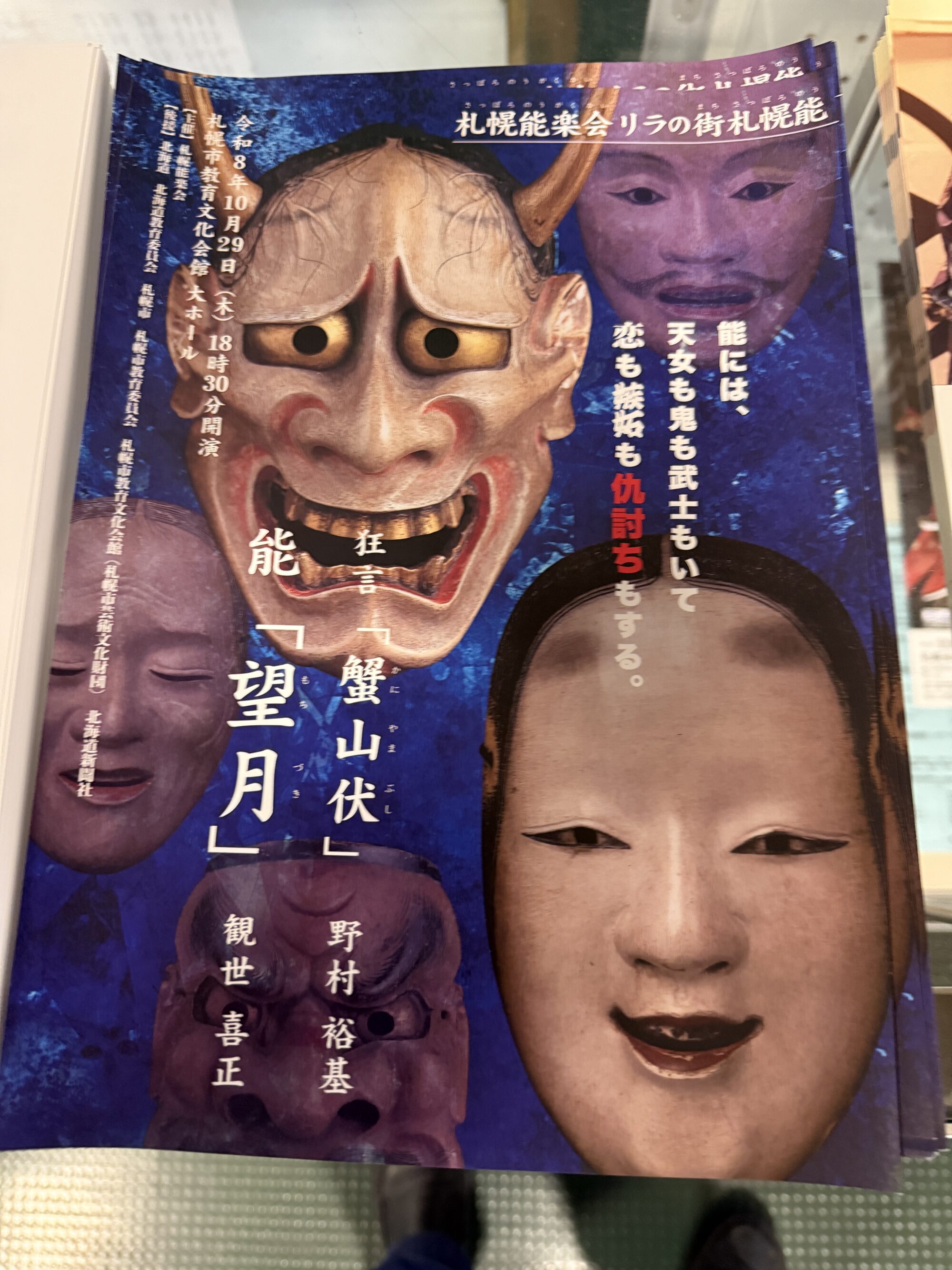
October brings further variety. The 31st Otaru Wind Ensemble Regular Concert is scheduled for 17 October at the Civic Hall (18:00 start). The same date features the 42nd Choryo Memorial Hall Concert with saxophone, bassoon, and piano. On 20 October, Nakagawa Kei (Soul Flower Union) and Rikuo appear at Ura Otaru Montparnasse. The 24th sees a Matsumae Kagura joint performance at the Civic Center’s Marine Hall, and on 29 October the Sapporo Noh Society presents the Noh play Mochizuki and the kyogen Kani Yamabushi at Sapporo’s Education and Culture Hall.
November includes a violin recital by Ishida Yasunao (“One and Only”) with pianist Okamoto Tomoya at Otaru Civic Hall on the 14th. The same day forms part of the 54th Otaru Citizens’ University lecture series at the Otaru Economic Center, which also offers sessions in late September, October, and late November on topics ranging from contemporary dance and storytelling to human-resource development, mountain safety, and global structural change.
Smaller venues and recurring energy
Ura Otaru Montparnasse and nearby spots host a steady stream of live music, pop-up shops, and bazaars (including the three-day Ura Otaru Bazaar at the end of September and KENGAI NETWORKS events in early October). The Otaru City Library marks its 110th anniversary with special programming on 26–27 September. Additional Noh-mask exhibitions, photo shows, and temporary markets continue to appear across public halls and museum spaces.
From industrial-heritage art installations and canal-side night markets to ballet, wind-ensemble concerts, Noh and kyogen, community festivals, and university lectures, Otaru’s calendar remains full. Whether visitors arrive for a single evening or a longer stay, the combination of permanent cultural assets and seasonal programming ensures that something is almost always happening—on stage, in a gallery, along the canal, or simply under the city’s autumn sky.