
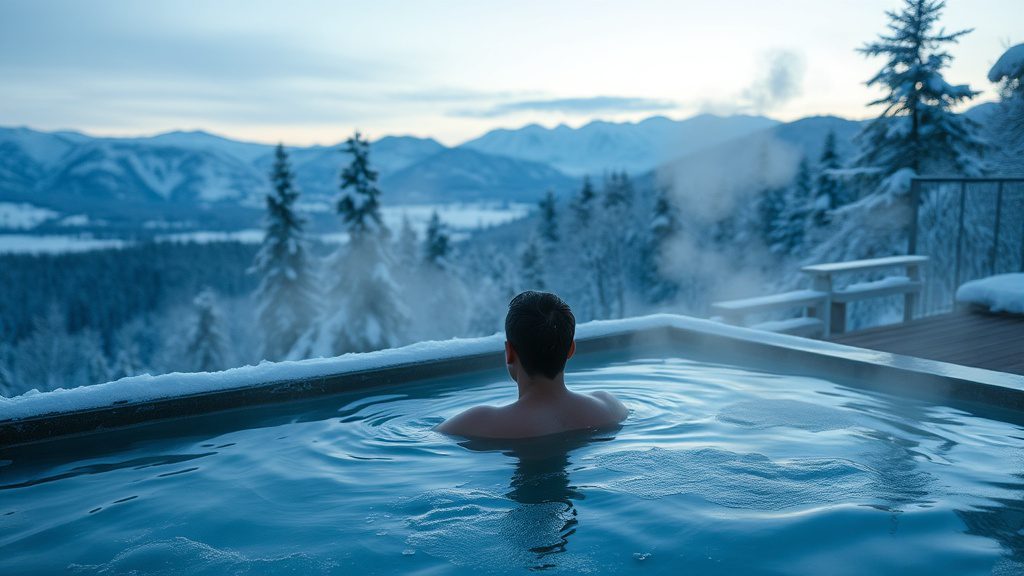
Hokkaido gets the lightest, driest powder snow on earth. This is not local boosterism. It’s meteorology.
Cold Siberian air masses cross the Sea of Japan in winter, picking up moisture from the relatively warm sea surface. When that moisture-laden air hits Hokkaido’s mountain ranges, it dumps. Ten to fifteen meters of accumulated snowfall per season, depending on location and year. The snow is dry because the air is cold — the moisture freezes into light, crystalline powder rather than the wet, heavy snow that coastal mountain ranges in the Pacific Northwest or the European Alps produce.
Skiers who’ve experienced Hokkaido powder describe it as skiing through smoke. Your skis disappear. The snow billows chest-high on turns. You can fall and the landing is soft enough that you laugh instead of wince.
This is the snow that falls on Otaru. And the mountains where it accumulates are close.
Tenguyama: The After-Work Option
Tenguyama (天狗山) sits above Otaru city proper. A ropeway — a single aerial tramway — runs from near the city center to the summit. In winter, the upper slopes operate as a small ski area. In summer, the ropeway runs for sightseeing, delivering you to a viewpoint that looks out over the city, the harbor, and on clear days, across the Sea of Japan.
As a ski resort, Tenguyama is modest. A handful of runs, limited vertical, no extensive trail network. It’s a local hill — the kind of place where Otaru high school students learn to ski, where parents take young kids on weekends, where someone living in the city can ride up after work and get a few runs in before dinner.
I mention it because having any skiing option within your city limits, accessible by public ropeway without a car, is unusual. Most cities that offer skiing within their borders are either purpose-built resort towns or wealthy Swiss municipalities. Otaru is a mid-sized Japanese port city that happens to have a mountain with a ropeway. The skiing is incidental. The views from the top are the real draw — Otaru’s cityscape laid out below, the harbor, the breakwater, the open sea beyond.
Kiroro: The Real Skiing Close By
Kiroro Resort is forty minutes from Otaru by car. This is where the skiing gets serious.
Twenty-one runs across two peaks. Just over 1,000 meters of vertical drop. A season that runs from late November through May in good years, thanks to Hokkaido’s persistent snowfall. Kiroro averages roughly seven to eight meters of snowfall per season — less than Niseko’s legendary totals, but more than enough to keep the powder deep and consistent.
What Kiroro has that Niseko doesn’t: fewer people. Kiroro flies under the international radar. Niseko’s global reputation draws Australian, Chinese, and Singaporean ski tourists by the tens of thousands. Kiroro gets a fraction of that traffic. Lift lines are shorter. The off-piste areas — Kiroro’s tree skiing is genuinely excellent — aren’t tracked out by 10 AM. Lift tickets cost less.
For someone living in Otaru, Kiroro is the home mountain. Forty minutes door-to-lift. Season passes are available and significantly cheaper than Niseko’s. On a powder day — and there are many powder days — you can be skiing fresh snow before most Sapporo residents have finished breakfast.
Niseko: Ninety Minutes Away
Niseko needs less introduction. Four interconnected resorts — Grand Hirafu, Hanazono, Niseko Village, and Annupuri — spread across the slopes of Mount Niseko-Annupuri. Consistent ranking among the top powder destinations on the planet. An international village with English-language everything — restaurants, rental shops, hotels, real estate offices. If Hokkaido powder is what brought skiing’s global attention to Japan, Niseko is the resort that captured it.
Niseko is ninety minutes from Otaru by car, roughly two hours by a combination of train and bus. Far enough that it’s not a casual after-work option. Close enough that a weekend trip requires no particular planning. I’ve done day trips — leave Otaru at 7 AM, ski until 3 PM, drive back by dinner. It works, though Kiroro is the easier call for spontaneous days.
The relevance for property buyers is indirect but real. Niseko’s international popularity has raised the profile of the entire western Hokkaido region. Ski tourists who visit Niseko discover Otaru on day trips. Some of them notice the property prices. Some of them start asking questions. The Niseko effect ripples outward, and Otaru sits in the ripple zone.
Onsen
Hokkaido is volcanic. Where there are volcanoes, there are hot springs. Where there are hot springs, there are onsen — the public bathhouses and ryokan (traditional inns) that pipe geothermally heated water into bathing pools for the general population to soak in.
Living in Hokkaido without using onsen is like living in France without drinking wine. Technically possible. Culturally bewildering.
Asarigawa Onsen (朝里川温泉) is the closest hot spring area to central Otaru — about twenty minutes by car or bus, nestled in a valley along the Asari River. Several ryokan operate here with both indoor and outdoor baths (rotenburo). The outdoor baths in winter are the essential Hokkaido experience: sitting in 42-degree water while snow falls on your head and the air temperature is negative ten. Your body is underwater-warm. Your face is winter-cold. Steam rises. Snow accumulates on the rocks at the edge of the pool. You stay until you can’t feel your ears, then you submerge to the neck and stay longer.
Otaru itself has several public bathhouses and hotel onsen scattered through the city. These aren’t resort-grade facilities — they’re neighborhood bathhouses, the Japanese equivalent of a public swimming pool, where locals go for a daily soak. Admission runs 400 to 800 yen. You bring your own towel or buy a small one at the front desk. The etiquette is specific (wash thoroughly before entering the bath, no swimsuits, no tattoo exposure at some facilities) but straightforward once you’ve done it once.
Jozankei Onsen (定山渓温泉) is about ninety minutes from Otaru, positioned in a river valley between Otaru and Sapporo. One of Hokkaido’s most established hot spring towns — dozens of ryokan, hotel onsen, and public facilities. The autumn foliage along the river gorge in October draws visitors specifically for the combination of colored leaves and hot water. It’s a day trip or an overnight from Otaru, and it’s the kind of place that reminds you why people have been soaking in volcanic water in this country for a thousand years.
Summer
Hokkaido’s best-kept secret isn’t the powder. It’s the summer.
Mainland Japan in July and August is a steam bath. Tokyo, Osaka, Kyoto — temperatures in the mid-thirties Celsius, humidity that makes your clothes stick to your body before you’ve walked a block, and a rainy season (tsuyu) that dumps water for weeks in June and July.
Hokkaido skips most of this. Summer temperatures in Otaru run 22 to 28 degrees Celsius. Humidity is noticeably lower than Honshu. The rainy season is either absent or brief. The days are long — Hokkaido’s latitude means extended summer daylight, with usable light until 7:30 or 8 PM.
This is when the landscape transforms. The mountains behind Otaru go green. Hiking trails through the surrounding hills open up. The coastline west toward Yoichi and the Shakotan Peninsula — some of the most dramatic coastal scenery in Japan, volcanic cliffs dropping into water that turns an impossible shade of blue — becomes accessible for day trips, sea kayaking, and fishing.
The Shakotan Peninsula deserves its own paragraph. Cape Kamui and Shimamui Coast feature volcanic rock formations, transparent blue water (the local term is “Shakotan Blue”), and coastal hiking trails that rival anything in the Mediterranean. It’s about an hour and a half from Otaru by car. In peak summer, the water is clear enough to see the bottom from clifftop viewpoints thirty meters above. Sea kayak tours operate from Bikuni and Yoichi harbors.
Fishing charters run from Otaru harbor and the surrounding coastal towns. Salmon, squid, rockfish, flatfish — the species depend on the season. Charter costs run reasonable by international standards. Some foreign residents with their own small boats fish the harbor areas and the coast toward Yoichi without a charter.
Cycling is excellent. Hokkaido’s relatively flat coastal roads and the network of cycling paths around Sapporo and Otaru make this a strong cycling region. The route from Otaru to Yoichi along the coast is a popular day ride — about 25 kilometers one way, mostly flat, with the Sea of Japan on one side and mountains on the other.
The Four-Season Argument
Most places that attract property buyers sell one season. Ski towns sell winter. Beach towns sell summer. Hokkaido sells four seasons, and each one is distinct enough to feel like living in a different place.
Spring arrives late in Hokkaido — cherry blossoms don’t reach Otaru until late April or early May, a full month after Tokyo. The delay means Hokkaido spring is compressed and intense. Snow melts. Flowers open. The city goes from white to green in about three weeks.
Summer is the outdoor season described above. Long days, comfortable temperatures, accessible mountains and coastline.
Autumn in Hokkaido starts early — late September in the mountains, spreading down to the coast through October. The Japanese maple and birch forests behind Otaru turn red and gold. Jozankei Onsen’s autumn colors are a regional draw. The fishing gets good. The air sharpens.
Winter needs no selling. Powder snow, skiing, onsen, snow festivals, the canal lined with snow lanterns in February. Hokkaido winter is long — November through March, with snow sometimes lingering into April — but it’s also the season that defines the place. You don’t move to Hokkaido despite the winter. You move there partly because of it.
The year-round argument matters for property buyers because it addresses the concern about seasonal utility. A house in Otaru isn’t a ski cabin you use four months a year. It’s a house in a city that has reasons to be outside in every month. Whether you’re skiing Kiroro in January, soaking in Asarigawa onsen in March, kayaking the Shakotan coast in July, or watching the maples turn at Jozankei in October — the house earns its keep all year.
I bought a house in a snow country port city. On a July evening, I sit on my engawa and watch the sun set over the Sea of Japan at 7:45 PM in 25-degree air, and the snow feels like it happened to someone else. Then November comes and I remember. Both versions of the city are real. Both are the reason I’m here.