
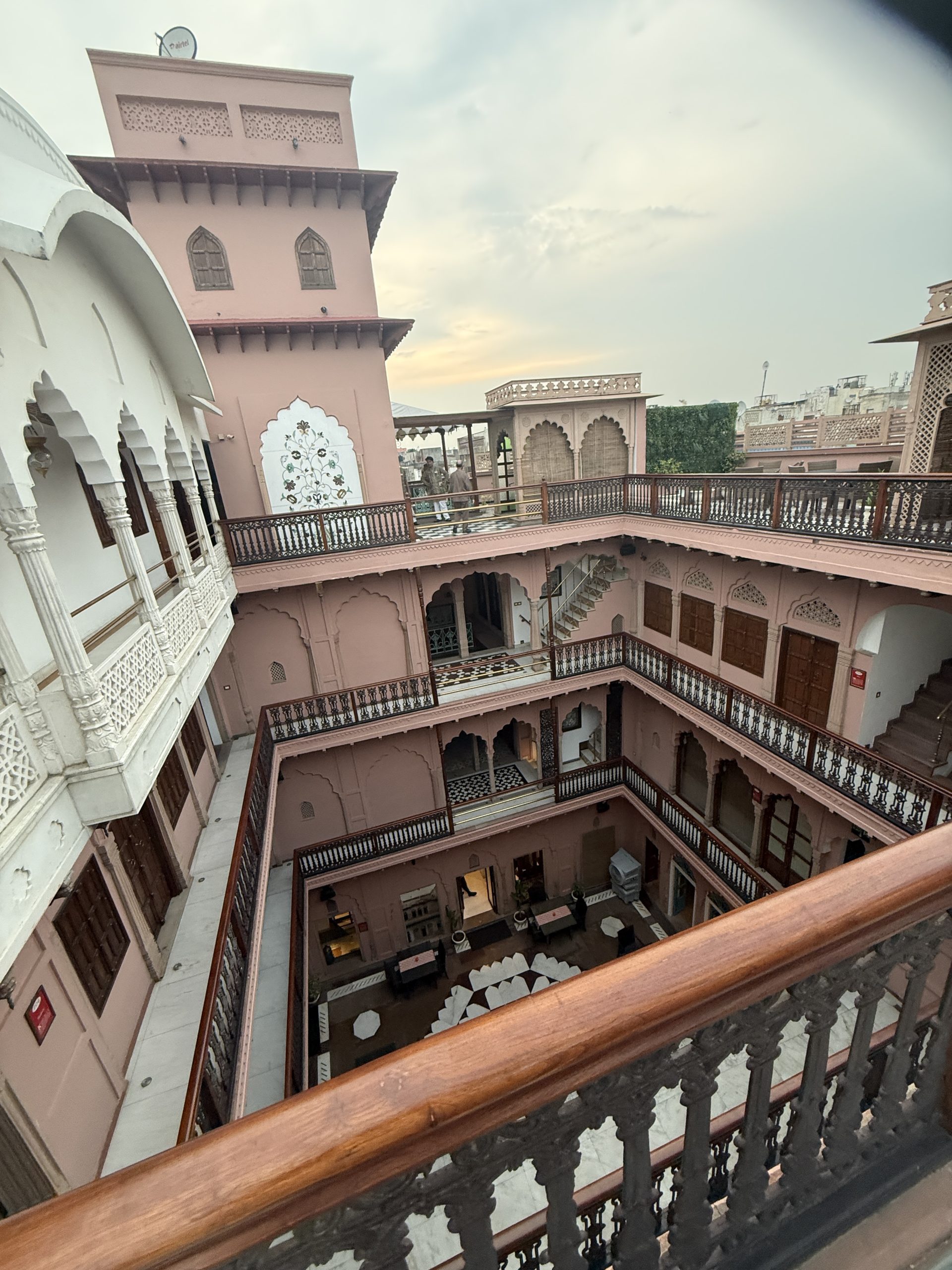
Three Houses, Three Courtyards, Three Educations
I have spent enough nights inside at least two of these to have opinions that don’t come from a guidebook, and the third I have started to get a feel for even with just learning about them.
The riad education started in Morocco, years before Vagobond had much of an archive at all, and it kept teaching lessons long after I thought I’d learned them. The haveli education is happening right now, in Old Delhi, on a trip built around exactly this kind of comparison. The konak education happened in between, on the Bosphorus and the Aegean Sea, during two years I still count among the most fulfilling of my life. Three traditions, three continents, and it turns out they rhyme in ways that are worth writing down instead of just noticing.
What a riad taught me about disappointment
I wrote about some beautiful riad’s in both Fez and Marrakesh, but the Riad Jnaan Sherazade in Casablanca was not a love letter. Beautiful decoration, filthy negotiation. The place traded on the word “riad” the way a lot of Casablanca hospitality does: villa built in the 1950s, dressed up in the aesthetic afterward, and priced like it had four centuries of pedigree instead of a coat of zellige-adjacent paint. Hard mattress, thin towels, a manager who told me children weren’t welcome after I’d already mentioned my one-month-old daughter. The riad concept survived. My opinion of that particular execution of it did not.
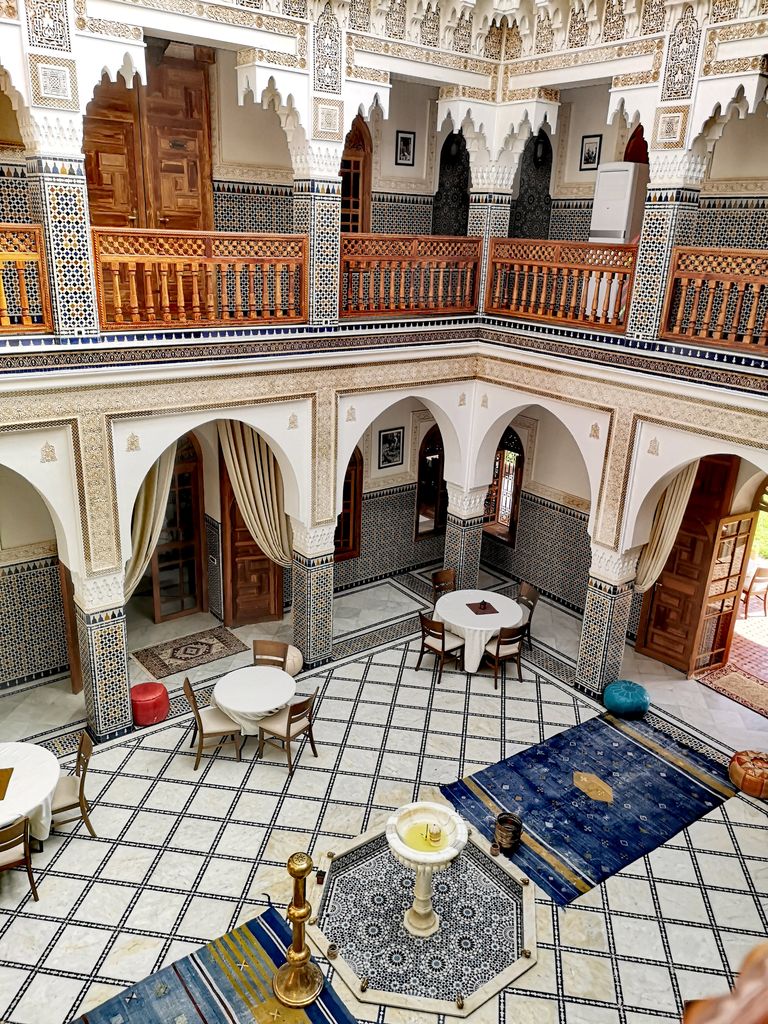
A real riad looks like the photo above. Or more grand, or less, but it has a form and it has a function.
That distinction matters more than it sounds like it should. A riad is not just a floor plan, it’s a claim, and the claim gets rented out constantly by places with only a loose right to it. The real ones, the ones that grew up inside a medina instead of being retrofitted to sell a fantasy of one, feel different the moment you’re through the door. Courtyard first, street second. The house turns its back on the city and its attention inward, toward water, tile, and whatever family history is embedded in the woodwork.
Dar Jamai in Meknes is the version that earns the word. Old riad, now a museum of Moroccan handicraft, and even with some regrettable concrete patchwork over the zellige, it still carries the weight that Jnaan Sherazade only borrowed. That’s the real split in riad culture: inherited gravity versus rented vocabulary. Dar Finn in Fez, Dar El Menia, and many others are legitimate riads worthy of the name.
What a haveli is teaching me now
Old Delhi runs on the same instinct but a completely different material language. Where the riad hides behind a plain street wall and blooms inward around a courtyard and a pool, the Delhi haveli is more willing to announce itself, carved sandstone facades, jharokhas hanging out over the street, frescoes that were never meant to be discreet. The courtyard is still there, still doing the same job of light, air, and privacy, but the building’s relationship to the street is more argumentative. A riad disappears. A haveli postures, then retreats inward once you’re past the doorway.
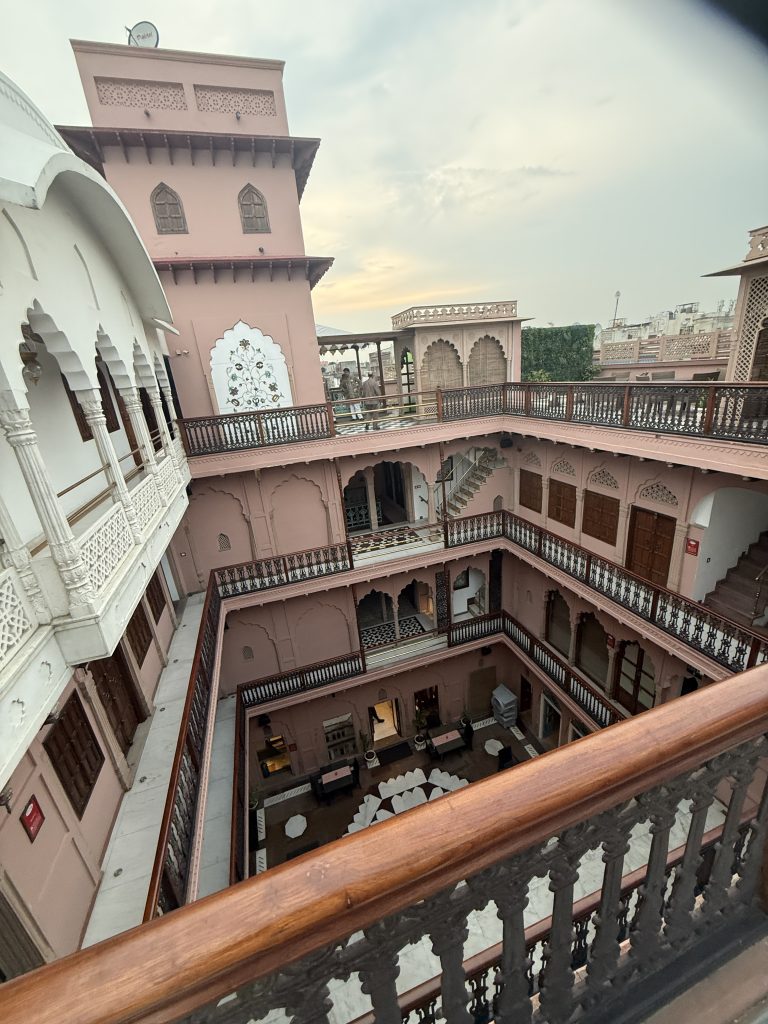
Both were built by people with money to display and a climate to manage. Both have been gutted by a century of political change and a couple of decades of guesthouse conversion. Both are more likely today to be sold to you as an experience than lived in as a home. That’s not a complaint, some of the best nights I’ve had in either country were inside converted ones, but it’s worth naming plainly instead of pretending heritage architecture and hospitality product are the same thing.
What a konak never had to hide from
Istanbul solves the same problem with the opposite instinct. The classic Ottoman house, whether it’s a modest wooden konak up a back street in Zeyrek or one of the grand yalı mansions strung along the Bosphorus shoreline, doesn’t turn its back on the world the way a riad does or posture at it the way a haveli does. It opens straight onto the water or the street, wood frame instead of stone or plaster, built that way partly for the earthquakes and partly because there was never quite the same imperative to disappear. A yalı’s whole reason for existing is the view. Grand facade facing the Bosphorus, private dock out front, harem section tucked further back for the part of the household that did want privacy, but the public face of the house was never in question. It wanted to be seen from the water.
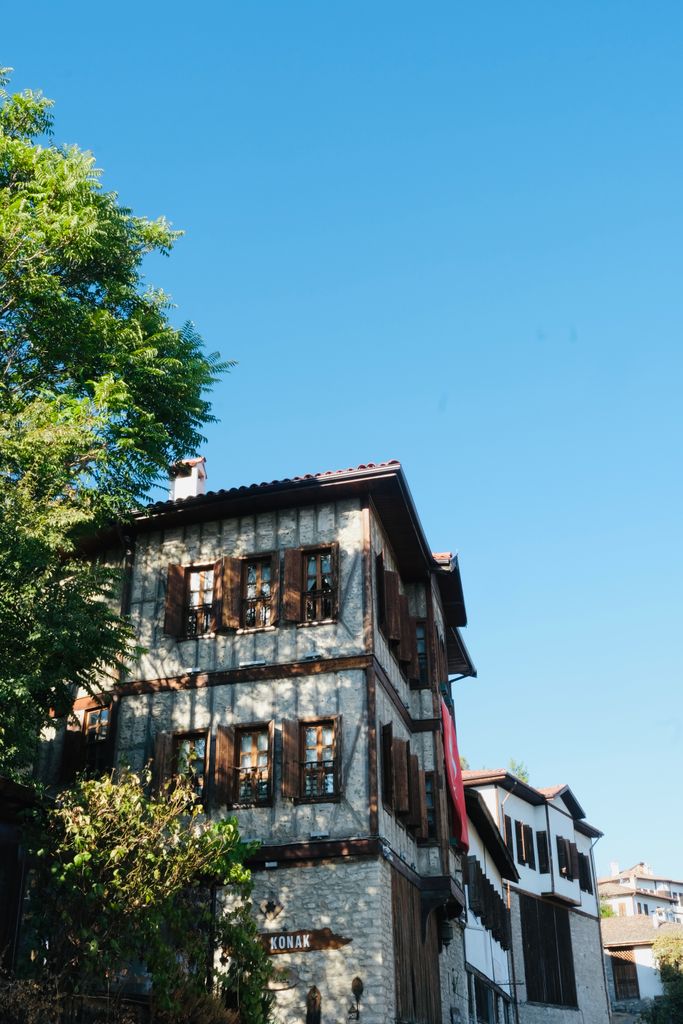
I lived in Turkey from 2010 to 2012, a lot of it orbiting the Bosphorus, and what stayed with me wasn’t the architecture as an abstraction, it was the way those wooden houses organized the rhythm of the strait itself. Ferries, tea, the hustle of the waterfront markets, and behind all of it these fading, once-magnificent wooden mansions that were either meticulously restored under protection status or quietly falling apart, sometimes both ends of that spectrum a few doors apart from each other. Where a riad hides its wealth behind a plain wall and a haveli argues with the street through carved sandstone, a konak just accepts that the water is going to look back at it. Less concealment, more confidence. The privacy work still gets done, but by a harem wing set back from the facade rather than by turning the whole house inward.
The material tells the same story as the layout. Riads run on tile, tadelakt, and marble built to hold cool. Havelis run on carved stone built to last centuries and be looked at. Konaks run on oak and pine, thin walled and fire prone, chosen because wood flexes when Istanbul’s fault lines don’t. Three different bets on what a house owes its climate, and none of them wrong.
The riad as a character, not a backdrop
The Keys to the Riad takes the idea further than travel writing usually bothers to. Colette is a New York “it-girl” staring down forty who discovers a riad she didn’t know she owned (or bought) , and the book treats the house itself as the plot engine, not the setting. Hidden passages, buried family history, characters who want the riad’s secrets kept exactly where they are. The premise only works because a riad actually behaves like that in real life: inward-facing, compartmentalized, built to keep some rooms and some histories separate from the ones facing the courtyard.

You could not tell the same story with a haveli’s floor plan without changing the mechanics, and you could not tell it with a konak’s either. Havelis tend to stack multiple courtyards in sequence, often with a clearer public-to-private gradient as you move deeper into the property, women’s quarters furthest from the street. A riad’s secrets hide behind a single courtyard’s worth of doors. A haveli’s secrets get organized by degree of household intimacy. A konak barely bothers hiding anything at the level of the facade, so its version of a secret would have to live in the harem wing at the back, or in the water out front. Three different floor plans, three different places a novel could bury its history, and three different kinds of book depending on which one you picked.
The through-line
Strip away the tilework, the sandstone, and the oak beams and all three traditions are solving the same problem: how do you build a home that keeps its comforts intact when the world outside is hot, crowded, seismic, or not always trustworthy. Riad, haveli, and konak are three regional answers to that same question, not the same answer wearing different clothes. Morocco solved it with water, marble, and total street-facing anonymity. North India solved it with layered courtyards, carved stone, and a facade that’s proud to be looked at even while the household inside stays organized around who’s allowed to see whom. Istanbul solved it by facing the water head-on and doing its privacy work quietly, off to the side, in wood built to survive an earthquake rather than to hide from a neighbor.
I’ve been disappointed by a riad’s marketing and educated by its museum version in the same country. I lived two years inside the rhythm a konak keeps without ever having to write it up until now. I’m still early in the haveli side of the ledger. But the pattern’s already familiar across all three: the ones worth writing about are never the ones selling you the word. They’re the ones where the courtyard, or the facade, or the dock, was built for a family that actually lived there, and you can still feel it.
The Keys to the Riad is available on Amazon. More of CD’s books are at indignified.com/books.