
The cheap house you found online might be cheap for a reason that has nothing to do with the house.
It might be cheap because it can never be rebuilt. Or because the road it sits on is too narrow for legal construction. Or because the land underneath it is classified as farmland and you can’t legally buy it without government permission you’ll never get. Or because the sewer connection doesn’t exist and installing one costs more than the house.
These are the legal and regulatory realities that don’t show up in listing photos. They’re the things that experienced Japanese buyers check first and that foreign buyers often learn about too late. I’m going to walk through the ones that matter most for akiya purchases in Otaru and Hokkaido generally, because any one of them can turn a ¥2 million bargain into a ¥2 million mistake.
Rebuilding Rights: The Most Important Check You’ll Make
Some properties in Japan cannot be legally demolished and rebuilt. The Japanese term is 再建築不可 (saiken-chiku fuka) — literally “rebuilding not possible.” If you buy one of these properties, you can live in the existing structure and you can renovate it, but if the building reaches the end of its life — or if you want to tear it down and build something new — you’re legally stuck.
This restriction comes from the Building Standards Act (建築基準法), and it hinges on two numbers: the width of the road fronting your property, and the width of your property’s frontage on that road.
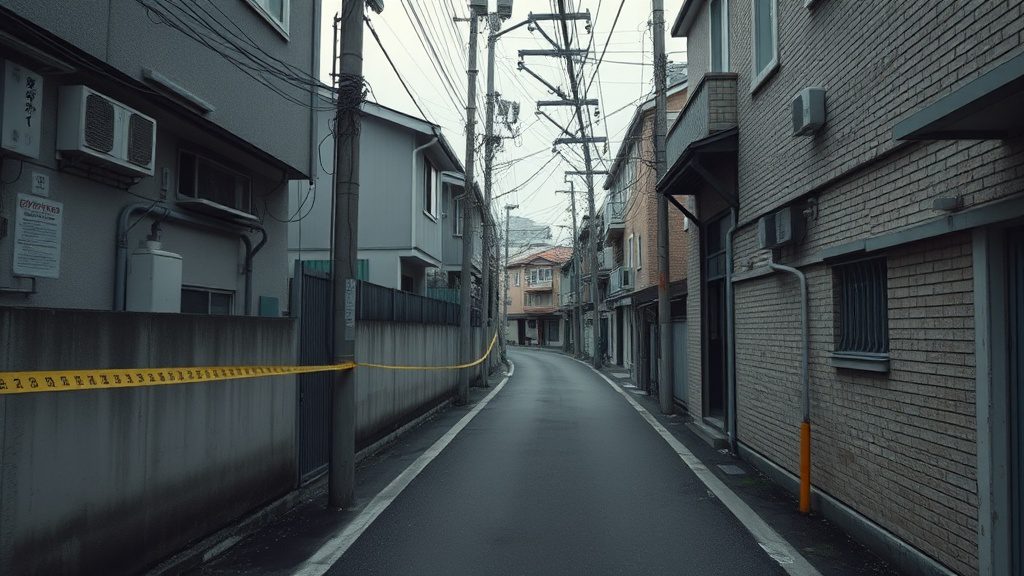
The rule: your property must front at least 2 meters on a road that is at least 4 meters wide. Both conditions must be met. If your lot sits behind another lot and reaches the road via a narrow passage less than 2 meters wide — a so-called “flag lot” or 旗竿地 (hatazao-chi) — no rebuilding permit will be issued. If your property fronts a road that’s only 3 meters wide, same problem.
Why does this exist? Fire truck access. Japanese building codes are heavily shaped by fire safety — wood-frame construction in dense neighborhoods has a long and catastrophic history in Japan — and the 4-meter-road, 2-meter-frontage rule exists to ensure emergency vehicles can reach any building.
The practical impact is severe. A property without rebuilding rights has dramatically lower resale value because future buyers face the same constraint. Lenders won’t mortgage it. Insurance options narrow. Your only play is to renovate the existing structure indefinitely, which works until it doesn’t — eventually any building becomes unrepairable.
How to check: the property’s rebuilding status is disclosed in the jusetsu (important matters explanation) that your real estate agent is legally required to present before the sale. It will specify the road width, the frontage measurement, and whether the property has rebuilding rights. Read this section carefully. If you’re buying without an agent — direct from an owner through an akiya bank, for instance — hire a judicial scrivener or real estate attorney to verify the status at city hall before you commit. It costs ¥20,000-50,000 and could save you millions.
Setback Requirements
Related to the rebuilding rule but distinct from it: setback requirements (セットバック, settobakku).
If the road fronting your property is less than 4 meters wide, and you want to rebuild, you must set your building line back from the current road edge to create an effective 2-meter distance from the road centerline. The city measures to the center of the road, then requires 2 meters of clearance on each side. Your property on paper might be 100 square meters, but if a setback requirement eats 10 square meters along the road edge, your buildable area is 90 square meters.
You don’t lose ownership of the setback strip. It’s still your land. But you can’t build on it, can’t fence it, and can’t use it in your building footprint calculations. In effect, it’s land you own that the city controls.
In Otaru’s older neighborhoods — especially the hillside residential areas and the streets near the harbor — many roads are less than 4 meters wide. They were built before the current building code and have never been widened. Setback requirements are common in these areas, and they shrink already-small lots.
This doesn’t make a property unbuyable. It makes it smaller than the listing suggests. Make sure you know the buildable area, not just the lot area, before you make decisions about what you can build or rebuild on the site.
Zoning
Japan has 13 zoning categories (用途地域, youto chiiki), and they’re more detailed than what most Western buyers are used to. The categories range from exclusively low-rise residential (第一種低層住居専用地域) to commercial and industrial zones, with various mixed-use categories in between.
For most akiya buyers purchasing a residential house to live in, zoning isn’t a problem. The house is already residential, and you’re using it residentially. No conflict.
Zoning becomes critical if you plan to do something commercial with the property. Running a guesthouse (民泊, minpaku), opening a small café, operating a share house, or using it as an office for a business — all of these trigger zoning questions. Some residential zones prohibit commercial activity entirely. Others permit limited commercial use if the floor area stays below certain thresholds.
Otaru specifically has areas that are zoned for tourism-related commercial use — near the canal district, around the station areas — and areas that are strictly residential. If you’re buying with commercial plans, check the zoning designation at city hall before you buy. Your real estate agent should identify the zone in the listing materials, but verify independently. The designation is a matter of public record.
Minpaku (short-term vacation rental) has its own additional regulatory layer on top of zoning. National law limits unlicensed minpaku to 180 days per year, and some municipalities impose further restrictions. Otaru allows minpaku in most zones but requires registration. I’ll cover the minpaku regulatory landscape in a separate article.
Property Boundaries
Japanese property boundaries are defined on survey maps registered at the Legal Affairs Bureau. These maps are called 公図 (kouzu) and 地積測量図 (chiseki sokuryouzu), and in many cases they’re old. Decades old. Sometimes they reflect surveys conducted before the current property was built.
Boundary disputes are less common in Japan than in some countries — neighbors tend to resolve things quietly — but they happen. A fence that’s been in place for thirty years doesn’t necessarily sit on the legal boundary. Trees that overhang a neighbor’s lot can become a point of tension, especially when property changes hands.
For most standard akiya purchases in established neighborhoods, the existing boundaries are clear and undisputed. The neighbors know where their land ends and yours begins, and the physical markers (boundary stones, fences, walls) align with the registered maps.
Where it gets complicated: irregularly shaped lots, hillside properties where erosion has shifted the landscape, properties where buildings overhang lot lines, and situations where neighboring buildings are so close together that a centimeter of boundary ambiguity matters.
A formal survey (境界確認, kyoukai kakunin) costs ¥200,000-500,000 and involves a licensed surveyor who measures the property, compares findings against the registered maps, and produces an updated survey document. Neighboring property owners are invited to confirm the boundaries — their agreement is part of the process.
For a ¥3 million akiya in a normal residential neighborhood, a ¥300,000 survey may feel disproportionate. But for properties where the boundaries are unclear, or where you plan to build close to a lot line, it’s cheap insurance against future disputes. Your judicial scrivener can advise on whether a survey is warranted for your specific property.
Right of Way and Access
Some properties are accessed via paths or roads that cross another person’s land. In Japan, these access rights are typically recorded as easements (地役権, chieki-ken) in the property registry. If an easement exists, it transfers with the property — you don’t have to renegotiate it with the neighboring landowner.
But not all access arrangements are formally recorded. In some older neighborhoods, access patterns have been established by decades of use without ever being registered as legal easements. This works fine as long as everyone is friendly. It stops working when someone sells their property and the new owner questions why you’re driving across their land.
Check the registered easements as part of your due diligence. If the only access to your property crosses someone else’s land and there’s no recorded easement, this is something to resolve before purchase — either by formalizing the easement or by factoring the risk into your decision.
Utilities: Buried and Not-So-Buried
Confirm what’s connected before you buy. “Connected” means connected right now, with active service, not “theoretically connectable if you pay for installation.”
Water. Municipal water service covers urban Otaru. Confirm the water meter exists and the connection is active. A vacant house that’s been disconnected for years will need the water authority to reactivate service — usually straightforward but involves an inspection.
Sewer. Urban Otaru is mostly on municipal sewer (下水道, gesuidou). Some older properties and properties on the outskirts use septic systems (浄化槽, joukasou). Septic in Japan isn’t necessarily a problem — they work well when maintained — but connecting to municipal sewer when it becomes available in your area is typically mandatory, and the connection fee runs ¥300,000-1,000,000+ depending on the distance from your property to the sewer main.
If the listing says “septic” and the street has sewer mains, ask why it hasn’t been connected. There might be a good reason (recent sewer installation, connection scheduled) or a bad reason (prohibitive connection cost due to elevation or distance).
Gas. Otaru uses propane (LP gas) for most residential properties. City gas (piped natural gas) exists in some areas of Sapporo but is limited in Otaru. Propane tanks sit outside the house, and a local gas company delivers. Confirm there’s a gas supply agreement in place or that you can establish one.
Electricity. Hokkaido Electric Power (HEPCO) serves the area. Reconnecting electricity to a vacant house is straightforward — contact HEPCO, they send someone to turn on the meter. This is rarely an issue.
Historical Preservation Zones
Otaru has designated historical areas (伝統的建造物群保存地区 is the formal category, though Otaru’s historical protections take various forms) concentrated around the canal district and the old banking quarter. If your property falls within one of these zones, renovation and especially exterior modification may require architectural review and approval.
This doesn’t prevent you from buying or renovating. It means you can’t slap vinyl siding on a century-old stone warehouse without the city having opinions about it. The restrictions typically govern exterior appearance — materials, colors, proportions, signage — while leaving interior work largely unrestricted.
For most akiya buyers looking at cheap residential houses, this is irrelevant. The historical zones cover specific commercial and historic districts, not ordinary residential neighborhoods. But if you fall in love with a beautiful old stone building in the canal area, know that the beauty comes with strings.
Agricultural Land
This one catches occasional buyers off guard. Agricultural land (農地, nouchi) in Japan is subject to the Agricultural Land Act (農地法), which restricts purchase to farmers or those who will farm the land. Government approval from the local agricultural committee (農業委員会) is required for any agricultural land transaction, and approval for non-farmers is rarely granted.
This almost never affects urban akiya purchases in Otaru. The residential lots in the city’s neighborhoods are classified as residential or mixed-use land, not agricultural. But on the outskirts of the city, where residential lots border farms, classification can be unexpected. A large lot that includes a former garden plot might have a portion classified as agricultural. A property on the edge of town where the zoning transitions from residential to agricultural might straddle a boundary.
Check the land classification (地目, chimoku) registered at the Legal Affairs Bureau. If it says 宅地 (takuchi, residential land), you’re clear. If it says 田 (ta, paddy field) or 畑 (hatake, dry field), you have a problem that needs to be resolved before purchase — typically through a land-use conversion application (農地転用), which is a bureaucratic process that can take months and isn’t guaranteed to succeed.
What This Adds Up To
None of this is designed to scare you off. Every country’s real estate system has its complications, and Japan’s is more logical and transparent than most. The information is available at city hall, at the Legal Affairs Bureau, and in the legally mandated disclosure documents that accompany every property transaction.
The danger isn’t that the system is opaque. The danger is that foreign buyers skip the due diligence because they’re excited about a ¥2 million house and don’t want to spend ¥100,000 on checks that might kill the deal. That impulse is understandable and expensive.
Get the jusetsu translated if you don’t read Japanese. Ask about rebuilding rights specifically. Confirm the road width. Check the zoning. Verify the utilities. It takes a day and costs a fraction of the purchase price. The information is there. You just have to look at it.