
The Horn Is Not What You Think It Is
Every guidebook warns you about Delhi traffic before you land. Chaos, honking, no lanes, cows in the road. What none of them tell you is that it’s not chaos at all. It’s a language, and once you start hearing it that way, crossing the street stops being terrifying and starts being interesting.
I’ve been in Delhi long enough now to stop flinching at the horns. That took a few days. What replaced the flinch was something closer to fascination.
The horn isn’t anger, it’s radar
Back home a horn means someone screwed up. Here it means something closer to “I exist, plan accordingly.” Drivers tap it constantly, at blind curves, before overtaking, approaching an unmarked intersection with no signal in sight. It’s not an insult thrown at you. It’s a ping, sonar for the whole street, so nobody has to fully stop and guess what’s coming.
You see it painted right on the backs of trucks and buses: Horn Please. That’s not decoration. Truck mirrors are useless in this density, so the truck is literally asking the car behind it to make noise before passing. The horn becomes a handshake instead of a complaint.
Lanes are a suggestion, gaps are the reality
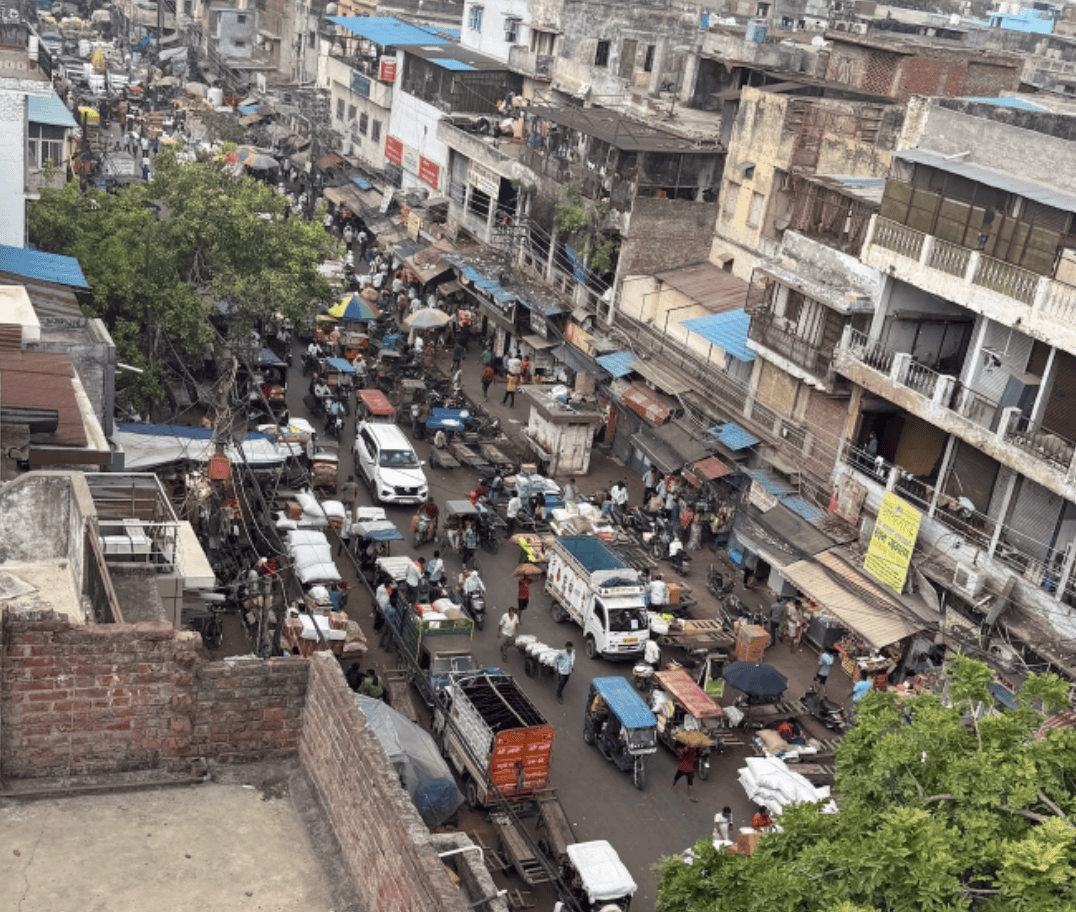
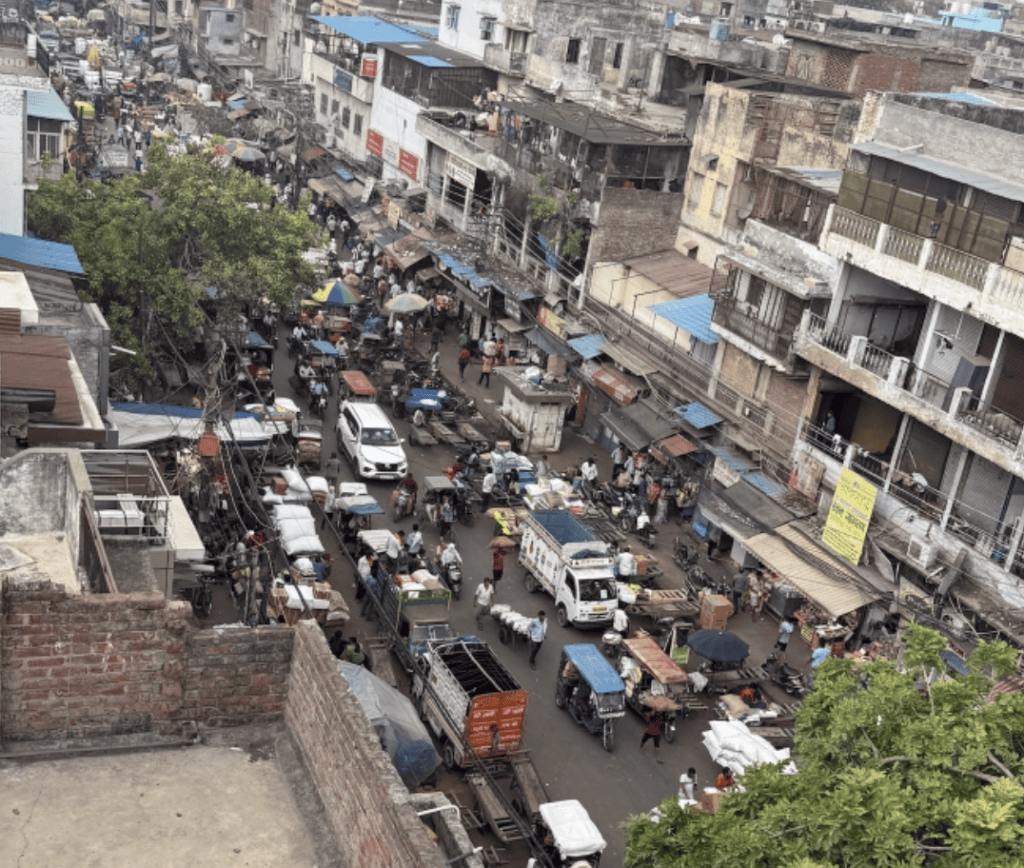
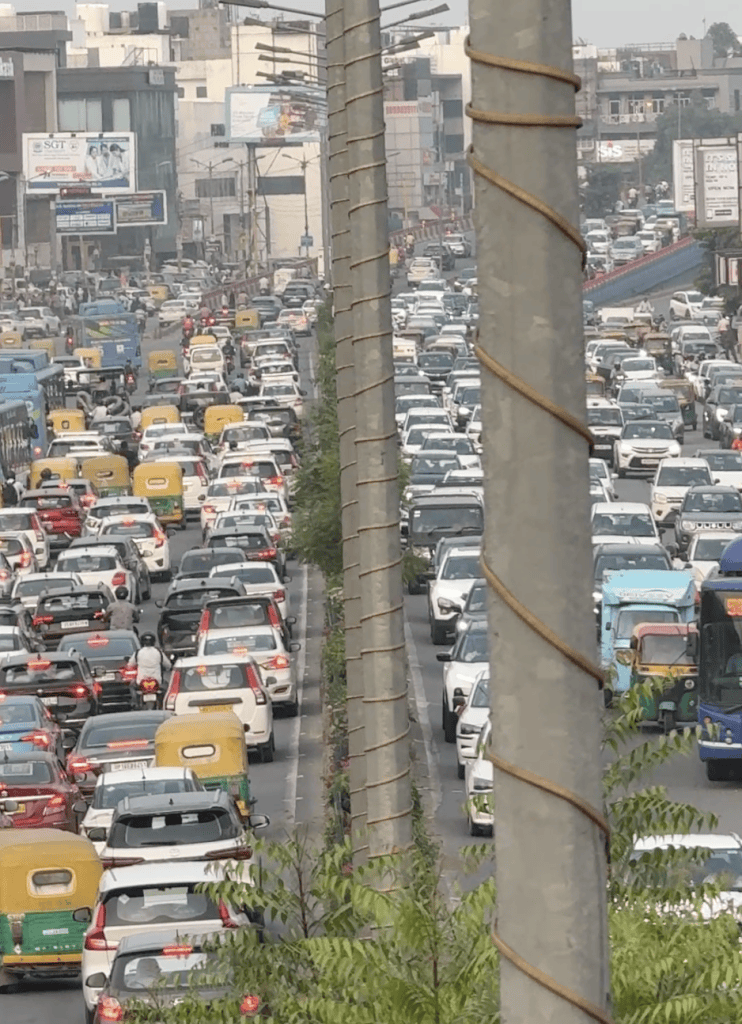
The paint on the road exists. Nobody is reading it. What drivers read instead is the actual negotiable space between vehicles, which means a two-lane road can run four motorbikes wide without anyone considering that unusual. It looks like chaos from the sidewalk. From inside it, it’s closer to water finding the shape of a container.
The real signals are hands, headlights, and inches
Turn signals get used when someone remembers. The actual communication happens through a hand out the window, a flash of the headlights, or nosing the car forward a few inches to stake a claim on space before someone else takes it. It’s a slower, more physical negotiation than the binary yield-or-go logic most Western driving runs on.
Nobody fully stops
Instead of one vehicle stopping and another going, Delhi traffic moves through everyone slowing down about ten percent at the same time. It’s a rolling negotiation, not a stop-and-go one. Watching it from a rooftop, it looks almost choreographed, like flocking birds adjusting course a few degrees at a time rather than making one big decision.
Pedestrians are traffic too
The trick to crossing here, and it took me actual practice, is that you don’t wait for a gap. You step out at a slow, steady, predictable pace and let the traffic route around you, the same way it routes around a cow standing in the middle of a roundabout like it owns the deed. Hesitate and you’re the dangerous variable. Commit and the system absorbs you.
Roundabouts reward confidence over caution
Right of way belongs to whoever commits first and means it. Hesitation is what causes accidents here, not aggression. That single fact rewired something in how I think about decision making generally, but that’s a essay for another day.
What looks like chaos from a taxi window the first time is actually one of the more elegant systems I’ve watched a city run on, dozens of small continuous adjustments instead of a handful of big binary ones. Nobody designed it. It just works, the way things that survive contact with millions of people every day tend to work.