
I’ve spent 28 articles telling you why buying property in Otaru is feasible, affordable, and maybe brilliant. Now I’m going to tell you everything that could go wrong.
This isn’t the part where I hedge my enthusiasm with a paragraph of disclaimers and then reassure you everything will be fine. Some of these risks are serious. Some of them have no mitigation. If any of them are dealbreakers for you, better to know now than after you’ve wired money to a Japanese bank.
The Town Is Shrinking
Otaru’s population peaked around 190,000 in the 1960s. It’s about 105,000 now. The trajectory hasn’t reversed. Young people leave for Sapporo, Tokyo, anywhere with more jobs and more nightlife. The people who remain are getting older. Birth rates aren’t replacing them.
What does population decline look like at the neighborhood level? Fewer kids means schools consolidate or close. Fewer residents means some bus routes get cut. Businesses that depended on local customers — the neighborhood pharmacy, the small restaurant on the corner — shut down when the customer base drops below viability. Tax revenue falls, which pressures city services.
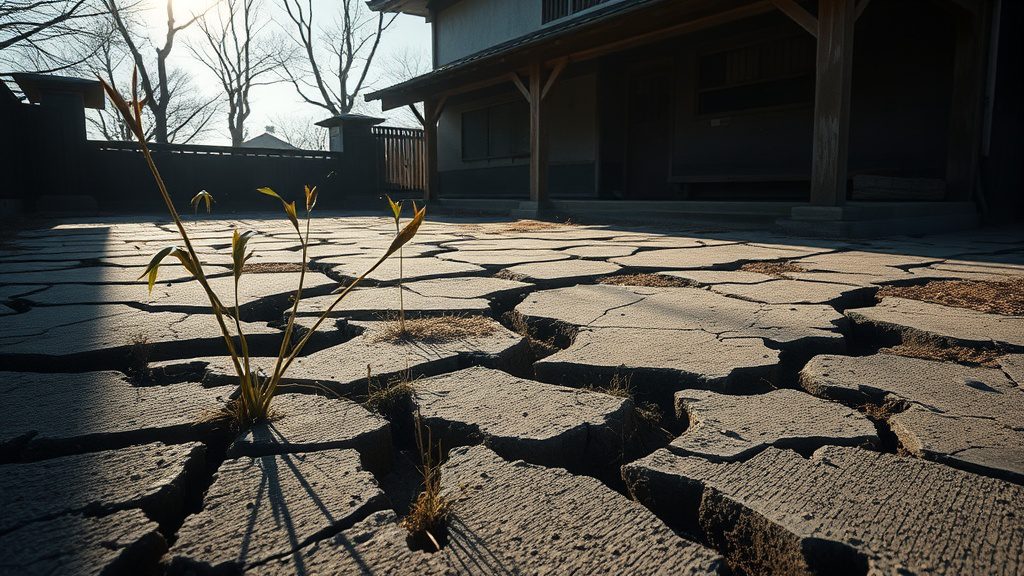
This isn’t hypothetical. It’s been happening for decades. Walk through some of the hillside neighborhoods in Otaru and you’ll see it: houses with overgrown gardens and mailboxes stuffed with years of flyers. The people who lived there died or moved to care facilities, and nobody came after.
This is the macro risk. You’re buying into a declining market. The house will likely never appreciate in value. The neighborhood around it will have fewer people in it ten years from now than it does today. If you’re okay with that — if you’re buying the house for the life it gives you, not the return it generates — this risk is priced in at the purchase price. You’re not paying for growth. You’re paying ¥3 million for a house. The expectations match the price.
You Might Not Be Able to Sell It
Cheap Japanese property is easy to buy and hard to sell. The buyer pool for a ¥3 million akiya in Otaru is narrow — mostly foreigners doing exactly what this series describes, plus occasional Japanese buyers looking for a weekend house. The domestic market for used housing in Japan is structurally weak. Japanese buyers prefer new construction. Used houses depreciate toward zero over 20-30 years regardless of condition.
If you need to sell quickly — job loss, family emergency, change of plans — you may wait months or years for a buyer. You may need to sell below your purchase price. You may need to pay a demolition company ¥1-3 million to tear the house down and sell the land, because in some cases the land without the house is more marketable than the land with it.
This is not a liquid asset. Don’t spend money you can’t afford to lose. Don’t treat this as your emergency fund with a roof. If you’re buying with ¥3 million you’d otherwise invest in an index fund, understand that the index fund can be sold on Monday morning and the house cannot.
The House Will Surprise You
Even with a pre-purchase inspection, old houses hide things. Pre-1990 construction materials in Japan often contain asbestos — in floor tiles, insulation, roof shingles, pipe wrapping. Abatement is expensive and legally required before renovation. You can’t just rip it out yourself.
Buried oil tanks are another Hokkaido special. Houses that used to heat with oil sometimes have underground tanks that were abandoned in place when the owner switched to kerosene or gas. These tanks leak. Soil remediation is expensive. A ground survey before purchase can catch this, but most casual buyers don’t do one.
Termites. Rot behind walls. Corroded plumbing that works fine until it doesn’t. Electrical wiring that predates modern safety codes. A roof that was patched with materials that don’t match and now leaks at the seams.
Budget overruns on renovation are the norm. The contractor who quoted ¥2 million will call you three weeks in and explain that the floor joists are compromised and the real number is ¥3.5 million. This is not a scam. This is what happens when you open up a 50-year-old house and find 50 years of deferred maintenance.
The mitigation is the pre-purchase inspection I wrote about in Article 15. Get one. Hire a professional. Accept that even with inspection, surprises happen. Build a contingency buffer into your renovation budget — 25-30% minimum.
Currency Will Move Under Your Feet
If you earn in dollars and spend in yen, the USD/JPY exchange rate is a second price tag on everything you buy. In the past five years, the yen has traded as strong as 100 per dollar and as weak as 160. Your ¥3 million house costs $30,000 at 100 yen/dollar. It costs $18,750 at 160. Same house. Same price in yen. Completely different cost to you.
This swings both ways. If you bought when the yen was weak and the yen strengthens, your Japanese assets become worth more in dollar terms. If you bought when the yen was strong and it weakens further, your dollar income stretches further for daily expenses.
You can’t hedge this without financial instruments that cost money and add complexity. Most individual buyers just accept the currency risk and try to convert money at reasonable rates. The practical move: don’t convert your entire dollar savings to yen at once. Move money over in tranches. Accept that you’ll get a better rate on some transfers and a worse rate on others.
The Ground Moves
Hokkaido is seismically active. The 2018 Hokkaido Eastern Iburi earthquake (magnitude 6.7) caused landslides, structural damage, and a territory-wide blackout that lasted days. Otaru wasn’t the hardest-hit area, but the power was out and the supply chains were disrupted.
Japanese construction standards account for earthquakes — buildings are designed to flex rather than collapse. But standards evolve. A house built in 1975 meets 1975 earthquake codes, not 2025 codes. Retrofitting seismic reinforcement is possible but adds cost.
Snow is the other structural threat. Otaru gets 5-6 meters of snowfall annually. Roofs bear enormous weight. Older roofs sag. Ice dams form. Gutters rip off. The freeze-thaw cycle cracks foundations over decades. Maintenance isn’t optional here — it’s the cost of keeping the house standing.
Earthquake and fire insurance (地震保険 and 火災保険) are available and strongly recommended. They don’t cover everything — deductibles exist, coverage caps exist, and the claims process after a major event is slow when every house in the region is filing simultaneously. But the alternative is absorbing the full loss, and on a ¥3 million house with ¥5 million in renovations, that’s real money.
The Isolation Is Real
Otaru is a Japanese city of 105,000 people. The foreign resident population is small. There is no English-speaking expat bubble like you’d find in Tokyo, Osaka, or even Niseko (which is 90 minutes away and caters to Australian ski tourists).
If you don’t speak Japanese, your social world is limited to the people who speak English, and in Otaru that’s a short list. The barista at the canal-side cafe, maybe a few ALTs (Assistant Language Teachers) at local schools, occasionally a tourist. Your neighbors will be kind. They will also speak to you in Japanese, and when you can’t respond, the conversation ends with mutual bowing and silence.
This gets heavy in winter. Hokkaido winters are long and dark. Snow piles up. You stay inside more. If your social infrastructure is thin, January and February can feel very long.
The mitigation is language study, which takes years to produce conversational fluency. And the chonaikai, which provides social structure even when your vocabulary is limited. And Sapporo, which is 35 minutes by train and has a larger foreign community, English-friendly bars, and international events.
But I won’t sugarcoat it. If you need English-speaking friends within walking distance, Otaru is a hard place to find them.
Legal Surprises After You’re Gone
Japanese inheritance law doesn’t work like American or British law. If you die owning property in Japan, your heirs don’t just inherit it through your will. Japanese succession law applies to real property located in Japan, and the rules about spousal shares, children’s shares, and mandatory heir portions may conflict with what your home-country will says.
This gets complicated fast. A dual-nationality family with assets in two countries and different inheritance laws in each jurisdiction — it’s exactly the kind of situation that generates legal fees for years.
Talk to a lawyer about this before you buy. Specifically, a lawyer who handles cross-border estate planning. A Japanese judicial scrivener (司法書士) can explain the Japanese side. Your home-country estate attorney can explain the interaction. This costs money upfront and saves your family from a disaster later.
The Cheap House Trap
Some akiya are listed at ¥500,000 or even ¥0. Free houses. They exist. There’s a reason they’re free.
No road access — the house is on a private path with no legal right-of-way. No rebuilding rights — if the house burns down or is demolished, zoning doesn’t permit new construction on that lot. Contaminated soil from a former commercial use. Structural failure so advanced that the house is essentially a ruin with a roof. Legal encumbrances — liens, contested ownership, unclear boundaries.
The cheapest listings are cheap for discoverable reasons. A competent real estate agent or judicial scrivener will identify these issues before purchase. The danger is the buyer who skips professional help because the price is so low it feels like there’s nothing to lose. There’s always something to lose. Your time, your renovation investment, your ability to use the property for its intended purpose.
The Distance
Japan is far from everywhere except other parts of Asia. From the west coast of North America, it’s a 10-hour flight. From Europe, 12+. From the east coast of the US, you’re looking at 14+ hours with a connection.
A house you visit once a year deteriorates between visits. Pipes freeze in winter if the heat isn’t running. Mold grows in the rainy season if the house isn’t ventilated. Snow piles against walls. Gutters fill with leaves. A house needs presence, and Otaru is not a place you can pop over to on a long weekend.
If you’re planning to live in the house full-time or at least several months per year, this isn’t a concern. If you’re imagining a vacation property you’ll visit for two weeks each summer — think carefully about who maintains it the other 50 weeks. Property management services exist but add ongoing cost that may exceed the property taxes.
So Why Did I Buy?
Every risk on this list was visible before I signed the deed. Population decline — I read the census data. Liquidity — I knew I might never sell this house. Renovation surprises — I found some. Currency — the yen moved after I converted. Distance — I split my year between countries.
I bought anyway because the opportunity math still worked. A house in a beautiful port city in one of the safest, most functional countries on earth, for less than a used Honda Civic. Health insurance that costs less per month than a single American emergency room copay. Property taxes under $500 a year. Neighbors who brought me food when I moved in.
The risks are real. They didn’t outweigh what I got. Whether they outweigh what you’d get is a question only you can answer, and the next article — the last in this series — makes the affirmative case one final time.