
The one Who Cannot Touch the Ground
Kathmandu, Nepal
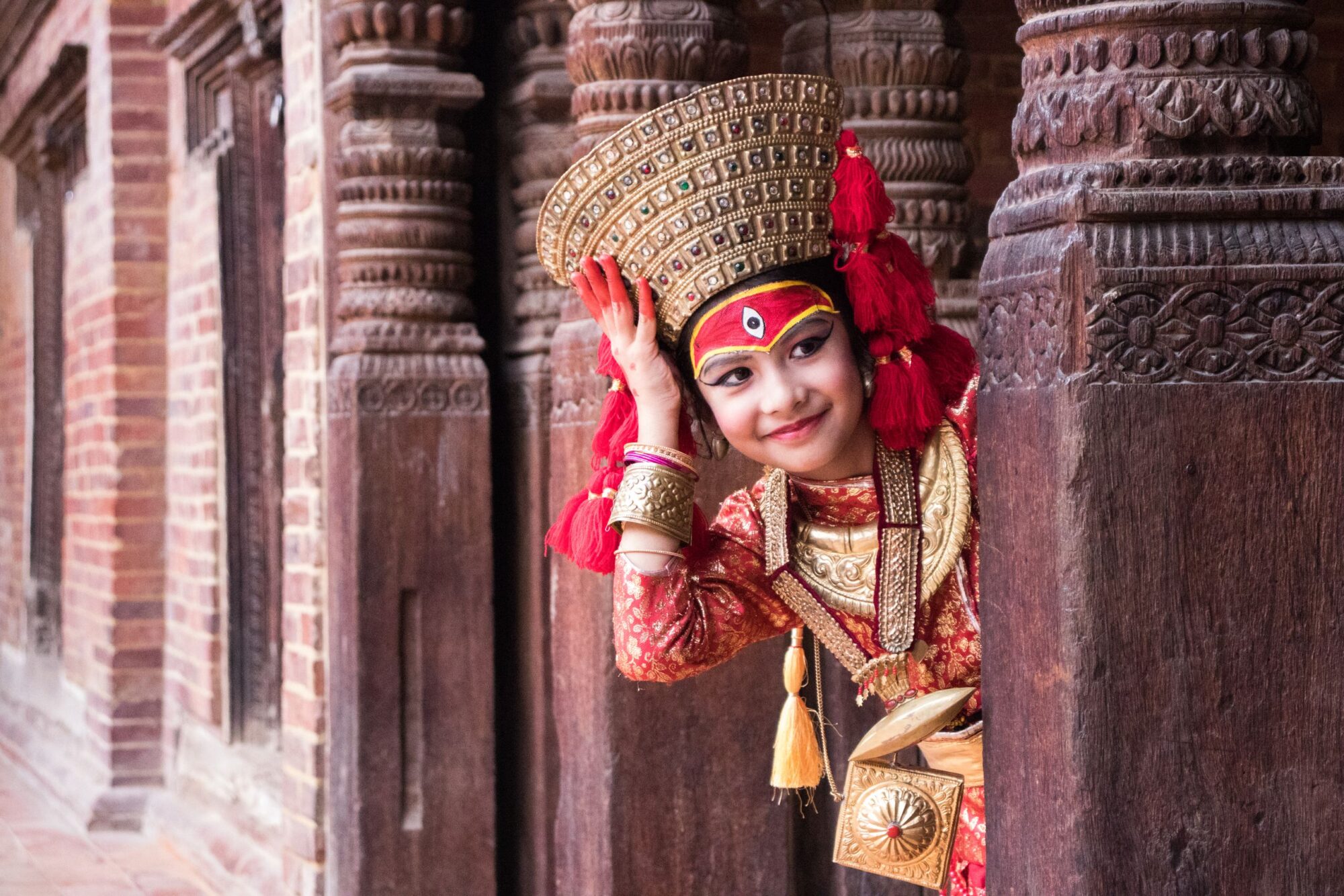
There is a window in Durbar Square that pilgrims and tourists watch the way people watch for weather. No schedule is posted. No announcement comes. But most afternoons, around four o’clock, a small face appears behind the carved wood lattice of Kumari Ghar, and the crowd below hushes in the way crowds do when they believe they are looking at something that is not, strictly speaking, a person.
She is. That is the part that bothers me. She is definitely a person. A child. A little girl.
What She Is Believed to Be
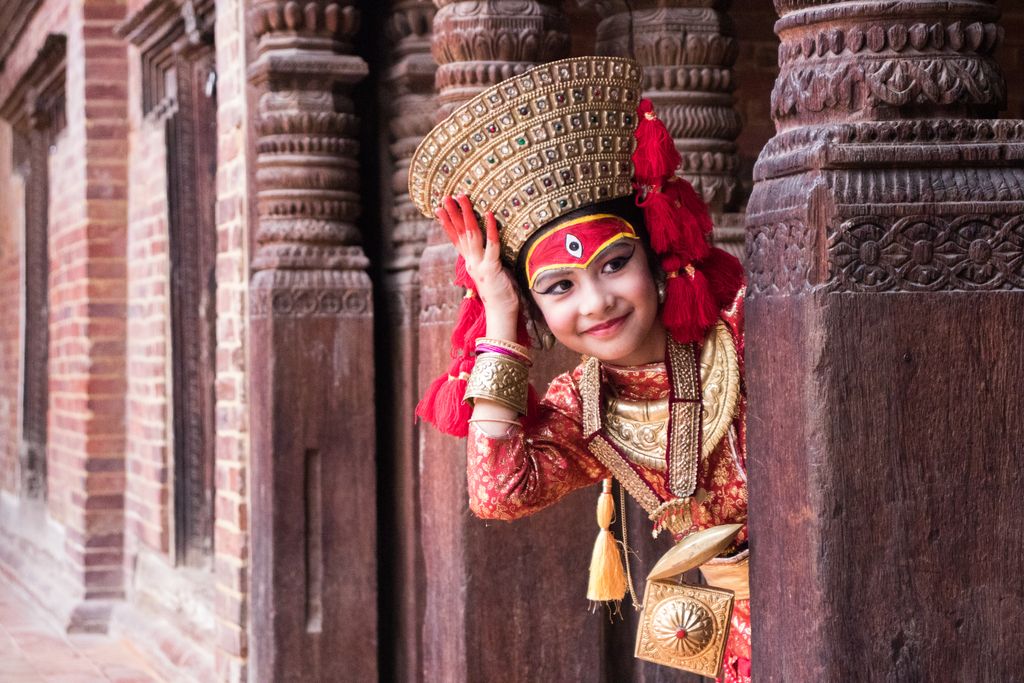
The Kumari is a living goddess, the incarnation of Taleju, a form of Durga worshipped as the protector deity of the Malla kings who once ruled the Kathmandu Valley. She is selected from the Newar Shakya caste while still a small child, before her first tooth loss disrupts the required physical criteria, and she remains Kumari until her body tells the tradition otherwise. The first drop of blood, whether from injury or her first period, is read as the goddess departing. A new search begins.
There are actually several Kumaris across the valley. Patan has one. Bhaktapur has one. But the Royal Kumari of Kathmandu, seated at Kumari Ghar just off Durbar Square, carries the most historical weight. For centuries, it was her blessing that legitimized the king’s rule, an arrangement odd enough to say plainly: the head of the Hindu kingdom needed the sanction of a Buddhist-caste child believed to house a Hindu goddess. Nepal’s king tradition is dying. The Kumari tradition continues anyway.
How One Is Chosen
The selection process reads like something between a beauty pageant and an exorcism screening, and neither comparison does it justice. Candidates are examined against thirty-two specific physical markers, unblemished skin, particular body proportions, a certain quality of gaze among them. Priests cross-check her horoscope for compatibility with the nation’s. And there is a courage test: the child is placed alone at night among ritual buffalo heads and masked dancers meant to terrify her. The girl who does not cry, who does not flinch, is the one in whom the goddess is believed to have already arrived.
Most spiritual traditions ask the practitioner to work toward stillness across years of practice. This one demands it, fully formed, from a child who may not yet be four or five years old, as proof of divinity rather than a goal to grow into.
The Life Itself
Once confirmed, a Kumari’s feet are not meant to touch the ground outdoors. She is carried, or wheeled in her palanquin during festival appearances, most visibly at Indra Jatra. She lives inside Kumari Ghar, attended by caretakers, visited by pilgrims seeking darshan, a moment of blessing through sight alone. Photography of her directly is not permitted. Her days are structured around ritual, not classrooms or playgrounds, though this has shifted somewhat in recent decades as courts and advocates have pushed for tutoring and greater contact with ordinary life.
Then it ends, often abruptly, and she returns to a childhood she was never allowed to have in the first place, now arriving late and without a map.
the Difficulty
I will not pretend this tradition resolves cleanly, because it doesn’t, and any article that tries to land hard on one side of it is lying to you a little.
On one side: this is a child, selected through physical inspection, isolated from normal development, denied the ordinary textures of growing up, then released into a world she was never prepared for, based on the condition of her body rather than any choice of her own. Read plainly, that is a description of institutionalized harm, however sacred the language wrapped around it. The women who have been Kumari have detailed the hardship it entails when they are put back into the human world. There is a legend that men who marry a former Kumari will die young and violent deaths. That is not a great thing to have hanging over you.
On the other side: the Newar Buddhist and Hindu communities who sustain this practice are not outsiders imposing it. It is theirs, chosen and maintained across generations, and several former Kumaris have spoken of the role with pride rather than resentment, pushing back against outside narratives that flatten their experience into simple victimhood. Nepal’s Supreme Court has intervened over the years specifically to protect Kumaris’ access to education and wellbeing, evidence that the tension is recognized from within the culture, not only by visitors passing through with opinions.
Both of these things are true at once, unresolved, sitting inside the same small girl behind the same carved window.
The Syncretism Underneath
What strikes me most is what the Kumari reveals about how this valley actually practices faith. A Hindu goddess, housed in a Buddhist body, worshipped by both communities without contradiction, blessing a head of state in a nation that no longer has a throne for her to legitimize. Nobody here experiences this as strange. It is simply how devotion has always worked in the Kathmandu Valley, traditions overlapping and borrowing and cohabiting rather than competing for a single correct answer.
I think of it as a rough, uncomfortable cousin to what I have called Rox and Tox elsewhere in this work, the idea that every person already carries the capacity to recognize good from harm, without requiring an outside authority to hand it down. The Kumari tradition asks the opposite of its central figure. It asks a child to be the outside authority herself, whole and complete, before she has had the years most of us need to arrive at anything like wisdom.
Maybe that is the real weight of standing in that square at four in the afternoon, waiting for a window to open. Not the mysticism of it. The math of it. A community’s entire spiritual center, resting on a girl too young to have chosen it.
She will appear for a few seconds. The crowd will exhale. And then the window will close, and everyone will go back to their tea and their temples, having witnessed something that is, depending entirely on which truth you are holding onto that day, either sacred or cruel.