
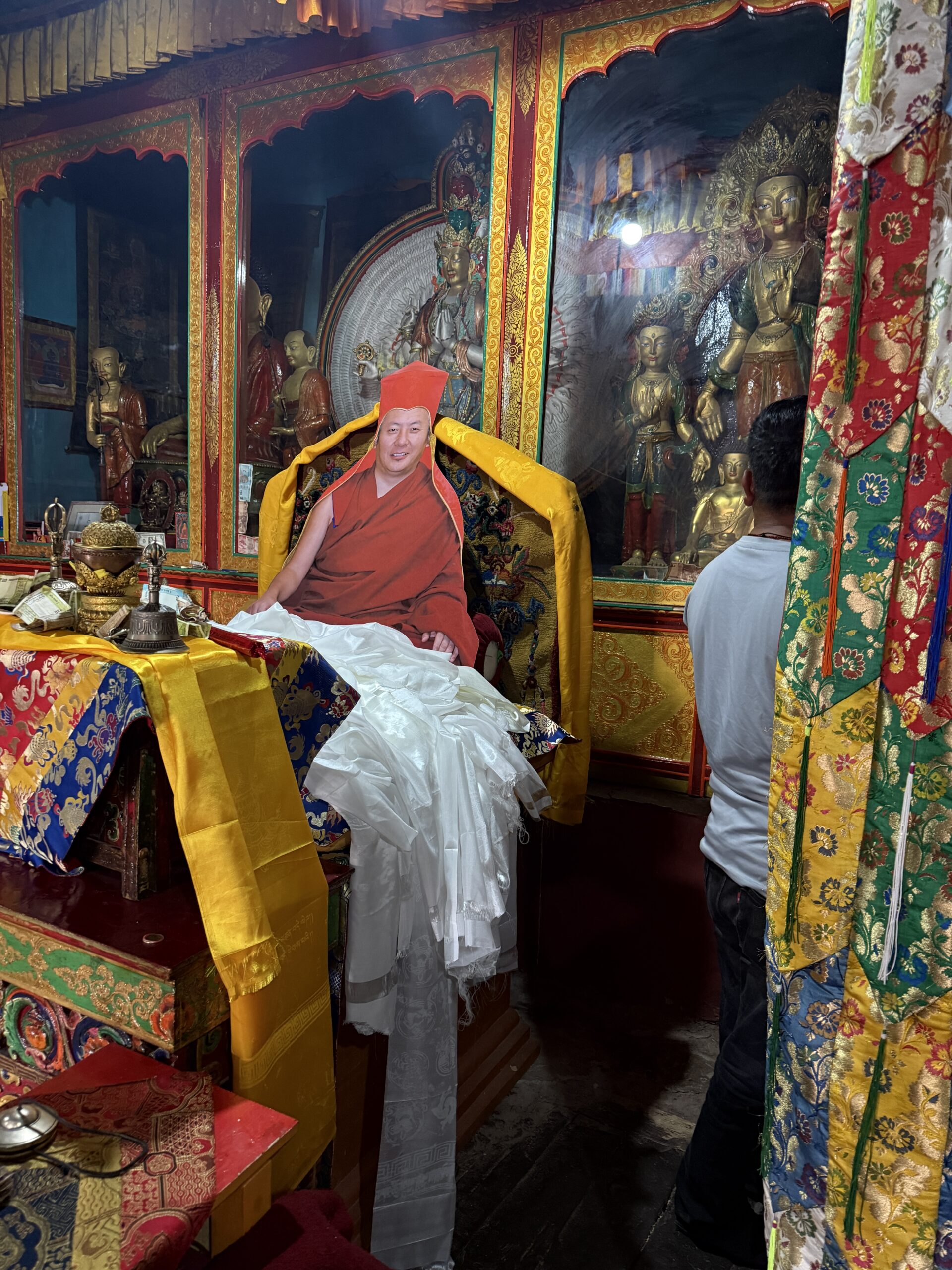
Stok and Matho: A Kingdom and a Living Ceremony, Twenty Minutes Apart
The driver quoted me three thousand rupees for the day. Stok, Matho, four to five hours, dropoff back at my hotel. I had a feeling he was padding it a little. The union sheet for the same loop runs closer to two thousand, and I’d seen enough of Leh by then to know that “agent rate” and “actual rate” are two different economies operating in the same fifteen square kilometers. But I didn’t haggle. I did the math in my head and landed somewhere close to what I would have tipped him anyway if I’d talked him down and then handed cash back at the end. So I let it go. Not every transaction needs to be a negotiation. Sometimes the extra eight or nine hundred rupees is just the fee for not thinking about money for an afternoon.
That turned out to be worth it, because Stok and Matho are not the kind of places you want to be rushing through with a driver checking his phone.
Stok: What’s Left of a Kingdom
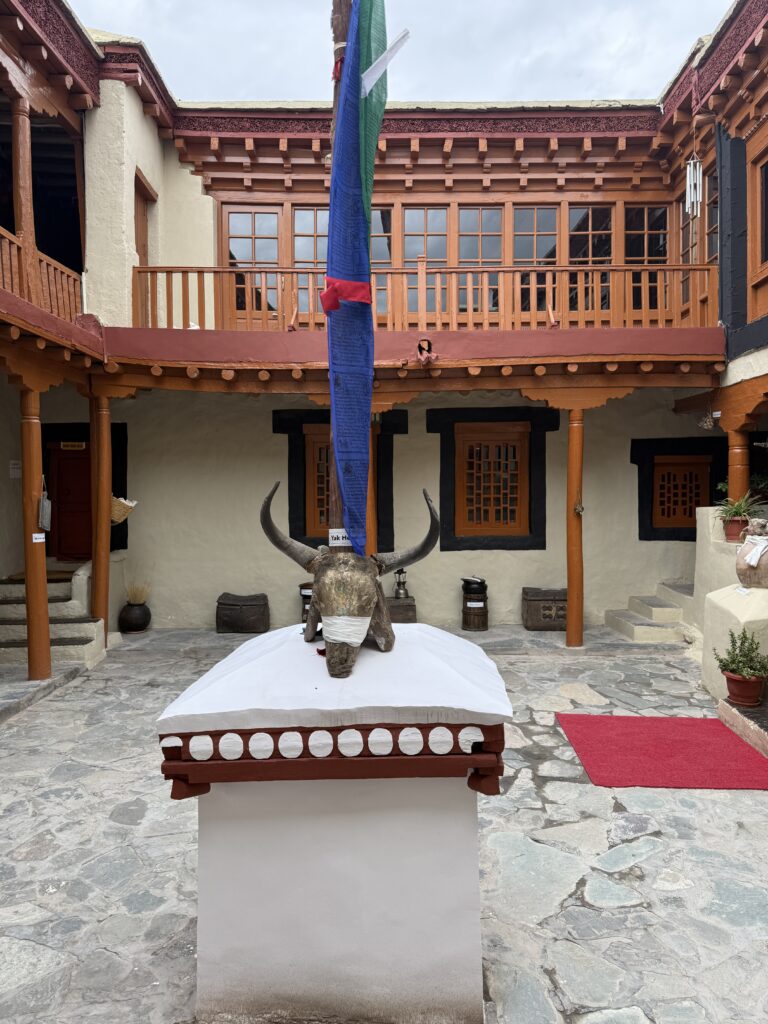
Stok sits about fifteen kilometers outside Leh, across the Indus, and it’s easy to drive past without registering what you’re looking at. From the road it’s just another whitewashed compound against the mountains. What it actually is: the last residence of the Namgyal dynasty, the family that ruled Ladakh before the Dogra conquest folded the kingdom into what eventually became modern India. Built in 1825 by King Tsespal Tondup Namgyal, Stok Palace is the tail end of a much longer architectural tradition, the fortified hilltop palace, the kind of building meant to project power over a valley rather than just house a family.
Part of it is a heritage hotel now. Part of it is a museum. The museum is the reason to come.
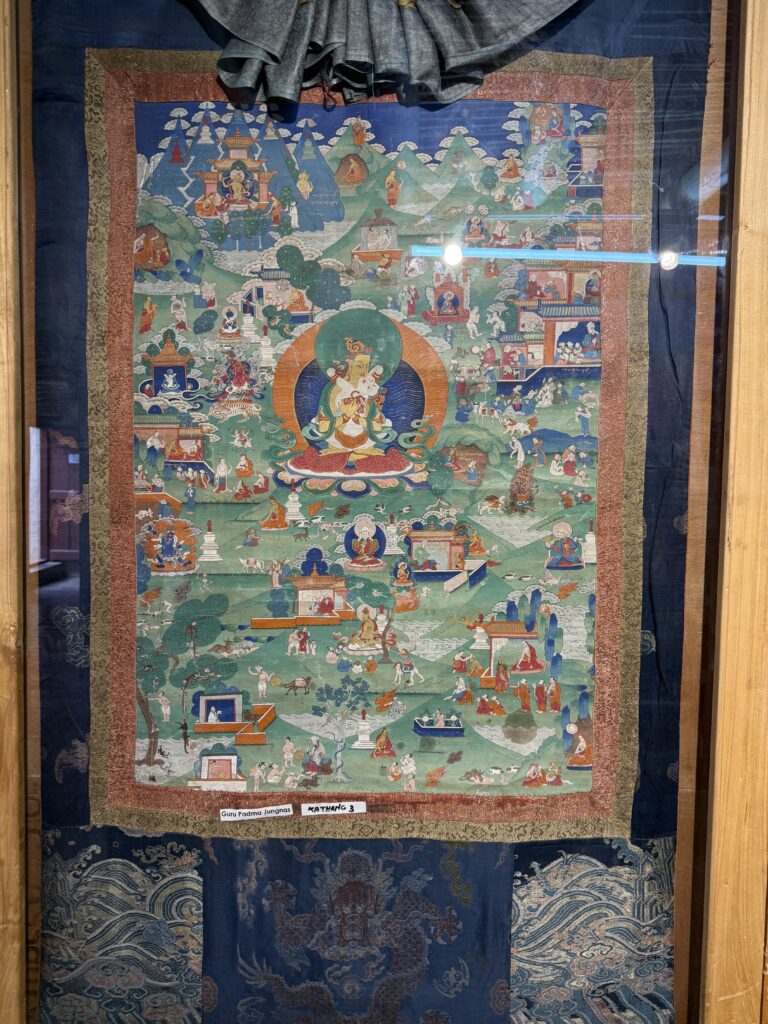
They won’t let you photograph inside, which I understand and also resented a little, because the collection is genuinely strange and specific in a way that photographs would have done more justice to than my notes will. There’s a queen’s headpiece set with 401 pieces of uncut turquoise, coral, and gold. A crown that the museum dates back a thousand years. A ceremonial sword tied in a knot, which is either a security measure or a metaphor, I never got a straight answer on which. Sixteenth century thangkas walking through the life of the Buddha, hung next to a room of old war relics, swords and shields and matchlock firearms that once meant something very different than they mean now, sitting behind glass.
It’s a strange feeling, standing in a room full of a dead kingdom’s jewelry. Not sad, exactly. More like reading someone’s diary after they’ve been gone long enough that you can’t feel guilty about it anymore.
Down the road from the palace is Stok Monastery, founded in the fourteenth century by Lama Lhawang Lotus, home to a complete 108-volume Kangyur, the core canon of Tibetan Buddhist scripture. It’s a working monastery, not a museum piece, and after the palace it felt like the difference between visiting a grave and visiting a house someone still lives in.
Matho: The Sect That Stands Alone
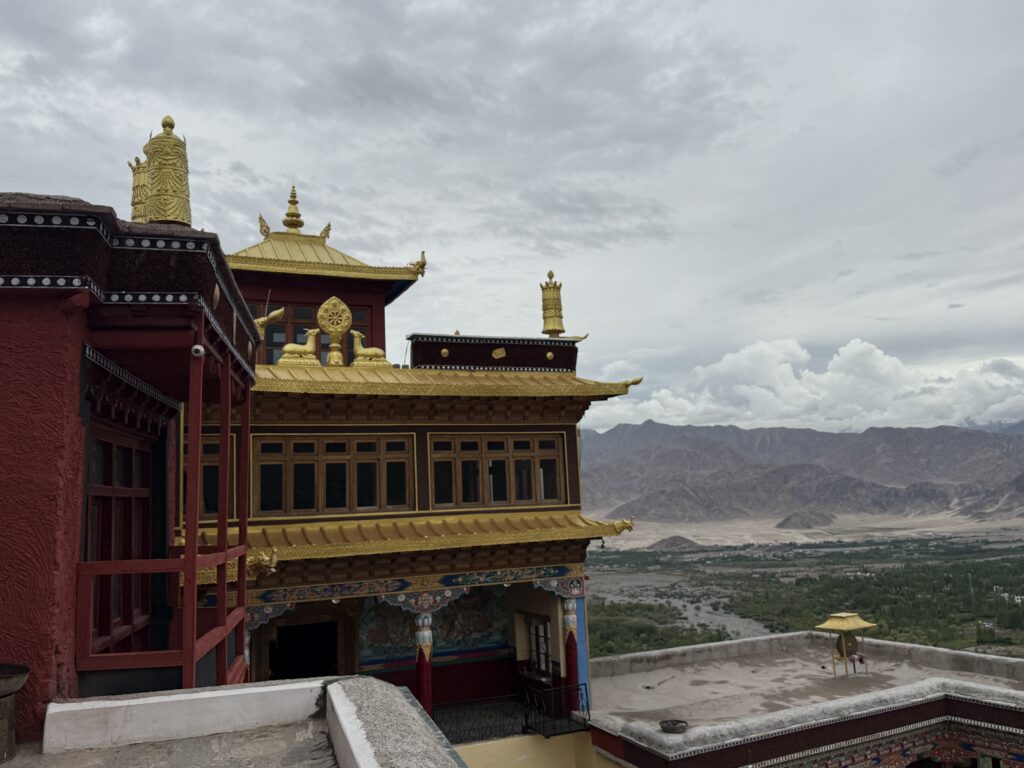
Matho is another twenty minutes or so past Stok, and the character of the place shifts the moment you walk in. Where Stok felt like history under glass, Matho felt like something still actively happening.
Matho Monastery was founded in the sixteenth century by Lama Dugpa Dorje, and it holds a distinction that matters more than it sounds like it should: it’s the only Sakya-sect monastery in all of Ladakh. Everywhere else you go in this region, you’re looking at Drukpa or Gelug institutions, different branches of the same broad Vajrayana tree but with their own lineages, their own politics, their own five hundred years of quiet rivalry. Matho is the outlier. One Sakya monastery, alone, in a valley otherwise divided between the other schools.
The monastery’s real treasure is a set of four thangkas dating to the twelfth century, discovered near Matho village only a handful of years ago and now being restored on site by local women trained specifically for the conservation work. I stood and watched for a while. There’s something quietly moving about watching someone repair a six-hundred-year-old painting with the same unhurried attention you’d give to anything you actually cared about.
Next to the monastery is a newer building, MaMoMu, the Matho Museum, built to look like a traditional Ladakhi house, mud brick and poplar wood, three floors that move you from Ladakhi art styles up through Buddhist iconography and into monastic life. There’s a small rooftop café up top with a view over the Indus valley toward the Stok range, which meant I could sit and look back across the river at the palace I’d just come from. The dead kingdom on one side, the living monastery on the other, and me in the middle with a cup of tea I didn’t expect to be that good.
Matho is also home to the Matho Nagrang festival every spring, where monks enter a trance state as oracles and perform ritual acts that the whole valley turns out to watch. I wasn’t there for it, wrong season, but the monks I spoke with talked about it the way people talk about something they take completely seriously and also can’t quite explain, which is usually the sign that you’re looking at the real thing and not a tourist reenactment of it.
What Twenty Minutes Buys You
What struck me most, driving between the two, wasn’t the distance. It’s nothing, fifteen minutes of dirt road and river views. It’s how completely the character of the place changes in that short a drive. Stok is temporal power, fully expired, preserved behind glass so you can look at what it used to mean. Matho is spiritual authority that never stopped operating, still restoring its own relics, still running its own festival, still answerable to nobody but its own five-hundred-year-old lineage.
Ladakh does this constantly. You go looking for one monastery and you come back having accidentally toured the entire shape of how power works here, who held it, who still holds a different kind of it, and how little those two things have ever had to do with each other.
I paid too much for the ride. I’d pay it again.