
I don’t usually plan but when I get to a place I find a bunch of things online I want to do and then have a list for the times I’m not randomly doing something interesting. In this case, I gave my list to Claude to create this guide. I didn’t get the chance to do all these things, but maybe you will. ~CD
How This Works
Delhi will overwhelm you if you try to do it like a checklist. I already know this after 24 hours. Don’t. Use this as a menu, not an itinerary. Pick what sounds good on the day, ignore what doesn’t, and leave room for the city to surprise you. It will.
One practical note before anything else: get a metro card. Delhi’s metro is air-conditioned, cheap, safe, covers almost the entire city, and will keep you from losing your mind in traffic. If you’re here more than three days it pays for itself on day two.
Autos are your other friend. Bargain first, always.
Day One: Old Delhi
Go early or don’t go. Old Delhi in the afternoon heat is a different proposition than Old Delhi at nine in the morning, when the light is still soft and the alleys haven’t fully woken up.
Red Fort is where you start. Opens at 9:30am, closed Mondays. Get there when it opens and you’ll have it nearly to yourself. The fort is Mughal imperial architecture at full scale — red sandstone walls stretching for two kilometers, gardens, pavilions, a museum. By noon it will be full of tour groups. You won’t be there by noon.
From there, walk into the lanes. Old Delhi’s neighborhoods are their own argument for the city. You’re not here to see things, you’re here to be inside it. Follow your nose. Chandni Chowk is the main artery but the parallel lanes are where it gets interesting.
Khari Baoli is Asia’s largest wholesale spice market. The ground level is chaotic commerce. Get onto the rooftops if you can — the views over Old Delhi from up there are worth the climb and the conversation required to get access.
Find lunch somewhere local. Paranthe Wali Gali in Chandni Chowk has been frying stuffed flatbreads since the 19th century. It’s touristy and still worth it.
Evening: Hazrat Nizamuddin Dargah for qawwali. Thursday evenings are the main event — the Sufi shrine fills with devotional singing that has been happening there for seven centuries. You don’t need to be religious for it to do something to you. Go at dusk, dress respectfully, leave your shoes.
Day Two: New Delhi
New Delhi is what the British built when they decided to relocate the capital in the early 20th century. Wide boulevards, grand government buildings, a certain imperial logic to the layout that feels entirely different from the organized chaos of everywhere else.
India Gate is the anchor. War memorial, 42 meters of sandstone, perpetual flame. Go in the evening rather than the heat of the day — the lawns fill up with families and ice cream vendors and it becomes one of those rare Delhi moments that’s genuinely peaceful. The ice cream, per multiple sources, is non-negotiable.
Akshardham Temple deserves more than a quick visit so plan accordingly. Arrive at 2-3pm to allow time for the complex itself and then the evening show with its laser and water display. Even stripped of any religious context it’s a genuinely spectacular piece of architecture and engineering. The exhibition inside is good. Photography is not allowed and they’ll make you check everything including your phone, so be prepared for that.
Purana Qila — the Old Fort, not to be confused with Red Fort — is one of the oldest structures in Delhi, built on a site that has been continuously occupied for roughly five thousand years. The museum inside has archaeological finds dating to 1000 BC. In the evening there’s a light show projected on the fort walls that tells several centuries of Delhi history. Opens 7am, closes 5pm, ₹20 for Indians, ₹200 for foreigners.
Agrasen Ki Baoli is a stepwell from the 14th century, tucked improbably between office buildings in the middle of Connaught Place. 103 steps descending to a dry well, flanked by arched galleries on three sides. It shouldn’t exist where it exists. That’s the whole point.
Connaught Place for the evening. The colonial-era circular shopping district has cafes, bars, and Janpath market for cheap finds.
Day Three: South Delhi
South Delhi is where you decompress. Leafier, calmer, residential. Also where you’re likely staying if you’re in GK-1 territory.
Humayun’s Tomb first thing in the morning before the heat arrives. The garden tomb that served as the template for the Taj Mahal, built by a grieving widow in 1570. The Persian char bagh garden design, the double dome, the red sandstone and white marble geometry. Architecturally it might be the most important building in Delhi and it gets a fraction of the attention Agra does.
Lodhi Garden after. Fourteen hectares of park containing multiple 15th century tombs, a footbridge, migratory birds, joggers, couples, and enough shade to make it survivable even in June. Free entry. One of the better urban parks in Asia.
Mehrauli Archaeological Park if you have energy and interest in ruins without crowds. 200 acres of forest containing over a hundred historically significant monuments, including the hidden stepwell Rajon Ki Baoli and the eerie Jamali Kamali twin tombs. You can wander freely. Most people don’t know it exists. That’s the point.
Champa Gali in Saket for the afternoon. A hidden pedestrian alley in Said-ul-Ajaib village, fairy lights, art cafes, independent bookstores, design studios. The kind of place cities accidentally produce and then can’t replicate. Good for the mid-afternoon dead hours when everything else is too hot to deal with.
Hauz Khas Village for evening. The complex has a 13th century reservoir, the ruins of a madrasa, a tomb, and deer in the park. The village around it has rooftop cafes with views over the water. Budget friendly, good for extended sitting with a drink as the light changes.
Day Four: Offbeat
This is the day for the things that don’t make the standard list.
Majnu-ka-Tilla — Delhi’s Tibetan refugee colony, near North Campus. Narrow alleys, street vendors, affordable clothing, authentic Tibetan food. Order lhaphing — cold, spicy noodles — and momos. Ama Cafe specifically has been called out for Korean-style Tibetan food, which sounds contradictory and apparently works. The neighborhood exists in its own register entirely, nothing like the rest of Delhi.
Tughlakabad Fort in South Delhi, if you want ruins without other tourists. A 14th century fortified city stretching for six kilometers, largely unvisited. When one writer went, there were twenty people in the entire complex. You might spot Nilgai — Indian Blue Bull, the largest Asian antelope — in the surrounding area. ₹5 Indians, ₹100 foreigners.
Sulabh International Museum of Toilets in Mahavir Enclave is exactly what it sounds like: a museum chronicling human sanitation from 2500 BC to the present. Medieval chamber pots, a replica of Louis XIV’s commode, the full arc of where humanity has chosen to sit. This is either your thing or it isn’t.
Indira Gandhi and Lal Bahadur Shastri Museums — both free, both near each other, both walkable from the same metro station, both genuinely uncrowded. If you have any interest in the political history of modern India these are worth two hours of your afternoon in the AC.
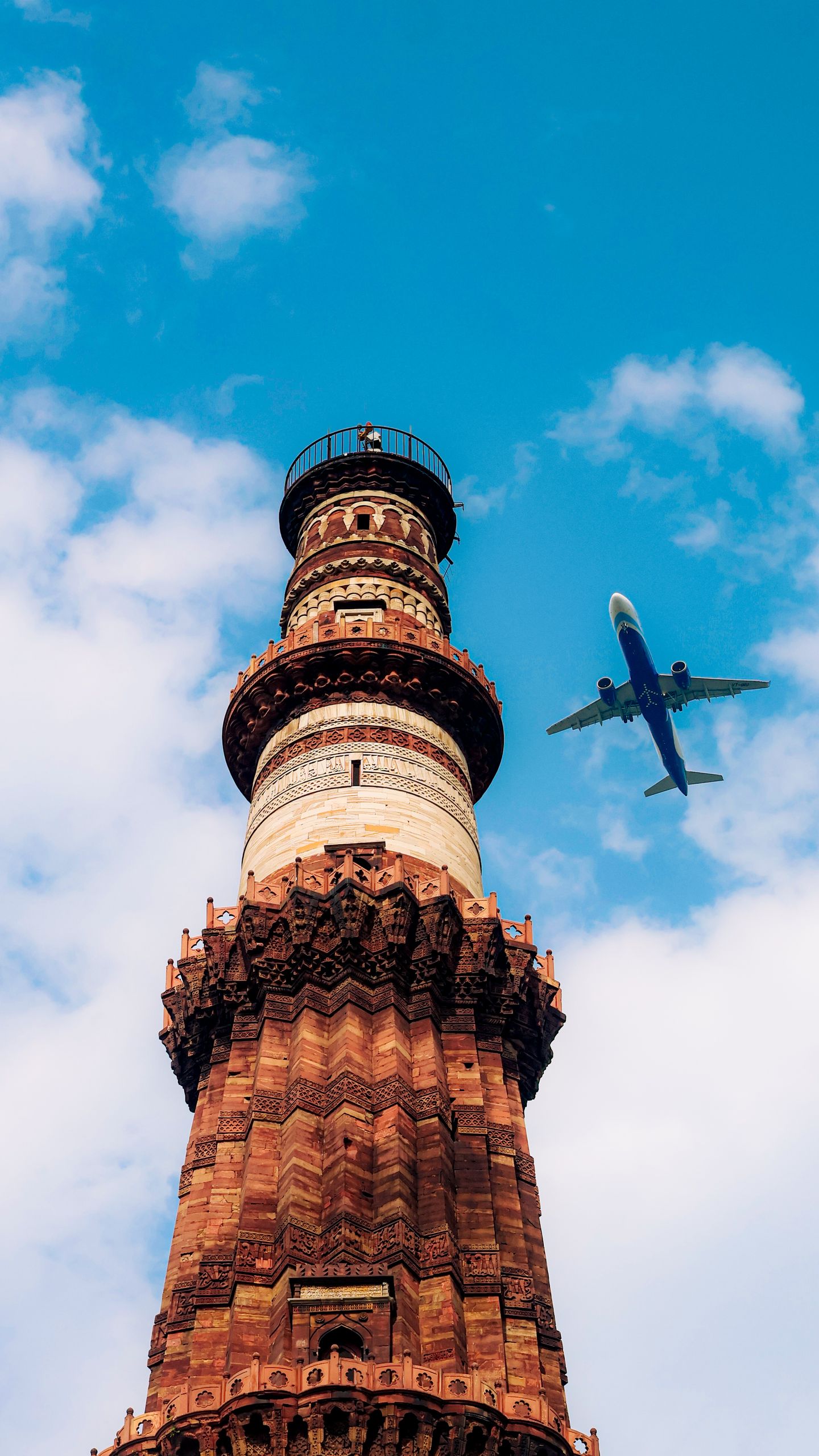
Evening: Qutub Minar at night. The 12th century minaret is Delhi’s most visited monument during the day and a completely different experience after dark when the crowds thin and the complex is lit up. The surrounding Archaeological Park has ruins from multiple dynasties in one small area.
Day Five: Eat and Wander
No agenda. This is the day the city gives you something you didn’t plan for.
Morning: street food in whatever neighborhood you wake up closest to. Delhi’s street food is the better reason for the city that no monument can fully make. Pani puri, chaat, parathas, whatever’s being fried at the stall with the longest queue of locals.
If you need a destination, Sarojini Nagar Market for cheap clothing — export surplus, streetwear, the real budget market. Get there before noon before the heat makes it unpleasant.
Dhan Mill Compound in South Delhi if you want spectacular cafes and don’t mind paying for them. Industrial space converted to design studios and restaurants. Good for a long lunch.
The Lotus Temple if you haven’t been — the Baha’i house of worship, 27 marble petals arranged in a flower shape, free entry, no photography inside, genuinely peaceful. Worth an hour of late afternoon before the sun drops.
Then find somewhere to eat. Ask someone local. Follow the queue. That’s always been the better guide than any list.
Practical Notes
Metro over auto when you’re going far. Auto over metro when you’re going somewhere interesting and not in a hurry — the city is best seen at street level.
Water is not free in restaurants. Budget for it.
Dress for the heat but have a scarf or light layer for temples and air-conditioned spaces that are kept aggressively cold.
The heat in June/July is serious. Everything before noon and after sunset. Cafes and museums and air conditioning in between.
The city will be chaotic, loud, and occasionally maddening. That’s the deal. The deal is worth it.