
The Japanese bureaucratic system is simultaneously the most frustrating and most functional I’ve encountered in decades of living in other countries. The forms are incomprehensible. The process is rigid. And when you come out the other side, you have health insurance that actually works, a tax ID that unlocks the entire digital government, and a bank account that lets you auto-pay everything so you never think about utilities again.
Here’s the sequence. The order matters.
Step 1: Residency Registration (住民登録)
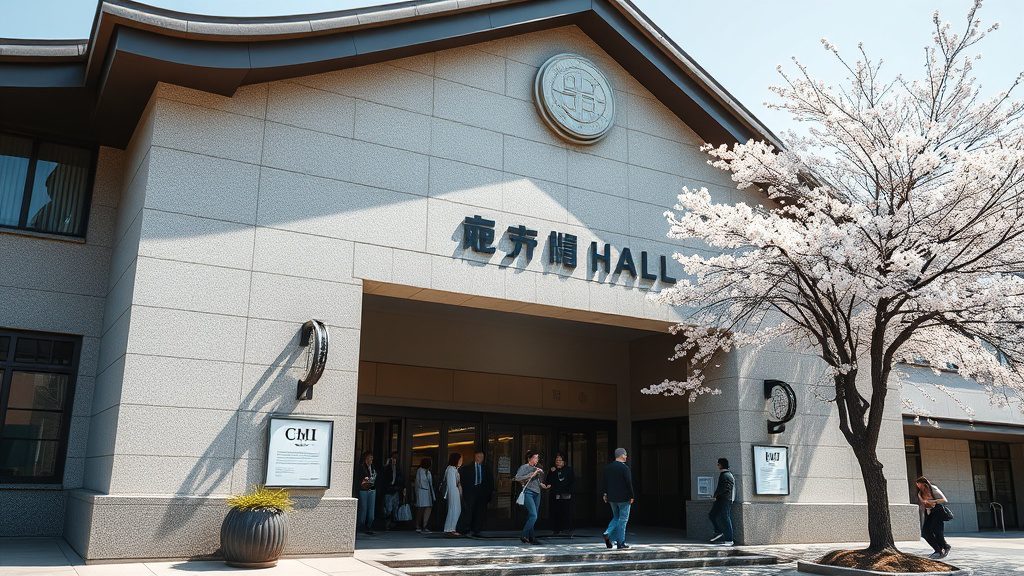
Within 14 days of moving into your Otaru address, go to Otaru City Hall and register your residence. This is not optional. It’s legally required for anyone with a visa that permits residency — work visa, spouse visa, permanent residency, any of the long-term categories.
Bring:
– Your passport
– Your residence card (在留カード) — the card immigration gave you at the airport or at the immigration bureau
– Proof of address: your property deed (登記事項証明書) or a utility bill showing your Otaru address
At the counter, they’ll update your residence card with your new address. It gets printed on the back of the card. From this moment, your legal address is your Otaru house. You live here now, as far as Japan is concerned.
They’ll hand you several things: a My Number notification letter, enrollment forms for National Health Insurance, a garbage sorting calendar for your neighborhood, and information about the chonaikai. Take all of it. Read none of it at the counter. Go home, point your phone’s camera at each page, and process it with Google Translate over a cup of coffee.
Step 2: National Health Insurance (国民健康保険)
Japan has universal health coverage. If you’re a registered resident and you’re not covered through an employer’s plan, you enroll in National Health Insurance — kokuho (国民健康保険). The enrollment desk is at city hall, often the same floor where you just did your residency registration.
Premiums are calculated based on the previous year’s income. If you’ve just arrived in Japan and have no Japanese income history, you’ll pay the base rate — typically ¥2,000-5,000/month. This number will adjust the following year based on what you actually earned.
What does kokuho cover? Seventy percent of medical costs. You pay the remaining 30% at the point of service. There’s no network. There’s no pre-authorization. Walk into any clinic, any hospital, hand them your insurance card, see a doctor, pay 30% of the bill on your way out.
I want to put a real number on this because Americans especially have no frame of reference for functional health insurance. A typical clinic visit — walk in, no appointment, wait 20 minutes, see a doctor, get examined, receive a diagnosis and a prescription — costs roughly ¥1,500 out of pocket. That’s about $10 at current exchange rates. For a doctor visit.
Dental is included. Vision is included. Most specialists are included. You don’t need separate dental insurance. You don’t need a vision plan. The ophthalmologist, the dermatologist, the orthopedic surgeon — same card, same 30% copay.
Prescriptions work differently than in the US. The doctor writes a prescription on paper. You walk next door to the pharmacy — and there’s almost always a pharmacy within sight of any clinic, this is by design — and hand them the paper. They fill it. Generic drugs are widely available. Most prescriptions run ¥500-2,000 out of pocket. I once got a month’s supply of a medication that costs $300 in the US for ¥820. I asked the pharmacist to repeat the number because I thought I’d misheard.
The ceiling exists too. If your medical costs in a single month exceed a threshold (roughly ¥80,000 for most income brackets), the high-cost medical care system (高額療養費制度) kicks in and covers the excess. Catastrophic coverage is built into the base plan. No rider. No upgrade. It’s just there.
Step 3: National Pension (国民年金)
This one surprises people. Japan requires all residents aged 20-59 to enroll in the national pension system. Foreigners included. The monthly contribution is ¥16,980 (2026 rate — it adjusts annually with inflation).
If that feels like paying into a retirement system you’ll never collect from, you’re partially right. But there’s a mechanism for this: foreign residents who leave Japan permanently can apply for a lump-sum withdrawal payment. You get back up to five years of contributions, minus a withholding tax. It’s not dollar-for-dollar, but it’s not nothing.
If your income is below a certain threshold, you can apply for exemption or reduced payment. Students, low-income residents, and people receiving certain benefits qualify. The exemption desk is at city hall, same building, probably same floor.
I’ll be honest — the pension payment is the one that stings when you’re trying to keep costs minimal. ¥16,980/month is real money. But it’s mandatory, and fighting it costs more in stress than it’s worth.
Step 4: My Number (マイナンバー)
When you register your residence, Japan assigns you a 12-digit My Number — their equivalent of a Social Security number. The notification arrives by mail. The number itself is immediately active.
The My Number Card (マイナンバーカード) — the physical photo ID version — requires a separate application. You can start this at city hall on the same day you register. They’ll take your photo, or you can submit one. The card arrives by mail in 1-2 months.
The card is increasingly essential. It’s replacing the paper health insurance card. It’s required for online tax filing. It’s your ID for various government services. Banks ask for it. Get it processed early because the wait time only gets worse if everyone in your situation procrastinates equally.
Step 5: Bank Account
You need a Japanese bank account. Utility auto-pay requires one. If you have Japanese employment, your salary goes into one. Buying anything on Japanese e-commerce practically requires one. Credit cards tied to foreign banks work at many places, but the infrastructure of daily life runs through Japanese banking.
For new residents, Japan Post Bank (ゆうちょ銀行) is the easiest path. Post offices are everywhere — Otaru has several — and ゆうちょ has the lowest barrier to entry for foreign residents. They’ve seen residence cards before. They have a process.
Bring:
– Your residence card
– Your My Number notification (the letter, not the card — the card won’t arrive for a month)
– Your inkan (personal seal) or be prepared to use a signature — ゆうちょ accepts signatures from foreign residents
– An initial deposit of at least ¥1,000
Shinsei Bank and Sony Bank are alternatives that are explicitly foreigner-friendly and have English-language online banking. Both operate primarily online, which means less counter interaction but also less physical presence if you need help.
The account opening process takes 30-60 minutes at the counter. The cash card arrives by mail in a week or two. Once you have it, go back to every utility company and set up auto-pay (口座振替). Never think about utility bills again.
One note: Japanese banks close at 3 PM. Some close at 2 PM on certain days. ATMs inside banks shut down in the evening. Convenience store ATMs (7-Eleven’s Seven Bank is the most reliable for foreign cards) run longer hours but charge fees after hours. Adjust your mental model of banking hours or you’ll find yourself standing in front of a dark ATM at 7 PM wondering what went wrong.
Tax Filing
If you work for a Japanese employer, taxes are handled through withholding — your company deducts income tax and residence tax from your salary. You don’t file anything. This is the easiest scenario.
If you’re self-employed, earn rental income, or have income from overseas, you file a kakutei shinkoku (確定申告) — the annual tax return — by March 15 at the local tax office (税務署). The Otaru tax office staff will walk you through the forms if you show up in early February before the rush. The online e-Tax system exists but requires a My Number Card and a card reader, and the interface is Japanese-only.
If you’re American: you already know this, but I’ll say it anyway. US citizens must file US taxes on worldwide income regardless of where they live. The Foreign Earned Income Exclusion helps — you can exclude roughly $126,000 (2026 figure) of foreign-earned income. The US-Japan tax treaty prevents most double taxation. But the filing obligation never goes away. FBAR and FATCA reporting apply if your foreign accounts exceed thresholds ($10,000 aggregate for FBAR, $200,000 for FATCA if you’re overseas). Hire a tax professional who handles expat returns. This is not DIY territory.
The Pattern Under the Paperwork
Here’s what nobody tells you about Japanese bureaucracy. It’s slow. It’s paper-heavy. The forms are dense. And every single person behind every single counter will try to help you get through it. I have never — in Otaru, in Sapporo, in any city hall I’ve walked into — been treated with anything less than patient professionalism by a Japanese civil servant.
They’ll pull out a laminated English guide from under the counter. They’ll call a colleague who studied English in college. They’ll draw diagrams. They’ll walk you physically from one counter to the next and introduce you to the person at the next window with an explanation of what you need. The system is rigid. The people in it are not.
Budget a full day for city hall. Go in the morning. Bring every document you own. Bring your phone for translation. Bring a pen. You’ll leave with health insurance, a pension enrollment, a My Number, and the feeling that you just accomplished something that would have taken six weeks of appointments and three denied applications in any American system you’ve dealt with.
You are now, bureaucratically, a resident of Otaru. The house has utilities. The government knows you exist. The insurance card works at every clinic in the country.
The next article covers what could go wrong. Because things can, and pretending otherwise would be dishonest.