
Thirty articles. That’s how long it took to walk through every step of buying a cheap house in Otaru — from browsing akiya banks to filing taxes as a foreign homeowner in Hokkaido. If you’ve read all of them, you know more about this process than most people who’ve actually done it.
This last one isn’t a summary. It’s the argument.
The Numbers
A house in Otaru costs ¥2-5 million. At current exchange rates, that’s roughly $13,000-$33,000. The median home price in the United States is $420,000. The median in Canada is over CAD $700,000. In the UK, £285,000. In Australia, AUD $780,000.
You could buy an Otaru house with the down payment you’d need for a starter home in Portland. You could buy one with a year’s rent in San Francisco. You could buy one with the money sitting in a savings account you haven’t thought about in three years.
Property taxes: ¥40,000-70,000 per year. Under $500. In most American cities, property tax alone — not the mortgage, not insurance, just the tax — exceeds your entire Otaru purchase price within a decade.
Monthly cost of living in Otaru, for a single person living modestly: under ¥150,000. That’s roughly $1,000. Health insurance, utilities, food, transportation — all of it. In a city with fresh sushi, public transit, hot springs, and skiing within an hour’s drive.
These numbers aren’t tricks. There’s no hidden fee reveal. The reason the numbers look impossible to Western eyes is that the Western housing market has become so distorted that a functional alternative feels like a scam. It’s not a scam. It’s a different market with different fundamentals operating in a country that builds more housing than it needs and doesn’t treat shelter as a speculative asset class.
The Structural Argument
Japan has approximately nine million empty houses. That number grows every year. The country’s population is declining — fewer people, same housing stock, increasing vacancy. The government at every level — national, prefectural, municipal — is actively trying to get these houses occupied. Akiya banks, renovation subsidies, tax incentives for purchase, relaxed rules for foreign buyers.
This creates a window. How long does it stay open? Look at Niseko.
Twenty years ago, Niseko was a quiet ski town in central Hokkaido with cheap housing and world-class powder. Australian investors noticed. Then developers. Then luxury hotel chains. Today, a modest house near the Niseko ski lifts costs ¥50-100 million. A condo in the new resort developments runs higher. The powder is the same. The price is 20 times what it was.
Otaru isn’t Niseko. It doesn’t have a single anchor attraction driving international investment (though its tourism numbers grow every year). But the pattern — foreign discovery, investment, price escalation — is visible across desirable Japanese towns. Onomichi. Kamakura. Parts of Kyoto’s outskirts. Places that were cheap because nobody was looking at them, until people started looking.
The other end of the window is demolition. Houses that sit empty for decades don’t wait patiently. They rot. Roofs collapse. The city eventually designates them as dangerous structures, and the owner — or the owner’s heirs, or the city itself — pays for demolition. Every year, viable houses cross the line into unsalvageable. The stock of repairable akiya shrinks while the stock of rubble grows.
If this interests you, the time to act is closer to now than to later. Not because I’m selling urgency — I’ve got nothing to sell — but because the arithmetic runs in one direction.
The Lifestyle Argument
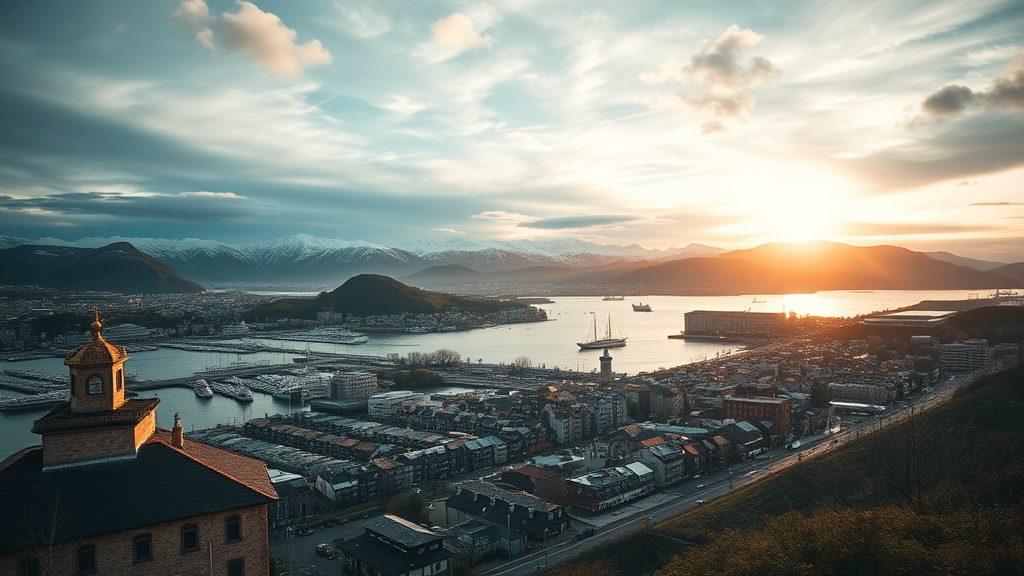
Otaru sits on the Sea of Japan coast, 35 minutes by train from Sapporo, Hokkaido’s capital (population 1.97 million). It has a functioning port, a historic canal district, and the kind of food culture that happens when a fishing city has 150 years of practice turning its catch into meals.
The sushi in Otaru is famous across Japan. Not tourist famous — famous among Japanese people who travel specifically to eat here. The triangular market (三角市場) near the train station sells crab, uni, and salmon roe at prices that would make a Manhattan restaurant owner weep. The conveyor-belt sushi places serve fish that was in the ocean this morning.
Beyond food: Hokkaido has four real seasons, each of which actually looks and feels different from the others. Spring is cherry blossoms along the canal. Summer is hiking in the mountains behind the city, festivals on the waterfront, and evenings cool enough to sleep with the windows open. Autumn is red and yellow leaves against slate-gray sky. Winter is five meters of snow, frozen canal water, and the ice lantern festival that turns the canal district into something out of a Miyazaki film.
Hot springs are everywhere. Asari Onsen is 20 minutes from central Otaru. Jozankei is 90 minutes. You can soak in volcanic mineral water while snow falls on your head and mountains fill the horizon, and it costs ¥800.
Healthcare works. I covered this in detail in Article 28, but the short version: you pay ¥1,500 to see a doctor. No appointment. No referral. No pre-authorization. Walk in, see the doctor, walk out with a prescription that costs ¥800 to fill. Dental, vision, specialists — same card, same price. The system is functional at a level that Americans in particular struggle to believe until they use it.
Public transit works. Trains run on time. Buses connect neighborhoods. Sapporo is 35 minutes away with departures every 15-20 minutes. New Chitose Airport — with direct flights to Tokyo, Osaka, Seoul, Taipei, Bangkok, and seasonal routes to further destinations — is 72 minutes from Otaru Station. You don’t need a car, though having one makes winter grocery runs easier.
And the safety. I’ve left my bicycle unlocked outside a convenience store in Otaru for three hours and it was there when I came back. I’ve walked home at 2 AM through residential neighborhoods where the loudest sound was my own footsteps. Japan’s violent crime rate is roughly one-twentieth of the United States. Otaru’s is lower than the national average. This isn’t a gated community enforcing safety through exclusion. It’s an entire society where leaving your door unlocked is still unremarkable.
The Personal Argument
I’ve lived in Morocco, Turkey, Thailand, Hawaii, Oregon, and a Volkswagen bus. I’ve paid rent on four continents. I’ve done the math on housing in a dozen countries, looking for the place where the cost of a home doesn’t require trading thirty years of your working life for a mortgage.
Otaru was the answer. Not the only answer — there are cheap houses in rural Portugal, in parts of the American South, in small Turkish cities. But Otaru offered something the others didn’t: first-world infrastructure at a developing-world price, in a country where the social contract still holds.
The American dream of homeownership — the one I was raised on in the ’70s and ’80s — runs about $420,000 now and requires a credit check, a 20% down payment or PMI, a 30-year mortgage at whatever rate the Fed feels like charging, property taxes that rise every year, insurance that rises faster, and a HOA that tells you what color your mailbox can be. At the end of those 30 years, you’ve paid the bank twice the purchase price in interest and you own a house that might be worth more than you paid, or might not, depending on whether the local economy held up and the neighborhood didn’t decline and the next housing crash didn’t hit before you sold.
My Otaru house cost less than a used Toyota Tacoma. I own it outright. The annual property tax is less than one month’s mortgage payment on a median American home. Nobody tells me what color my mailbox can be, mostly because I don’t have a mailbox — Japan uses a mail slot in the door.
I didn’t buy this house to get rich. I bought it to restructure my relationship with housing, location, and what a home costs. The calculus was simple: how much of my life do I want to spend paying for a place to live? In most Western countries, the answer is a third of your income for decades. In Otaru, the answer was one lump payment and $40 a month in property tax.
That freed up everything else. Time. Money. The ability to live somewhere because I wanted to, not because I was locked into a mortgage and a commute and a job that serviced the mortgage. The house didn’t make me rich. It made me free of a particular kind of debt, and that freedom turned out to be worth more than appreciation ever could.
The Honest Close
Otaru is not for everyone.
It’s cold. The winters are long and serious. If you hate snow, you will hate January.
It’s far. If your family is in Ohio and you need to see them regularly, a 14-hour flight is a real obstacle.
The language is hard. Japanese takes years to learn. You will feel stupid, often, in situations where you are not actually stupid. The gap between your intelligence and your ability to express it will frustrate you in ways that are hard to anticipate until you’re standing at a city hall counter trying to explain something simple and failing.
The houses need work. You will spend more on renovation than you planned. Something will go wrong that nobody predicted. The plumber will find a pipe that shouldn’t be there and you’ll spend a weekend trying to figure out where it goes.
But.
If you’ve read all thirty articles in this series and you’re still here, you already know whether this is for you. You’ve done the math. You’ve read the risks. You’ve looked at the pictures of the canal in winter and the sushi at the triangular market and the hot springs in the mountains, and something in you responded to the idea that a house in one of the most beautiful places on earth could cost less than a year’s rent in the city you currently live in.
If that idea won’t let go of you, here’s your next step. Go to the Otaru City akiya bank website. Use Google Translate. Browse the listings. Find three houses that interest you. Look them up on Google Street View. Then book a flight to New Chitose Airport, take the train to Otaru, and go look at them in person. Bring a notebook. Bring walking shoes. Bring a jacket — Otaru is always a little colder than you expect.
The house is there. It’s been waiting for someone to come fill it with life again. Thirty articles gave you the map. The rest is yours.