
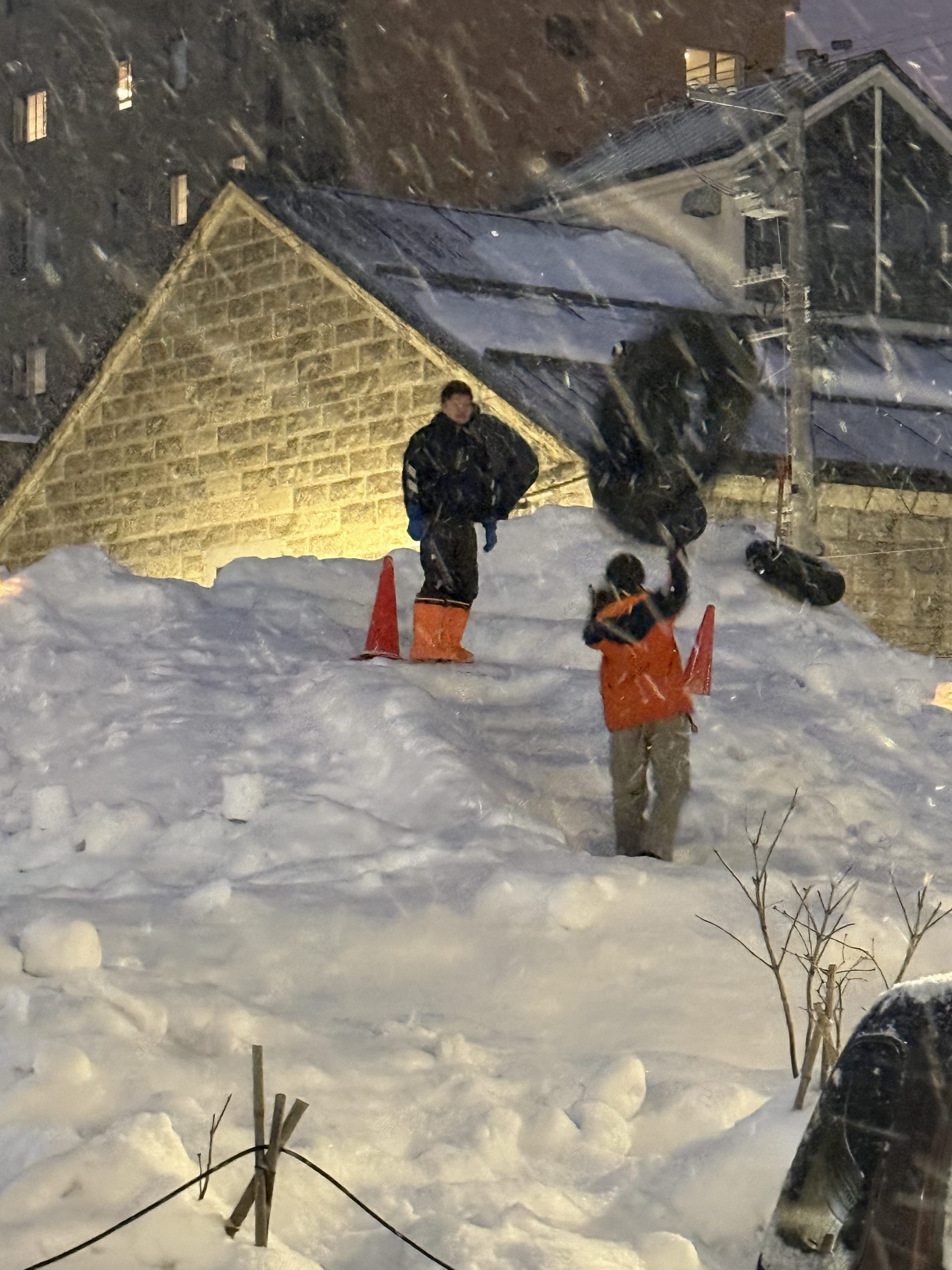
I didn’t plan to own property in Japan.
That’s probably the most honest thing I can say at the start of this. There was no spreadsheet, no investment thesis, no calculated read on emerging markets. Otaru happened the way a lot of things happen when you spend enough time moving through the world without a fixed destination — gradually, then suddenly, and with a logic that only becomes visible in retrospect.
The houses I own here are Showa-era. Built in the middle decades of the twentieth century, solid and unpretentious, the kind of construction that was meant to last rather than impress. Not the ancient farmhouse aesthetic that fills foreign real estate fantasy — no soaring beams, no thatched roof, no carefully preserved Edo-period joinery. Just well-made mid-century Japanese houses in a mid-sized Hokkaido port city that most people fly over on their way to Sapporo.
That turned out to be the point.
What Otaru Actually Is
Otaru had its moment a long time ago. In the Meiji and Taisho eras it was the commercial gateway to Hokkaido — a serious port city, economically significant, busy with herring fishing and trade and the kind of mercantile energy that builds stone warehouses along canals. Then the economy reorganized itself around Sapporo, and Otaru became what a lot of Japanese cities became: a place people were from, rather than a place people were going.
The canal district survived by accident. There wasn’t money to modernize it, so the warehouses and the waterways and the gas lamps simply remained. Citizens fought off a demolition plan in the 1980s, and what they saved turned out to be exactly what the next generation of tourists wanted — atmosphere, history, texture, the feeling of a Japan that predates the economic miracle and its aftermath.
Otaru is now one of Hokkaido’s top three tourist destinations, alongside Sapporo and Hakodate. Thirty minutes from Sapporo by express train. Kiroro ski resort thirty minutes in the other direction. Tenguyama practically in town. The Snow Light Path festival each winter draws people from across Japan and increasingly from well beyond it.
None of that was why I ended up here. But it’s relevant to what happens next.
The Long Shadow of 1989
To understand what Japanese property prices mean right now, you have to understand what happened to this country’s relationship with real estate over the past thirty-five years.
Japan built the largest asset bubble in recorded history through the late 1980s. Land prices in major cities tripled in a single decade. The stock market grew to represent nearly half of global equity markets. At the peak, all Japanese real estate combined was valued at roughly four times all American real estate — a country the size of California holding property worth more than four United States.
Then interest rates rose, and the whole architecture collapsed. Urban land prices fell more than 80% over the following decade. Households were left underwater on mortgages. Banks held mountains of bad debt. The economy entered what became known as the Lost Decades — two of them, in practice — and an entire generation learned the same lesson the hard way: property is not a safe asset, property is not a store of value, property is what ruins you.
That lesson became cultural. People stopped buying. Prices stayed low. The population peaked in 2008 and began declining. Fewer people, combined with a generation of buyers who had been burned or watched their parents get burned, produced an outcome that sounds almost absurd from the outside: Japan now has an estimated nine million vacant homes. Nearly one in seven residential properties, sitting empty. Some rural prefectures have vacancy rates above 20%.
Those empty houses are the direct inheritance of 1989. And the prices they carry — prices that reflect thirty-five years of a country’s collective reluctance to believe in property again — are what make Japan look the way it does to anyone arriving from outside that history.
The Template Already Exists
The story of how a forgotten Hokkaido location becomes an internationally recognized property market has already happened once, close enough to Otaru to be instructive.
Niseko was a quiet ski village. Australians found it in the early 2000s, discovered the snow — genuinely extraordinary, some of the driest powder in the world — and word spread in the way it spreads among people with money and flexibility. Foreign investment followed. For six consecutive years Niseko topped Japan’s national rankings for land price appreciation. Today prime properties there approach Tokyo prices. What was a bargain is now expensive, and even then remains undervalued relative to comparable European and North American ski destinations by most measures.
Furano followed the same arc at a slight delay. Still called the “Second Niseko” in investment circles, still at a fraction of Niseko’s pricing, still early enough that the first wave of buyers have seen meaningful appreciation without pricing out the next wave.
The pattern is consistent: foreigners arrive ahead of the crowd, prices are low by any international comparison, the weak yen makes them lower still, tourism infrastructure improves, the story spreads, money follows.
What’s Changing on the Ground in Otaru
Something is shifting here. It’s not dramatic yet — Otaru isn’t Niseko, the canal district isn’t Hirafu, nobody is building luxury branded residences overlooking the port. But the foreign presence that was essentially invisible a few years ago is becoming noticeable. You see it in the tourists first, then in who’s asking questions about property.
Hokkaido as a whole is seeing sharp increases in foreign buyer interest — up significantly year on year from English-speaking markets and accelerating from Southeast Asia, where proximity and currency dynamics make Hokkaido a realistic second-home destination rather than an exotic long-haul bet. Most of that attention lands on Sapporo. But Sapporo’s prices have risen accordingly. Otaru, thirty minutes away, with its own tourism draw and its own distinct character, is starting to register as the adjacent opportunity.
The average detached house here still costs around ¥14 million — roughly $100,000 USD at current exchange rates. For a house. In a city with a functioning tourism economy, established canal district, ski access in multiple directions, and a direct rail connection to Hokkaido’s largest city. The Showa-era houses that make up most of the residential stock aren’t glamorous, but they’re solid, they’re livable, and they’re priced as though nobody expects them to ever be worth more.
That expectation is a product of history. It may not survive contact with the present.
The Honest Version
I’m not making predictions and this isn’t financial advice. Japan’s property market has real friction for foreign buyers — most purchases require cash since mortgages are generally unavailable to non-residents, ownership doesn’t grant residency, renovation costs can be significant, and Hokkaido has been subject to ongoing discussion about tightening rules around foreign ownership in sensitive areas.
Otaru’s prices have been flat while Sapporo surged. The Niseko trajectory isn’t a law of nature. Cities with tourist appeal don’t automatically become investment destinations.
But I own Showa-era houses in a port city that most people still haven’t heard of, thirty minutes from a major airport hub, with ski resorts in both directions and a canal district that survived long enough to become valuable precisely because nobody thought it was worth saving.
I didn’t plan any of it. The logic became visible in retrospect.
That tends to be how these things work.