
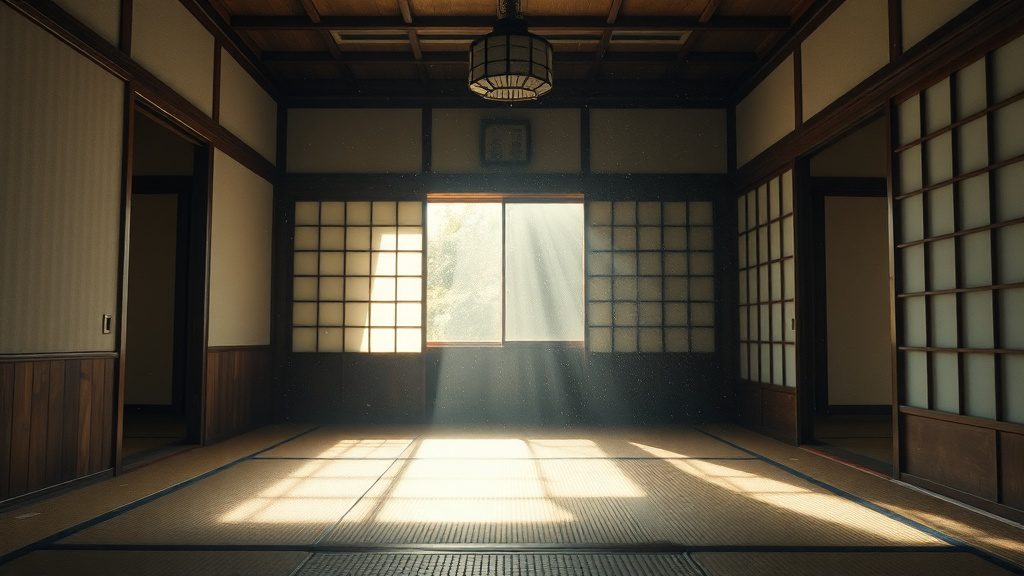
You buy a house in Otaru. You fly home. The house sits.
This is the reality for a significant number of foreign buyers in Japan. Maybe you bought with a five-year plan — retire there eventually, fix it up on annual trips, let it wait. Maybe you already spend winters in Hokkaido but live somewhere else the other eight months. Maybe you bought on impulse during a vacation and now you’re trying to figure out what “owning an empty house in Japan” actually means from 5,000 miles away.
It means obligations. It means weather. And in Hokkaido specifically, it means snow.
The Tax Situation Doesn’t Care Where You Sleep
Property taxes in Japan are assessed annually regardless of whether you live in the house, visit once a year, or haven’t set foot in the country since signing the contract. Two taxes apply:
Fixed Asset Tax (固定資産税): 1.4% of the assessed value. On a cheap akiya, this might be ¥30,000-60,000 per year. Not painful, but it’s due every year whether the house is occupied or empty.
City Planning Tax (都市計画税): Up to 0.3% of assessed value, depending on the municipality. Otaru charges this. Combined with the fixed asset tax, your annual bill on a property assessed at ¥3 million might run ¥50,000-60,000 total.
The problem for absentee foreign owners isn’t the amount — it’s the logistics. Tax bills arrive at the property address. In Japanese. If you’re in Portland or Berlin, you’re not opening that envelope.
The solution is a 納税管理人 (nozei kanrinin) — a tax agent. This is a person or entity based in Japan who receives your tax notices, handles payments, and communicates with the municipal tax office on your behalf. You file a simple designation form with city hall.
Your tax agent can be a friend in Japan, a property management company, your judicial scrivener, or a tax professional. Some buyers designate their real estate agent. There’s no licensing requirement for the role — it’s administrative, not advisory. They receive your bill, forward it or pay it, done.
If you don’t designate a tax agent and don’t pay? The municipality will send notices to the property, then eventually try to contact you at whatever address they have on file. Japan doesn’t immediately seize property for unpaid taxes, but liens accrue, and after enough years the property can go to a tax auction. Don’t let it get there. The annual bill on a cheap house is the price of a modest dinner out — set up the payment system and forget about it.
Hokkaido Weather Versus Your Empty House
Here’s where absentee ownership in Otaru diverges from absentee ownership in, say, Chiba or Kagoshima. Hokkaido has real winter. Otaru gets 5-6 meters of cumulative snowfall between November and March. Average January temperature is around -4°C. The ground freezes.
An occupied house handles this fine — you run the heat, you shovel the walk, you clear the roof when it gets heavy. An empty house absorbs the full force of a Hokkaido winter with nobody watching.
Snow load on roofs. This is the one that can kill a house. Accumulated snow on a roof in Otaru can reach 1-2 meters deep. Older houses were built for this — steep pitch, reinforced rafters — but age weakens everything. A neglected roof under heavy snow can sag, leak, or in extreme cases collapse. I’ve seen it in Otaru neighborhoods: a house that looks fine in August with the entire second floor caved in by March.
Snow removal from roofs is a thing people do here. Homeowners climb up with shovels, or hire companies with crews and ladders. If you’re not here, you need someone doing this for you during heavy accumulation years. Not every winter requires it — some are lighter — but the bad years are serious.
Frozen pipes. Water left in pipes in an unheated Hokkaido house will freeze. Frozen pipes crack. Come spring, the ice melts, and water goes everywhere — walls, floors, ceilings, into the foundation. I’ve seen houses where a single winter of frozen pipes caused more damage than the previous forty years combined.
The prevention is straightforward. Either keep minimum heat running all winter (expensive — figure ¥15,000-30,000/month in heating costs for an empty house, depending on size and insulation), or winterize the plumbing properly: drain every pipe, every trap, every toilet, every water heater. Shut off at the main. Add antifreeze to drain traps. This is standard practice in cold climates worldwide, but if you’ve never owned property in a freezing climate, you might not think of it until the damage is done.
Mold. Hokkaido’s summers are humid. Not Southeast Asia humid, but humid enough that a closed-up house with no air circulation develops mold. Tatami is particularly vulnerable — organic material in a stagnant humid environment is a petri dish. Fusuma (sliding paper doors) warp. Wooden surfaces get that fuzzy gray bloom.
Opening windows occasionally or running a dehumidifier helps, but both require someone to be there — or at least someone to visit periodically during summer.
Pest intrusion. Mice, raccoon dogs (tanuki), and in Hokkaido specifically, sometimes foxes or brown bears in rural areas. A sealed house is fine. A house with a broken window, a gap in the foundation vent, or a missing soffit panel becomes habitat. Animals don’t just occupy space — they chew wiring, contaminate surfaces, and leave the kind of damage that renovation budgets don’t anticipate.
Management Options
If you’re not going to be there for months at a time, someone needs to check the house. Here’s the spectrum:
Property management companies. They exist in Otaru and Sapporo. Basic services — monthly or bi-monthly visits, exterior check, mail collection, reporting — run ¥5,000-20,000 per month depending on the level of service. Some offer add-ons: interior airing, garden maintenance, snow removal coordination. A full-service arrangement for an absentee foreign owner might run ¥15,000-20,000/month — ¥180,000-240,000 per year.
Is it worth it? On a ¥3 million house, that’s 6-8% of the purchase price annually. On a ¥10 million house, the math is more comfortable. You’re paying for peace of mind and the prevention of catastrophic neglect — a frozen pipe that floods the house will cost more than several years of management fees.
Neighbor arrangements. I’ve heard of this working well and working terribly. If you have a neighbor you trust and who’s willing, a casual arrangement — they keep an eye out, let you know if something looks wrong, maybe grab your mail — can cover the basics. The risk is that “keeping an eye out” doesn’t include climbing on the roof after a heavy snow or checking for mold in the back closet. And the obligation is one-directional — you’re asking for ongoing favors with no structure.
Some buyers formalize this with a small monthly payment, which turns it into an informal management arrangement. That can work. Just make sure expectations are clear on both sides.
Seasonal check visits. Some owners fly in twice a year — once before winter to winterize, once in spring to open up and assess. If you’re visiting Japan anyway, this doubles as a trip. Budget ¥50,000-100,000 per visit for flights, transport, and supplies, plus whatever maintenance you handle during the visit.
This is what I’d consider the minimum for a Hokkaido property. Twice a year, in person or by proxy, with specific seasonal tasks each time.
Snow Removal
This gets its own section because it’s the single biggest operational concern for absentee Otaru owners.
Snow removal in Hokkaido means three things: clearing your sidewalk/access path, clearing your driveway/parking area, and (in bad years) clearing your roof. Municipalities expect all three. Some Otaru neighborhoods will fine homeowners — or more accurately, send very pointed notices — for unshoveled sidewalks that force pedestrians into the street.
If you’re not there, this needs to be contracted out. Budget ¥50,000-150,000 per season for ground-level snow removal, depending on lot size, access difficulty, and how frequently they come. Roof snow removal, when needed, is additional — a crew to clear a residential roof runs ¥30,000-80,000 per visit, and you might need it once or twice in a heavy year, or not at all in a light one.
Some property management contracts include snow removal coordination. Some don’t. Ask specifically.
Mail, Utilities, Insurance
Mail. Japan Post will hold mail for up to 30 days with a temporary hold request. Beyond that, undeliverable mail gets returned to sender. If you’re gone for months, you need a forwarding arrangement — either to your tax agent, your property manager, or a mail-handling service. Important documents (tax bills, insurance renewals, municipal notices) arrive by mail. Missing them creates problems that compound.
Utilities. You have two options for an extended absence in winter:
Keep minimum utilities running. Gas and electric stay on, heat set low enough to prevent freezing (around 10°C in the living spaces — the pipes in exterior walls need the ambient warmth). Water stays on but faucets are closed. This costs money every month you’re gone — maybe ¥20,000-35,000/month in deep winter — but the house stays functional.
Full winterization. Shut off water at the main, drain all pipes and appliances, turn off the water heater. Gas and electric can be suspended. The house goes cold — truly cold, below freezing for months. This saves on utility costs but means recommissioning everything when you return, and it assumes the winterization was done perfectly. One missed trap, one undrained pipe section, and you get the ice-crack-melt-flood sequence.
Most property managers can do either approach. Discuss it before your first absence.
Insurance. Fire and disaster insurance is advisable for any property, occupied or not. But here’s the catch: an unoccupied house is a different risk category. Inform your insurer that the property is vacant for extended periods. Some policies exclude or limit coverage for properties unoccupied beyond 60 or 90 days. Others adjust the premium upward. Either way, don’t assume your insurance covers a house you haven’t visited in a year — check the terms.
Earthquake coverage is separate in Japan and added as a rider. Whether you want it depends on your risk tolerance and the property value. On a ¥3 million house where the structure is valued at zero anyway, the calculus is different than on a fully renovated ¥15 million property.
The Honest Math
Here’s what absentee ownership of a cheap Otaru akiya actually costs per year, beyond the purchase price:
- Property taxes: ¥50,000-70,000
- Basic property management: ¥60,000-240,000
- Snow removal: ¥50,000-150,000
- Minimum winter utilities (if keeping heat on): ¥80,000-140,000
- Insurance: ¥20,000-50,000
- Miscellaneous repairs/maintenance: ¥50,000-100,000
Total annual carrying cost: roughly ¥310,000-750,000 ($2,100-$5,200)
That’s $175-430 per month to own a house in Japan while living somewhere else. Not free, but not ruinous either. Whether it makes sense depends on your plans, your timeline, and how much you’d pay for the option of having a place in Hokkaido whenever you want it.
What Actually Happens to Neglected Houses
I’ll be direct about this because the romanticized version of “I bought a house in Japan and it’s just sitting there waiting for me” omits the ugly part.
An unattended house in Hokkaido deteriorates faster than in warmer, dryer climates. The freeze-thaw cycles stress foundations and roofing. The humidity grows mold. The snow loads push structures. The vegetation — Hokkaido grows fast in summer — reclaims yards within a single season and starts working on the house itself within two or three.
Drive around any Otaru neighborhood and you can see the progression. Year one of vacancy: the yard gets shaggy. Year two: vines reach the eaves. Year three: the paint peels, a window cracks, something small breaks that would have been an easy fix if someone had noticed. Year five: structural problems that started as cosmetic problems. Year ten: a shell.
I’ve watched it happen to houses on my own street. The owners left, nobody came back, and Hokkaido did what Hokkaido does.
This isn’t an argument against buying. It’s an argument against buying and then ignoring what you bought. Budget for management, or budget for visits, or budget for both. The annual cost of keeping a house alive is a fraction of the replacement cost when it dies.
An empty house in Hokkaido is a bet against entropy. Entropy is patient, and it doesn’t take winters off.