
The Long-Neck Kayan of Pai: Culture, Coils, and Contested Tourism
In the hills of northern Thailand, near the backpacker town of Pai in Mae Hong Son Province, small villages draw visitors curious about one of Southeast Asia’s most visually distinctive traditions: women wearing heavy brass coils that appear to elongate their necks. These are the Kayan people—often called the “Long Neck Karen” in tourist materials—whose presence in Thailand is the result of conflict, displacement, and the complicated economics of cultural tourism.
Who Are the Kayan?
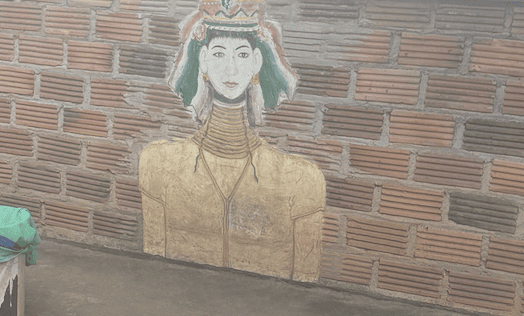
The Kayan (specifically the Kayan Lahwi subgroup) are a Tibeto-Burman people from Kayah State (also known as Karenni State) and adjacent areas of eastern Myanmar. They form part of the broader Red Karen or Karenni ethnic group. The term “Padaung,” sometimes used by outsiders, is a Shan-language label that many Kayan themselves prefer to avoid.
In the late 1980s, fighting between Myanmar’s military and ethnic armed groups displaced thousands. Several hundred Kayan crossed into Thailand and settled near the border in Mae Hong Son Province. Unlike many other refugees who entered formal camps, some Kayan families were placed in villages that quickly became accessible to tourists. Today, small communities remain in and around the Pai area and nearby sites such as Huay Pu Keng (the largest), Huai Sua Tao, and others. Estimates of the Kayan population in these tourist-accessible villages have hovered in the low hundreds.
The Brass Coils: Appearance Versus Reality
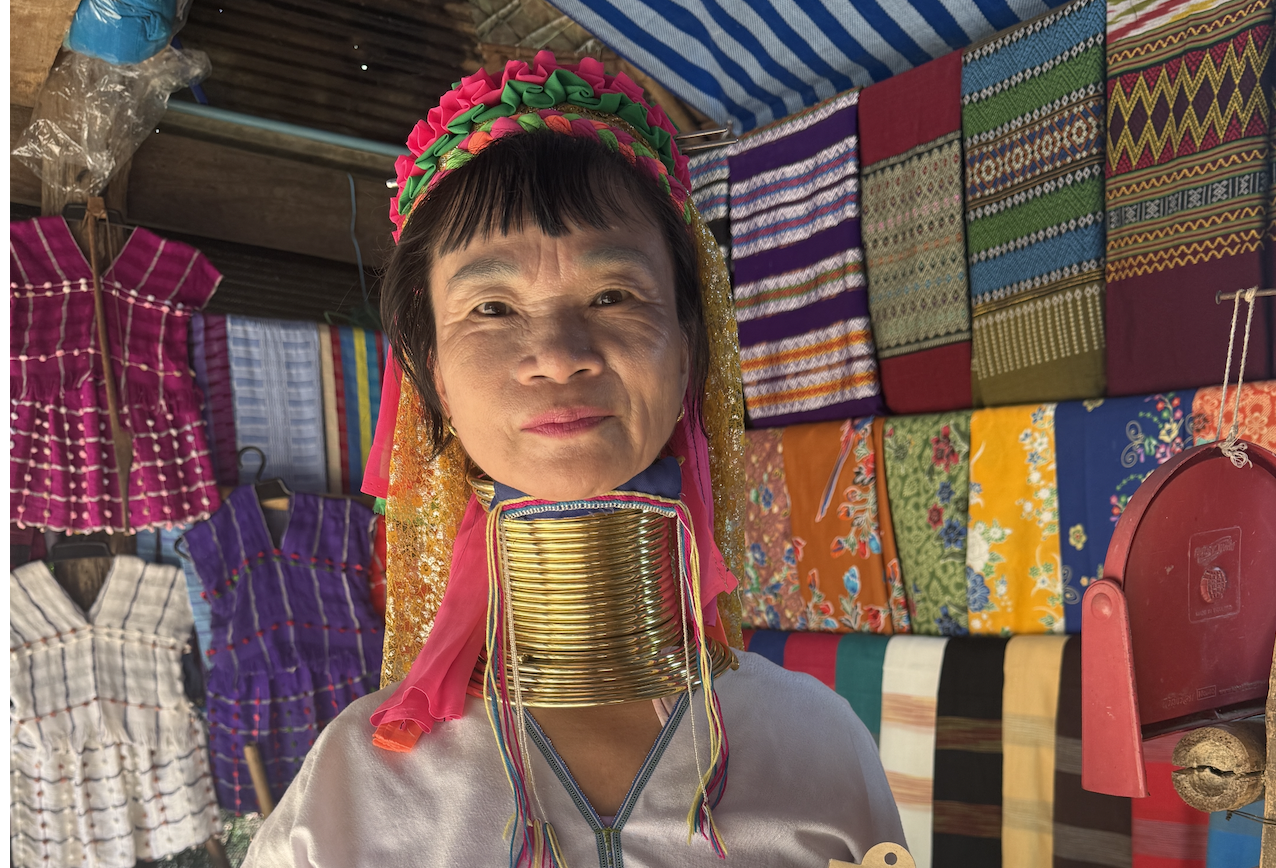
The most famous feature of Kayan culture is the neck coils worn by many women. Girls typically begin wearing them around the age of five. Over the years, additional turns or longer coils are added. Adult women may wear sets weighing several kilograms; some also wear coils on their arms and legs.
Contrary to popular belief, the coils do not stretch the neck vertebrae. The weight pushes down on the collarbone and compresses the upper ribcage, creating the optical illusion of a much longer neck. The neck itself remains the same length; the deformation of the shoulder girdle produces the dramatic visual effect.
Explanations for the custom vary. Some link it to beauty ideals and cultural identity. Others reference mythological origins, such as descent from a long-necked dragon, or older protective stories. In practice, the coils have become both a marker of group identity and, in the Thai villages, a central element of the tourism economy.
Villages Near Pai
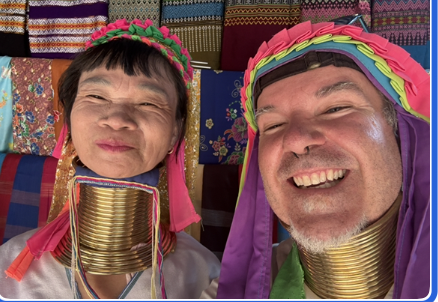
Pai itself is a small, atmospheric town popular with travelers. From there, visitors can reach nearby Kayan settlements relatively easily—sometimes by scooter, songthaew, or short boat trip along the Pai River. These villages typically feature traditional wooden houses, weaving looms, and stalls selling textiles, jewelry, and souvenirs made by the residents. Entrance fees are common (often around 100 baht in smaller sites near Pai). Visitors can observe daily life, speak with residents (language barriers permitting), and purchase handmade goods directly.
Huay Pu Keng, located further along the Pai River and accessible by boat, is frequently cited as the largest and more community-oriented of the settlements. Other sites closer to Mae Hong Son town or Chiang Mai and Chiang Rai operate on a more commercial model.
Tourism, Livelihoods, and Ethical Questions
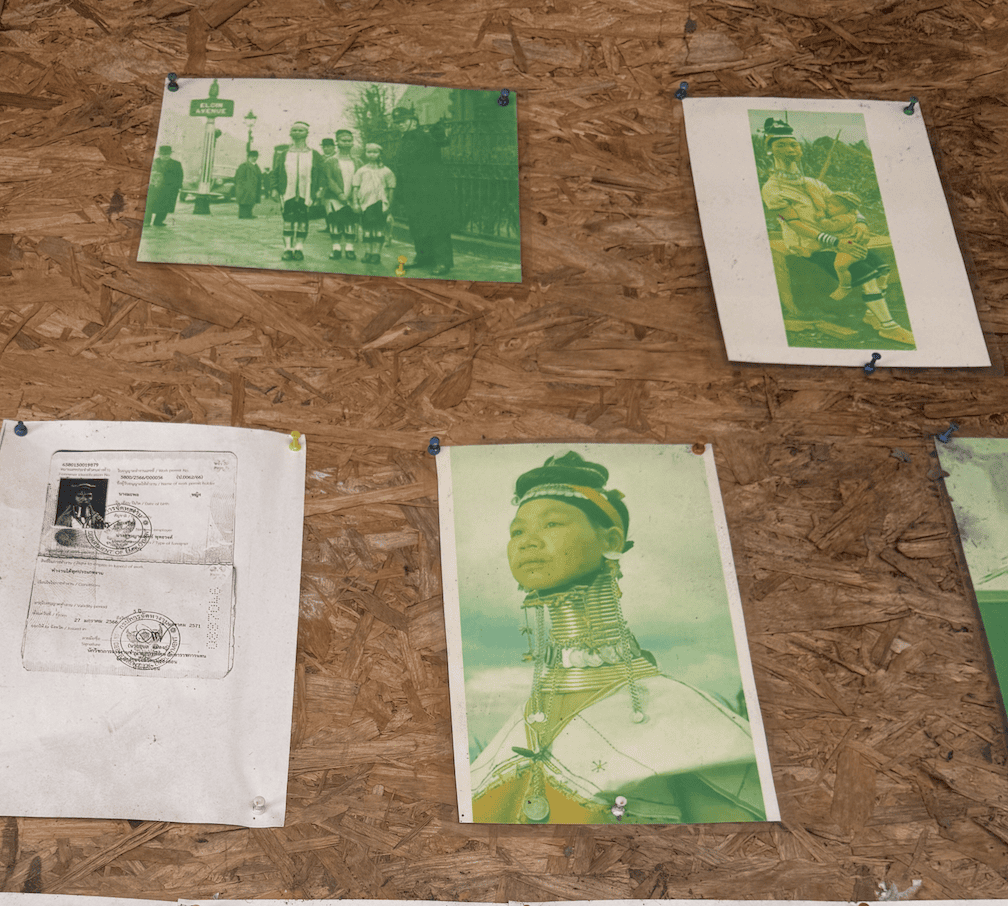
The presence of Kayan villages in Thailand has long been debated. Critics describe some sites as “human zoos,” arguing that refugees with limited legal rights and restricted freedom of movement are displayed for profit, with tour operators and local intermediaries capturing much of the revenue. The women’s coils, once a private cultural practice, have become a primary attraction that sustains the villages economically.
Supporters and some residents counter that tourism provides one of the few viable sources of income in a context of legal limbo. Direct purchases of handicrafts and community-managed approaches can put money into local hands. During the COVID-19 pandemic, when international tourism collapsed, the economic vulnerability of these communities became especially clear.
The situation remains complex. Many Kayan women continue the coil tradition with a mixture of cultural pride and economic necessity. Younger generations sometimes face choices about whether to continue wearing the coils. Outside Myanmar, where the practice also persists in some communities, the Thai villages exist at the intersection of heritage preservation, refugee status, and the global tourism market.
Visiting Responsibly
Those who choose to visit are generally advised to treat the experience as an encounter with people rather than a spectacle. Buying crafts directly from the makers, asking permission before photographs, and approaching conversations with respect help shift the dynamic away from pure exhibition. Independent travel rather than large packaged tours can reduce the role of middlemen.
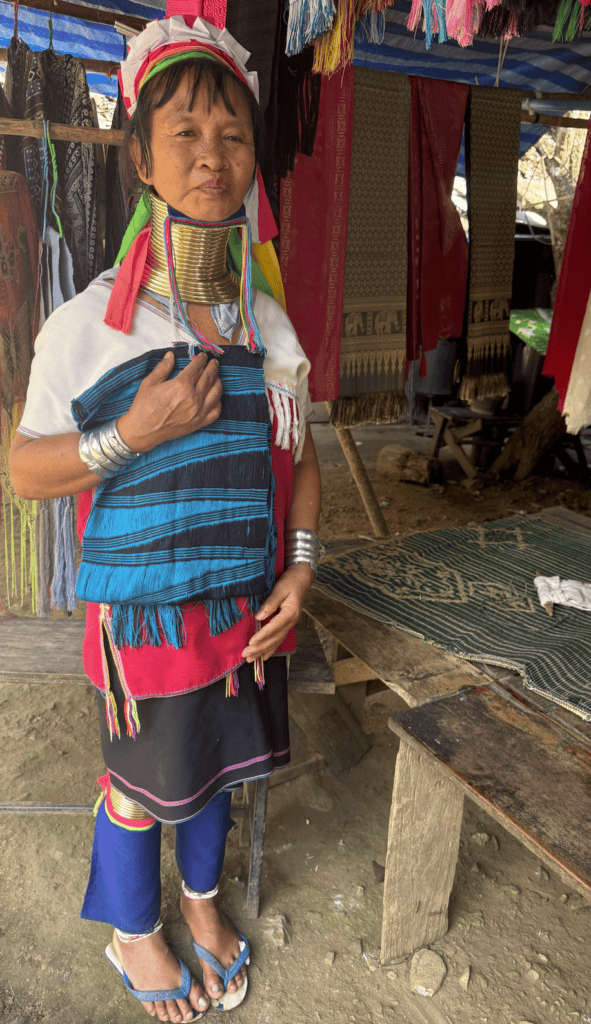
The Long-Neck Kayan of the Pai area represent a living cultural tradition shaped by history, displacement, and adaptation. Their coils remain one of the most recognizable visual symbols in northern Thailand’s ethnic landscape—an appearance that continues to draw attention while raising ongoing questions about culture, consent, and commerce.