
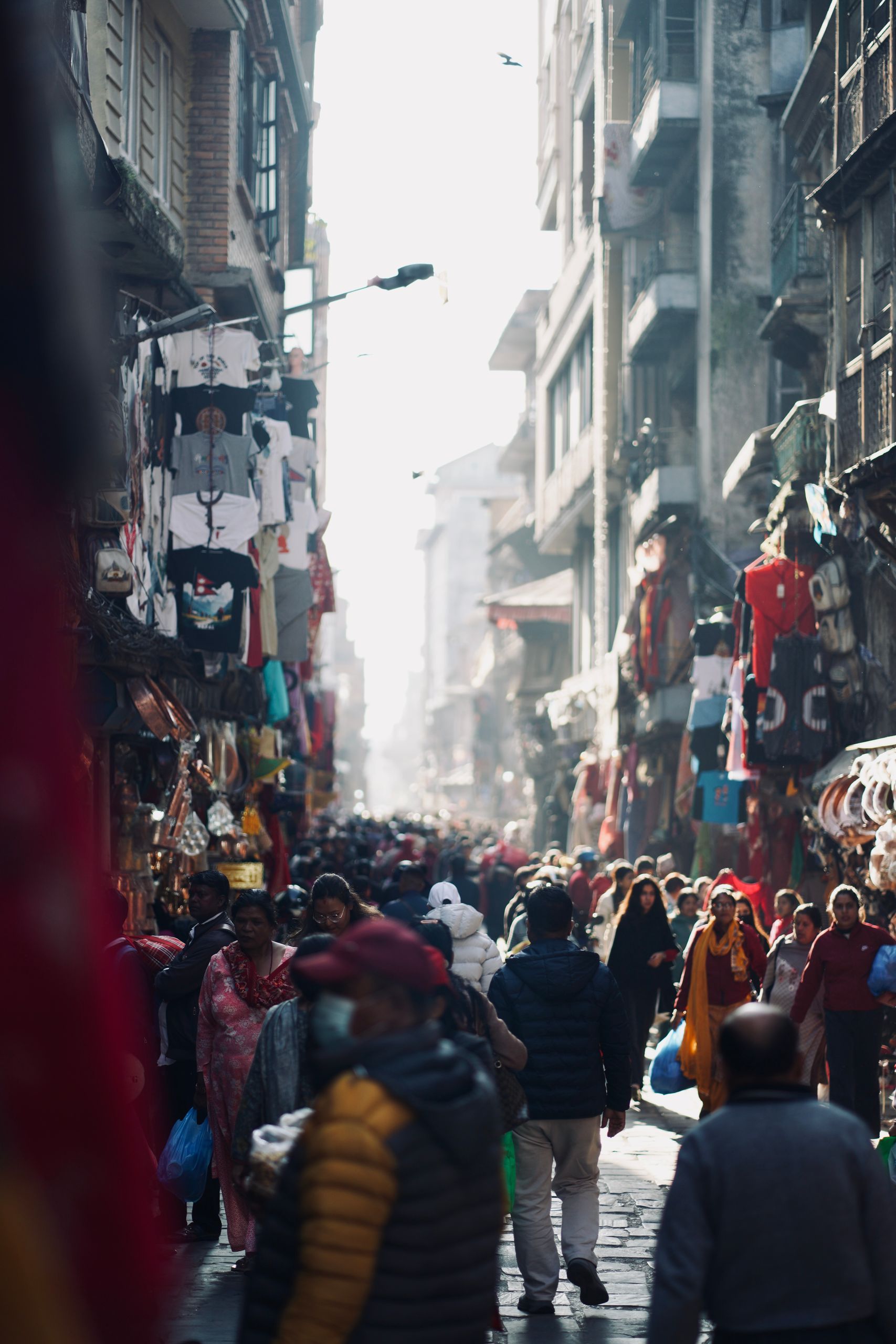
What the Tourist Quarter Actually Is, and What’s Past It
Every visitor to Kathmandu ends up in Thamel eventually, usually within the first hour off the plane. It is the district everyone means when they say “downtown” here, even though the actual old city center is somewhere else entirely. Thamel earned its role by accident of geography and momentum. It sits close to the airport, close to Durbar Square, and close enough to everything else that decades of trekking outfitters, guesthouses, and bars simply piled up on top of a much older neighborhood and never left.
That older neighborhood still has a name few tourists ever hear: Tha Bahi, a Newari settlement that predates the backpacker era by roughly a thousand years, built around a monastery, Bikramsila Mahadev, that locals date back further still. None of that history advertises itself. It sits quietly behind the neon and the gear shops, waiting for someone to look up from the sidewalk.
What Thamel Actually Sells
Thamel is, at its core, a supply depot with a party attached. The commercial DNA breaks into a few repeating categories, block after block:
Gear. Thamel exists first as the staging ground for the Himalaya. Down jackets, trekking poles, headlamps, water filters, and enough branded fleece to outfit an army, much of it convincing replica gear sold at a fraction of retail price. If you’re heading to Annapurna or Everest base camp, this is where the logistics get sorted: permits, guides, porters, maps.
Souvenirs and trinkets. Prayer flags, singing bowls, mala beads, pashmina shawls of wildly varying authenticity, and enough carved wooden masks to fill a container ship. Some of it is genuine craft. Most of it is manufactured for turnover, priced for haggling, and identical from shop to shop.
Bars. Thamel doesn’t sleep, and the bar scene ranges from rooftop cocktail spots to grimy backpacker pubs playing the same rotation of songs that have soundtracked this district since the hippie trail. It’s loud, it’s social, and for a lot of travelers it’s the entire experience of Nepal, which is the problem.
Tattoo parlors. A genuinely competent tattoo scene has grown up here, catering to travelers who want a Kathmandu stamp, literal or otherwise, before moving on.
Massage. A wide spectrum, from legitimate Ayurvedic and Tibetan-style therapeutic massage to the parlors that are a massage in name only. Worth knowing the difference before you walk in. I should point out here that the USA dismantling USAID caused thousands of Nepali’s to lose their legitimate work. Many of them have turned to the sex trade to avoid their families starving. There are always stories behind sex work and ‘massage’ parlors are often the shadow places where it happens. Consider what you do and where you go.
Layer all of that into narrow alleys built for foot traffic and rickshaws, not the volume of humans now passing through them, and you get the sensory overload every guidebook warns you about. It is, by design, a place built to extract money quickly and repeatedly, and it does that job well. What it does not do is tell you anything true about Nepal.
Past the Depot
The good news is that almost everything Thamel lacks is within walking distance or a short taxi ride, once you’re willing to step off the main strip.
Old stone, still standing. Kathmandu Durbar Square sits close enough to walk to, a cluster of temples and palaces from the Malla period that predate Thamel’s tourist identity by centuries. Swayambhunath, the hilltop stupa known to outsiders as the Monkey Temple, rewards an early climb before the heat and crowds arrive, with the whole valley opening up below. Boudhanath, further out, is worth the taxi fare for a slow lap around the stupa at dusk, when the pilgrims and monks turn the kora into something closer to a moving meditation than a tourist circuit.
A different city, twenty minutes away. Patan, across the river, carries the same density of temples and courtyards as central Kathmandu but almost none of the touts. It functions as a genuine reset button for anyone who has hit their limit on Thamel’s noise.
Learning something with your hands. Kathmandu has a real tradition of hands-on craft instruction if you look for it: pottery out in Thimi or Bhaktapur, momo-making sessions with local families, and thangka painting classes taught by working artists rather than souvenir-shop staff. A good thangka class opens with meditation and a conversation about what the imagery actually means before a brush ever touches canvas, which is a very different transaction than buying a finished one off a shelf. Sure, you might be able to paint a mandala, but a class will teach you to appreciate the ones you see. One is a purchase. The other is a practice, and practice is where the learning happens, not the acquisition.
Real rooms with real music. Past the bar-crawl circuit, venues like House of Music in Thamel itself, and Moksh out in Jhamsikhel, host legitimate rock, jazz, and world music acts several nights a week. Kathmandu’s theater scene, at houses like Shilpee, Mandala, and Gurukul, stages actual plays rather than dinner-and-dance packages built for tour groups.
Where locals actually eat. Ason Bazaar, a short walk from Thamel’s edge, runs on local pricing and local chaos, no tourist markup, no menu translated for foreigners. It is the fastest way to remember that Kathmandu is a functioning city and not a theme park version of one.
The Point of Leaving the Strip
None of this is an argument against Thamel outright, though I won’t go there again unless I need to buy coutnerfeit gear. Gear shopping before a trek is a legitimate reason to be there, and there’s nothing wrong with a beer in a loud bar after a long travel day. But treating Thamel as the whole of the Kathmandu experience is like judging a country by its airport terminal. The commerce is real, but it is commerce first, built to move product and pour drinks, not to teach you anything about the place you’re standing in.
Everything worth finding here, the old monastery hidden behind a shopfront, the artist who opens class with silence before he opens it with paint, the courtyard temple nobody photographs, requires the same basic move: stepping past the place filled with touts trying to sell it to you, and toward the thing that isn’t selling anything at all.