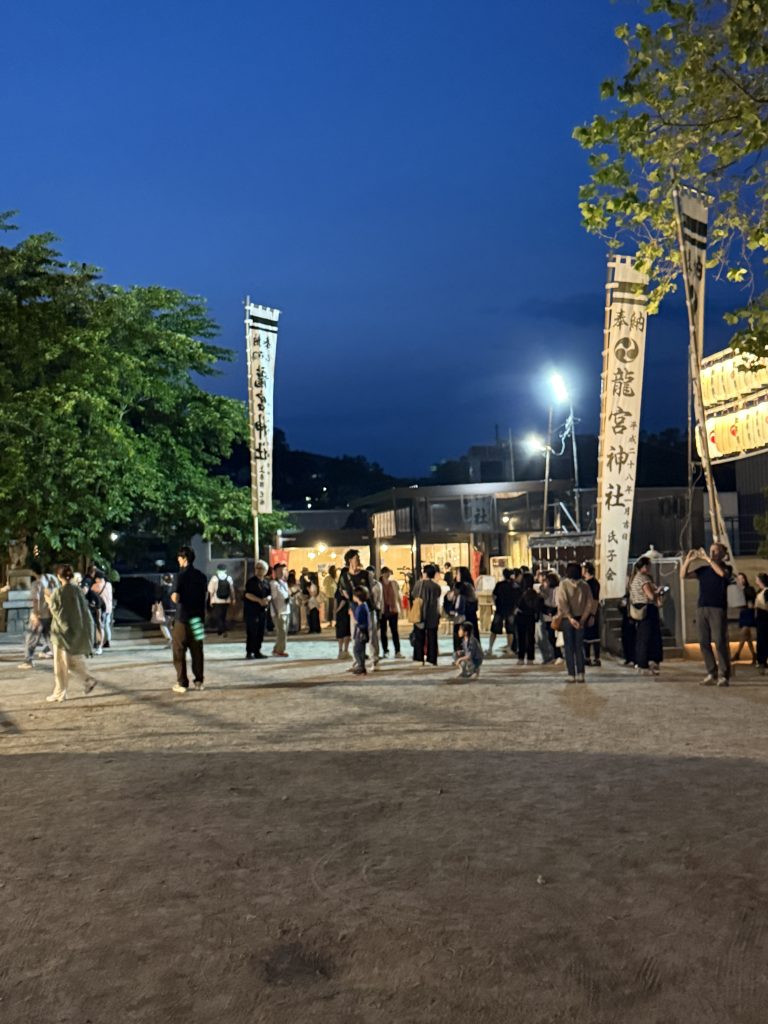
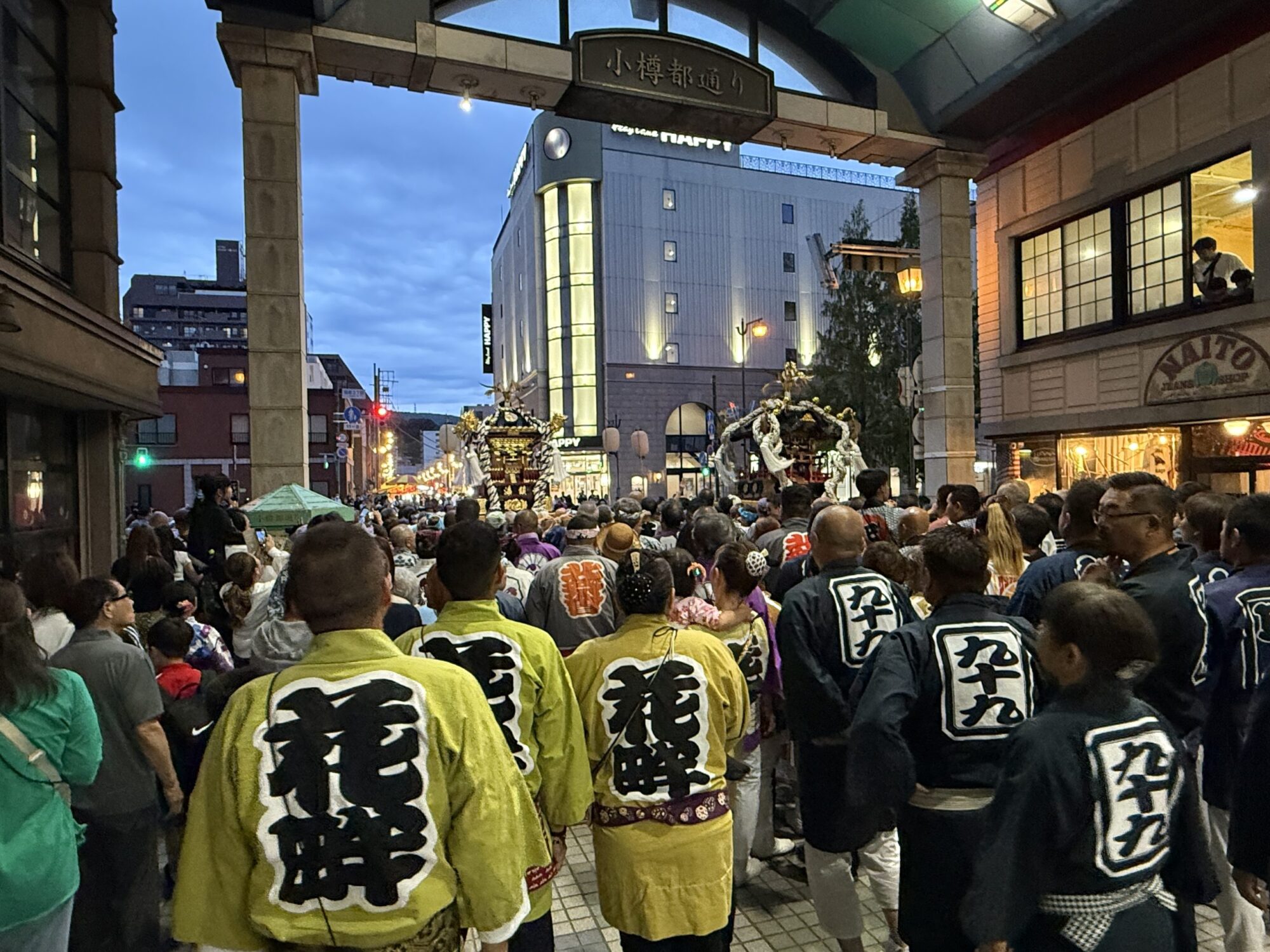
On Sunday, June 21, 2026 — the summer solstice — the historic streets of Otaru, Hokkaido, pulsed with the rhythmic chants, drumming, and vibrant energy of the Ryūgū Jinja Reitaisai (龍宮神社例大祭). One of Otaru’s Three Major Festivals, this year’s event carried special weight as the shrine marked its 150th anniversary (創祀150年), blending deep Shinto tradition with a rare maritime spectacle.
The Shrine and Its Kami
Nestled in Inaho 3-chome, just minutes from Otaru Station, Ryūgū Jinja (Dragon Palace Shrine) was founded in 1876 (Meiji 9) by the influential statesman and Hokkaido pioneer Enomoto Takeaki. Originally established to support the spiritual needs of settlers and fishermen in this bustling port town, the shrine enshrines Watatsumi-no-kami (also known as Wadatsumi or Ōwatatsumi-no-kami) — the ancient sea deities who govern the depths of the ocean.
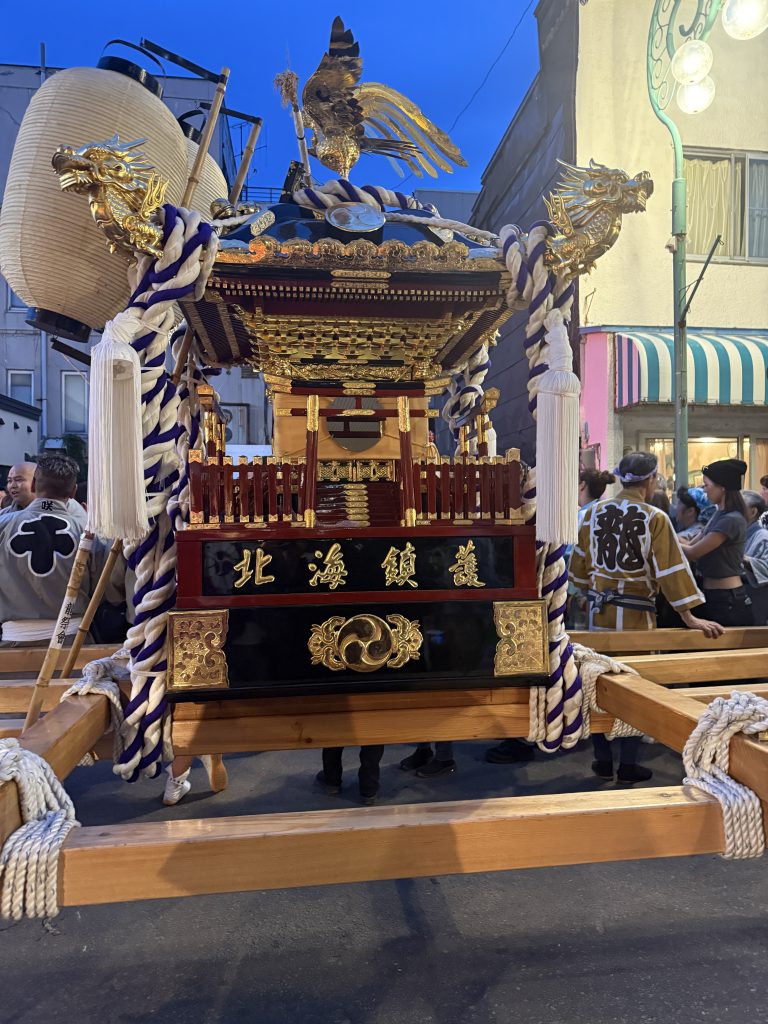
Specifically, it honors the three Wadatsumi deities (Sokotsu, Nakatsu, and Kamiotsu Wadatsumi) alongside associated gods like Toyokehime-no-Mikoto. In Japanese mythology, Watatsumi is the powerful sea god, often linked to the dragon king Ryūjin, residing in the mythical underwater palace Ryūgū-jō. For Otaru’s maritime community, the kami represents navigational safety, abundant catches (豊漁), prosperous shipping and business, and overall good fortune. The shrine’s location and dedication perfectly embody the soul of this historic harbor city.
The Heart of the Festival: Mikoshi and the Carrying
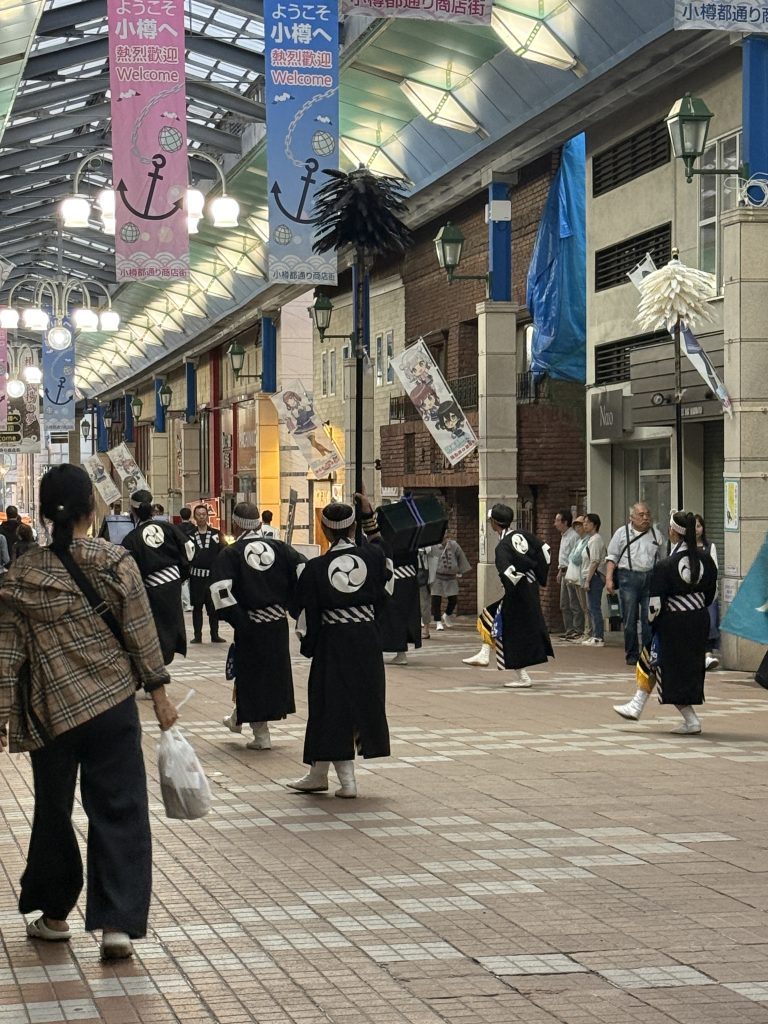
The festival’s undeniable highlight is the mikoshi procession (神輿渡御). On June 21, participants — many in colorful yukata or festival happi coats — from local groups like the Otaru Ryūsaikai (小樽龍祭會) and enthusiasts across Hokkaido shouldered the heavy portable shrine.
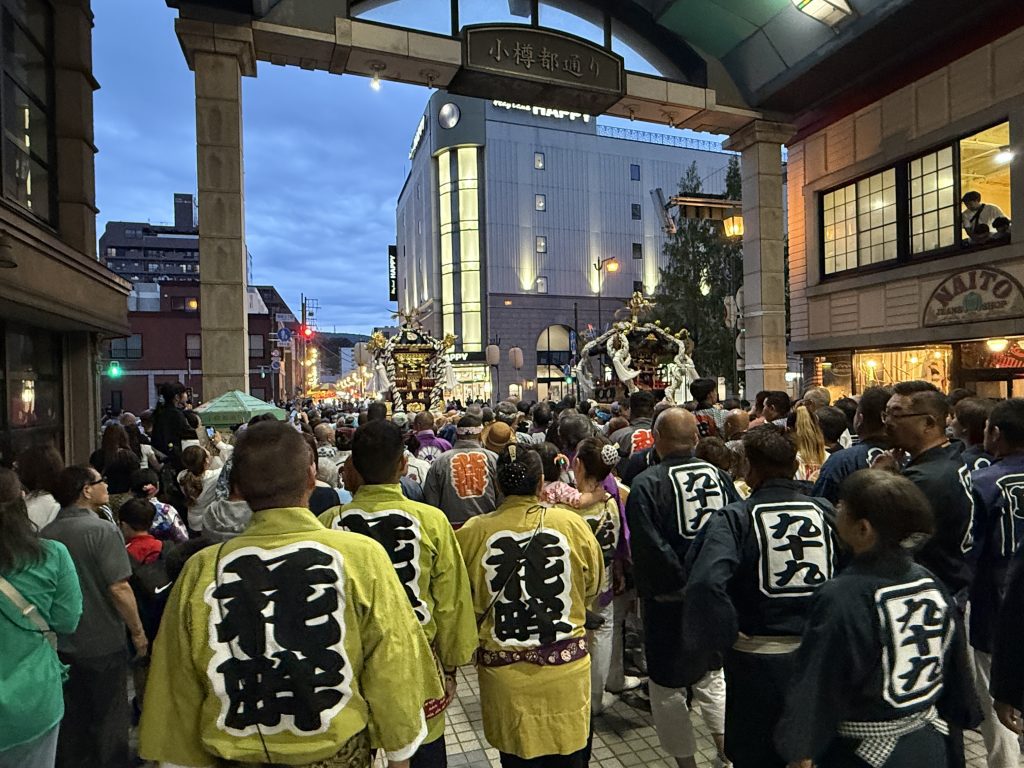
This “carrying” is far more than a parade. During the Reitaisai, the kami’s spirit is ritually transferred into the mikoshi, which is then paraded energetically through the streets. The rhythmic shaking and vigorous movements (神輿振り) purify the area, bless neighborhoods and businesses, and allow the deity to interact directly with the community. Drumming (notably the powerful shio-daiko or tide drums), cheers, and coordinated steps create an electric, communal atmosphere that draws spectators and participants alike.
The 150th Anniversary Maritime Procession
This year’s standout event was the rare maritime procession (海上渡御), revived for the first time postwar as part of the 150th anniversary celebrations. In the late afternoon (around 4:30 PM), the mikoshi was loaded onto boats at the harbor near Ryūgū Bridge and Otaru Canal area. Accompanied by priests, miko (shrine maidens) performing sacred kagura and Dragon God dances, and support vessels including a water-spraying fireboat, the procession cruised the harbor and canal waters.
This sea-borne ritual powerfully reaffirmed the shrine’s connection to Watatsumi and Otaru’s identity as a port town, drawing crowds to the waterfront for a uniquely photogenic and spiritual experience.
Other Festival Highlights
Throughout the three-day event (June 20–22), the area around Ryūgū-dōri and Liangchuan (梁川) Street came alive with:
- Matsumae Kagura — a nationally designated important intangible folk cultural property, featuring elegant traditional sacred dances.
- Children’s performances, Yosakoi Soran elements, and other cultural displays.
- Bustling food stalls (屋台) offering classic festival fare amid the shopping streets.
The festival’s timing on the summer solstice — the longest day of the year — added a symbolic layer of light and vitality to the celebrations.
A Living Tradition
The 2026 Reitaisai exemplified how Otaru’s Ryūgū Jinja continues to serve as a spiritual anchor for the community while welcoming visitors. Whether drawn by the thunderous energy of the mikoshi carriers, the serene beauty of the maritime procession, or the simple joy of summer festival vibes in a picturesque canal town, attendees experienced a profound connection to Hokkaido’s maritime heritage and Shinto traditions.
For locals and tourists alike, it was a memorable day honoring the sea god’s blessings on Japan’s northern shores. If you missed it this year, mark your calendar for future Junes — Otaru’s summer festivals are always worth the journey.