
Understanding Rox, Tox, and the Mirror
Not long ago, I sat on a rug with Tibetan monks in Choglamsar before sunrise and listened to horns, drums, and cymbals pull a room of monks through a ceremony I didn’t understand a word of. After that experience, I traced how that ceremony came to look the way it does: a Vajrayana tantric practice, built on a Mahayana bodhisattva foundation, wrapped around an old Bon animist substrate, itself one branch of a tree that split and re-split for two and a half thousand years, absorbing Hinduism, brushing against Sufism, occasionally colliding hard enough with Christianity and Islam to leave permanent marks on both.
Here’s the question underneath all of that: if every one of these traditions is doing roughly the same thing, teaching people to tell what helps from what harms, and then act on it, why do you need the institution at all? Why do you need the hierarchy, the doctrine about what happens after you die, the fee, the robe, the guru, the specific God?
That’s the question Baoism starts from.
The BaoisT Claim
Baoism’s premise is that every one of us is already capable of determining good from bad, Rox from Tox, and that this judgment isn’t limited to your own life. It applies across every scale that matters: what you do to yourself, what you do to the people around you, what you do to animals, to the planet, and, if you want to think that far out, to the universe itself.
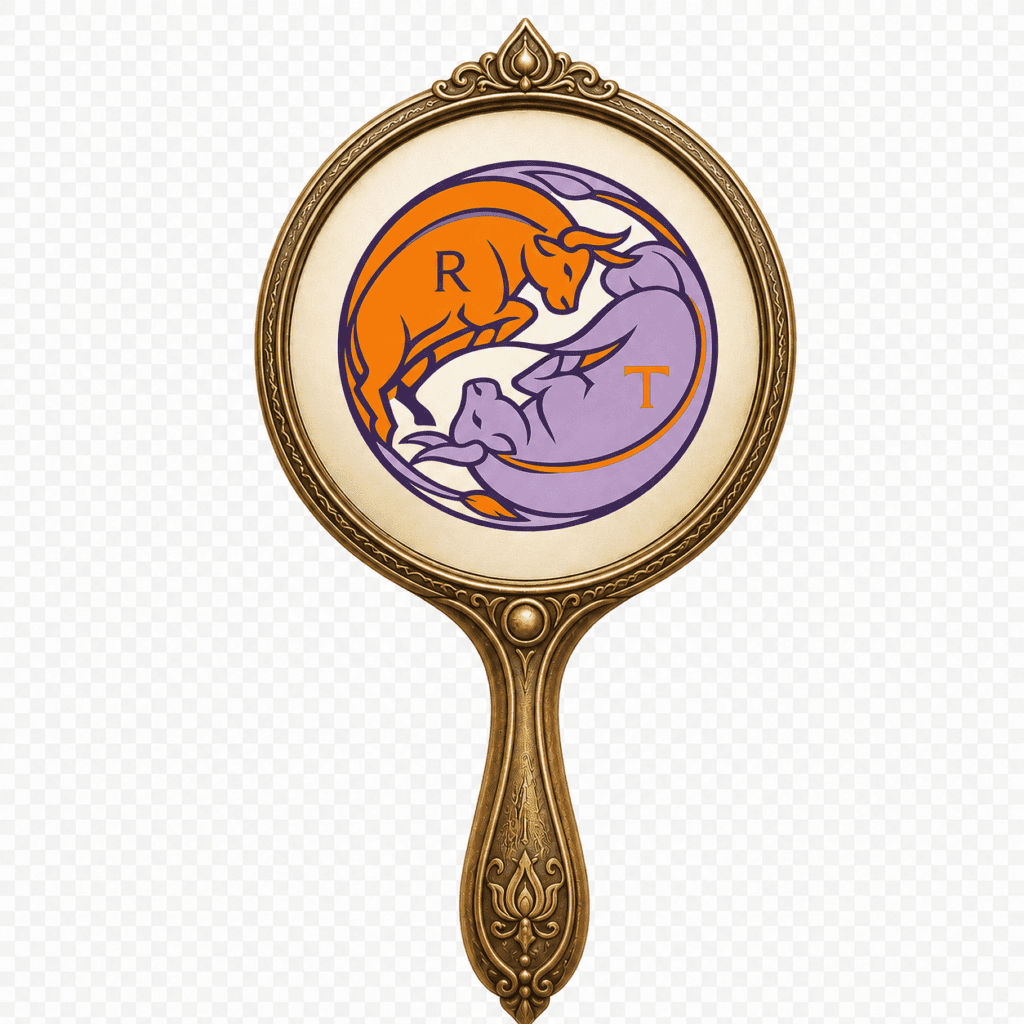
The catch is that most people can’t see the difference clearly, not because the difference is hidden, but because the mirror is dirty. Old wounds, bad habits, inherited fear, cultural noise, an entire life spent absorbing other people’s certainty about what’s true, all of it fogs the glass. You already have the capacity to see Rox and Tox. What you’re missing is a clean surface to see it in, and clearing it is not a matter of being handed new rules by an outside authority. It’s a matter of practice.
Polishing the Mirror
This is the actual mechanism, and it’s where Baoism stops looking like a new religion and starts looking like a lens for reading every religion that came before it.
Meditation polishes the mirror. So does education, community, time in nature, music, art, dance. So does sufi spinning, and so does chanting, whether that’s a mantra in a Ladakhi monastery or Nichiren’s own Namu Myoho Renge Kyo, the same six syllables you’d have heard chanted in Japan eight hundred years ago and which Soka Gakkai members still chant by the millions today. None of these practices are owned by the tradition that popularized them. They’re tools, discovered independently and reinvented constantly across cultures that never spoke to each other, because the mirror keeps needing polish and human beings keep finding new ways to do it.
That idea reframes everything covered in the last two pieces. The idea is not that all the world’s religions and philosophies are competing truth claims, each insisting its cosmology is the correct one. It’s that all of them, without exception, function as ways of polishing the mirror, so that a person can see Rox and Tox more clearly without needing an outside authority to hand them the answer. The eighteen early Buddhist schools arguing over Vinaya technicalities, Chan absorbing Daoist paradox, Shingon building elaborate mandalas, Sufis pursuing dissolution of self in the mountains above Balkh, none of it was really separate camps competing for the same prize. It was several thousand years of different populations, in different geographies, independently discovering that certain practices clean the glass, then building entire civilizations of doctrine, hierarchy, and architecture around the practices, sometimes mistaking the scaffolding for the thing itself.
Baoism’s move is to take the scaffolding down and keep the practices. You don’t have to believe Chenrezig is a real being to have compassion meditation clarify what Rox looks like in a hard moment. You don’t have to accept a specific cosmology of rebirth to notice that stillness makes the difference between reacting and choosing. The Tao Te Ching may be the clearest instruction manual for the whole process, precisely because it never insists on belief, it just keeps pointing at what happens when you stop forcing and start seeing. Sufi teaching stories work the same way, they don’t argue you into a position, they rearrange how you’re looking. And the words of Jesus and the words of the Buddha, read directly rather than through the institutions built on top of them centuries later, make the same thing plain: see clearly, stop grasping, treat what’s in front of you with care.
The Actual Work
Strip away the metaphor and Baoism runs on a clear sequence.
Eliminate Tox. Identify what’s harming you, or someone else, or something else, and stop doing it. This sounds simple and isn’t. Most Tox is comfortable, which is exactly why it survives.
Fill the hole with Rox. This is the part that makes Baoism a functioning practice rather than just another piece of advice to stop being bad. You cannot simply remove Tox and leave the space empty. A Tox-shaped hole does not stay empty. It gets filled again, and often with something worse than what was removed, because whatever the Tox was feeding doesn’t disappear just because you stopped feeding it. So the work is always paired: every act of elimination needs a matching act of construction. Every single time that trade actually happens, Tox removed, Rox installed in its place, the world becomes a slightly better place. Not metaphorically. Actually, incrementally, better.
Become a Bao Ji. This is the highest form the practice can take, and it’s specifically the practice of teaching this whole process to someone else, not simply performing a kind act for them. The greatest Rox available to a person isn’t a single good deed. It’s teaching another person how to see their own Rox and Tox clearly enough to run the process themselves. Every time someone behaves as a Bao Ji, they don’t just improve one exchange, they create the possibility of an infinitely better world downstream of that moment, because now there are two people capable of running the process instead of one, and each of those two can go on to teach others. The Dalai Lama is a Bao Ji. Jesus is still a Bao Ji. Lao Tzu and the Prophet Mohammad are Bao Ji. Rumi is a Bao Ji. They are still teaching people how to polish the mirror, how to eliminate Tox, and replace it with Rox. Their work continues. You may be a Bao Ji too. We can all be Bao Ji. We all should be.
What Baoism Doesn’t Do
The boundary is, in some sense, the whole design. Baoism doesn’t declare who or what God is, or whether there is God or Gods at all. It doesn’t lay out a fixed set of required practices, no prescribed number of meditation minutes, no mandatory text, no single correct path. It draws from every faith and every philosophy without needing to rank them against each other, because the traditions aren’t being evaluated on whether they’re correct. They’re being evaluated on whether they polish the mirror, and nearly all of them, approached honestly, do.
That also separates Baoism from the other deliberate religious synthesis in this series. Cao Dai took the world’s traditions and built a new hierarchy on top of the blend: a pope, cardinals, archbishops, a fixed pantheon of sanctioned saints. It solved the problem of institutional gatekeeping by building a new, bigger institution. Baoism goes the other direction entirely. No clergy, no unquestionable text, no claim about God settled one way or the other, nothing to join, nobody positioned between you and your own clarity. If Cao Dai is syncretism plus architecture, Baoism is syncretism minus architecture, which is the harder thing to build, since architecture is usually what makes a philosophy durable enough to survive its founder. Baoism is betting that Stop Tox, Fill It With Rox, Bao Ji (ie.Teach the Process), is durable enough to last without a building to protect it.
What This Has to Do With a visiting temples and monastaries
Sitting through a morning ceremony like I did in Ladakh was a Baoist practicing Baoism. It was also a monk running his own tradition’s specific, deeply embedded version of mirror-polishing, built inside fourteen centuries of Kagyu lineage, Bon-influenced ritual, and tantric technique that took years of transmission to earn. That specificity matters, and Baoism doesn’t erase it or claim to have superseded it.
What Baoism does is notice the pattern underneath: that ceremony, a line from the Tao Te Ching, a Sufi story about a king and a beggar, a tale of the Prophet Mohammad, a moment of unglamorous honesty with a friend who needs to hear the truth, are all doing structurally the same job. They’re all opportunities to see Rox and Tox more clearly than you did the moment before. Whether a person walks out of that moment calling themselves Buddhist, Sufi, Christian, Baoist or nothing at all, doesn’t change whether their mirror got a little cleaner.
Baoism doesn’t ask anyone to choose a tradition. It asks them to notice what actually polishes the glass, use it, eliminate what’s poisoning them, replace it with what helps, and then become a Bao Ji, teaching the next person to see clearly too. That last part is the key to the whole kingdom. Everything else, every horn, every mantra, every philosophy this series has walked through, is proof the method has been discovered, independently, by nearly everyone who ever seriously tried to see clearly.
To answer the question posed in the title. The answer really depends on you. Yes. No. Maybe. Definitely. Well, it depends.