
Neighbors on Mogami
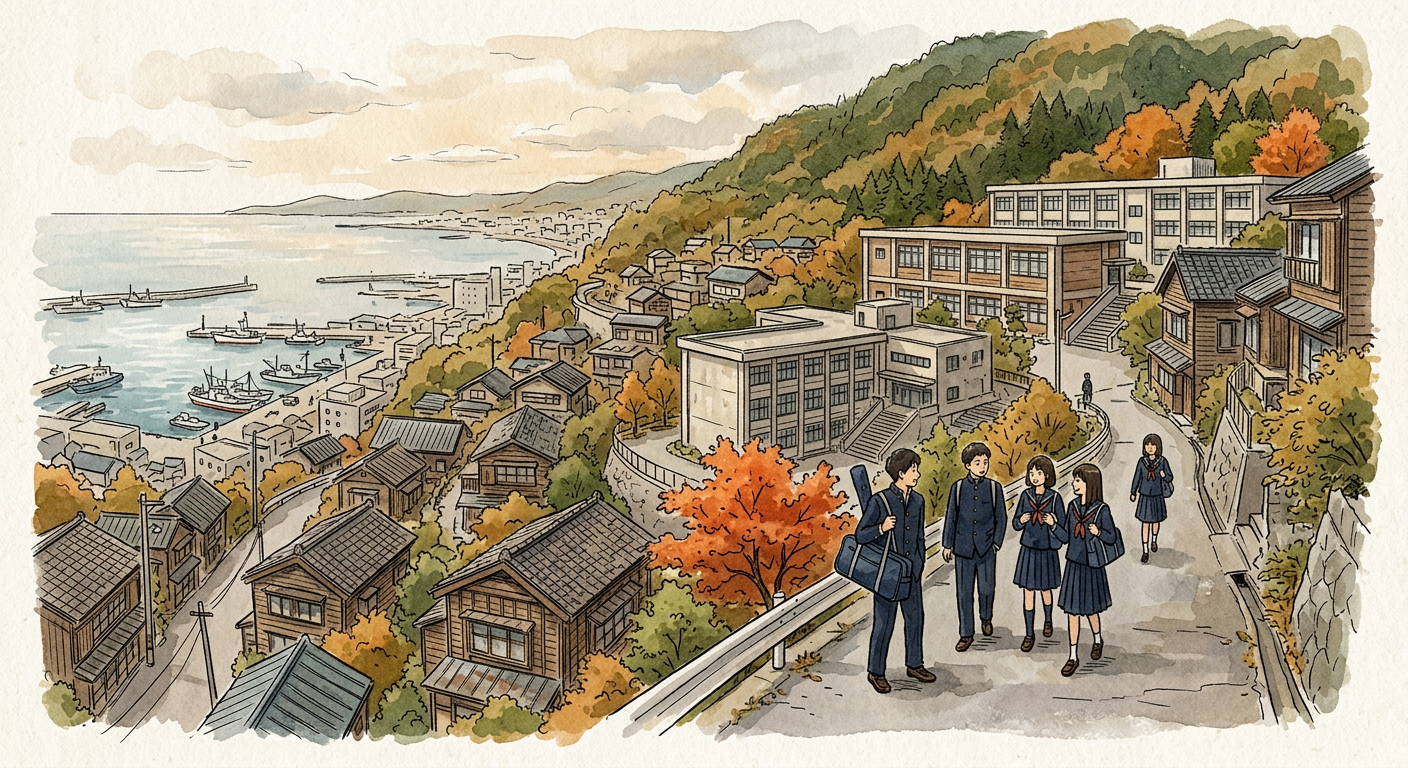
In Mogami 1-chome, on the slope above central Otaru, two high schools sit a short walk apart. Otaru Meiho is a small private school that takes in students who stopped attending school or dropped out somewhere else. Otaru Mirai Sozo is a public vocational school that trains electricians, builders, and accountants. In June 2026 their baseball teams met in the first round of the South Hokkaido championship, and Mirai Sozo won 19 to 0.
An American reading that score might assume two rival schools from different towns. They draw from the same city. What separates them is a test score, taken at age fifteen, and that single fact explains more about Japanese high school than anything else.
One port city, seven high schools
Otaru’s full-time high schools each fill a distinct slot, and families know roughly where each one sits on the ladder of hensachi, the standardized deviation score used to rank schools.
| School | Type | Hensachi (approx.) | Known for |
|---|---|---|---|
| Otaru Choryo | Public, general | 60 | The city’s university-prep school; also runs an evening course |
| Otaru Futaba | Private, general | 44 to 54 | Advanced and general prep tracks, a correspondence course, competitive baseball |
| Otaru Ouyou | Public, credit-system general | 49 | Flexible course selection; shares a rugby program with Choryo |
| Otaru Mirai Sozo | Public, vocational | 43 to 44 | Machinery, electrical, construction, distribution, IT, accounting; strong job placement |
| Otaru Suisan | Public, fisheries | 40 to 41 | Shipboard training, aquaculture, seafood processing, certifications |
| Hokusho | Private | Not listed | Baseball powerhouse; won the 2025 autumn all-Hokkaido title after a 13-year gap |
| Otaru Meiho | Private, general | 37 | Second-chance school: classes of 20 to 30, 9:30 start, five periods a day |
Mirai Sozo itself is the product of shrinkage. It opened in 2018 when Otaru Commercial and Otaru Technical merged, becoming the first credit-system vocational high school in Hokkaido. Otaru Suisan, with about 340 students, recruits hard as fewer teenagers choose trade programs over general academics.
How it differs from American high school
Sorted by score, not by address
Most American teenagers attend the public high school assigned to their neighborhood. The honors student and the kid who barely shows up share a building, a cafeteria, and a football team, and sorting happens inside the school through AP, honors, and remedial classes.
Japan sorts between schools. In the final year of middle school, students sit entrance exams, and their scores plus school records decide where they go. Choryo gets the top of Otaru’s cohort; Meiho gets those who struggled or fell out of the system. A teenager’s school name tells neighbors, employers, and future in-laws something specific, and that label is set at fifteen.
Specialization starts early
An American who wants to become an electrician usually finishes a general diploma first, maybe taking a shop elective, then goes to community college or an apprenticeship. In Otaru, a fifteen-year-old can enroll at Mirai Sozo and spend three years on electrical systems in a program accredited toward chief electrical engineer qualifications, or at Suisan training aboard ships. Graduates often walk straight into local employers who recruit through the school.
Optional, yet nearly universal
High school in Japan is not compulsory; it ends at middle school. Yet nearly every student continues. Private schools carry a large share of the load, from elite academies to places like Meiho that exist to catch students the public system did not hold. In the United States, attendance is required to age 16 or 18 depending on the state, and the dropout safety net is usually a GED program or alternative school run by the district.
One club, every day
American athletes often rotate through seasons, football in fall, basketball in winter, track in spring. Japanese bukatsu means one club, practiced most days of the year including weekends and holidays. Baseball sits at the top of that culture, with the national tournament at Koshien serving as the goal for schools like Hokusho. Club membership is closer to an identity than an extracurricular.
Daily life
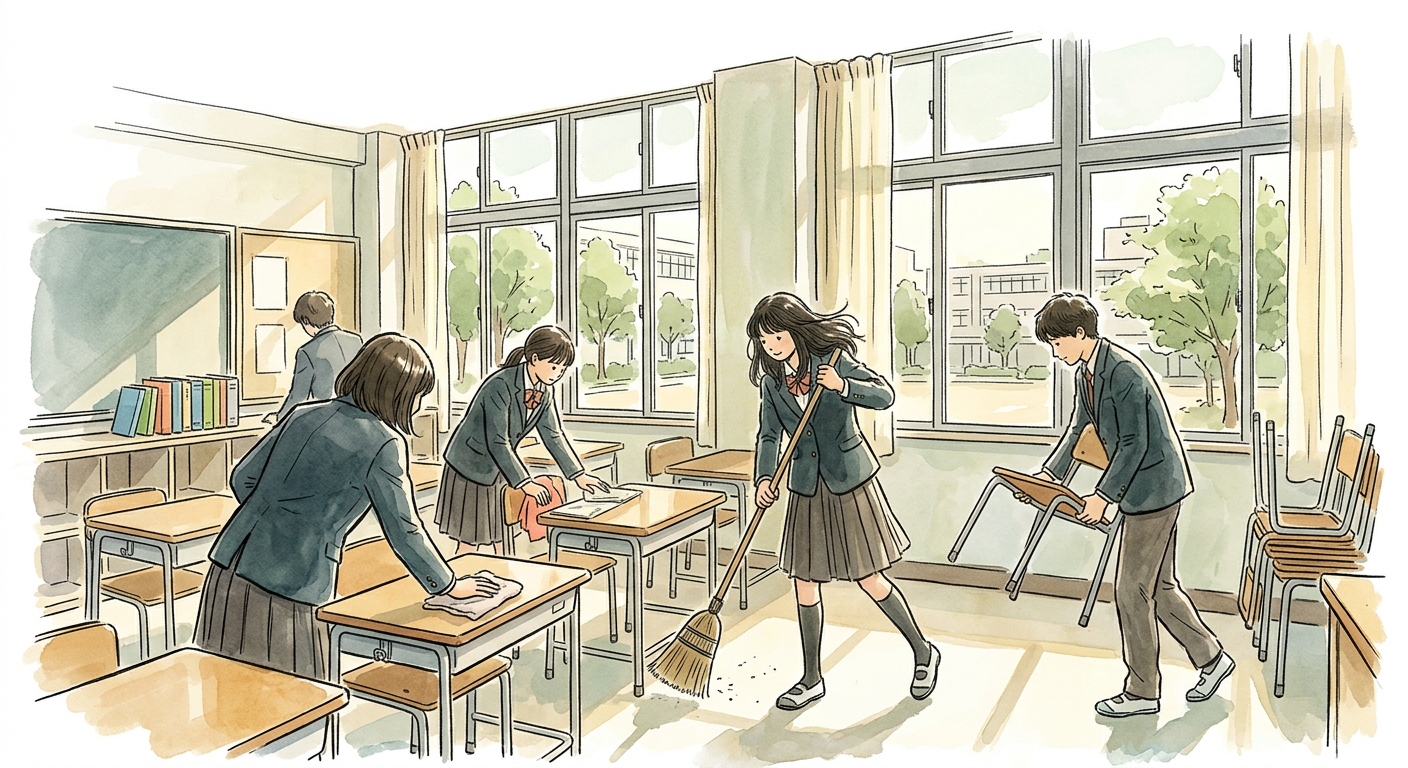
- Students clean their own classrooms, halls, and bathrooms; there is no janitorial staff doing it for them.
- Teachers rotate between rooms while the homeroom class stays put.
- Uniforms are standard, and rules often cover hair, makeup, and part-time jobs.
- Nobody drives to school. Students walk, bike, or ride trains and buses, and Meiho draws many commuters from Sapporo, about 40 minutes away by rail.
- The year starts in April, and in Hokkaido the winter schedule includes ski training.
Back on the hill
The American model bets on keeping everyone together and letting them separate later, through grades, college, and the job market. The Japanese model separates them at fifteen and builds a school around each group. Otaru shows both the cost and the benefit: a city where a test decides your classmates, and where a teenager who wants to work on ships or wire buildings has a school built entirely for that.
For a foreign family settling in Otaru, the practical point is timing. The high school decision happens in the last year of middle school, and preparation for the entrance exam starts well before that.
Sources
- Minkou: Otaru Meiho
- Nakanoshima Junior High bulletin on Meiho
- Mirai Sozo school guide
- Local Media: Mirai Sozo profile
- hb-nippon: Meiho baseball results
- Minkou: Hokkaido high school listings
- Hokkaido Shimbun: Otaru Suisan
- Hokkaido Shimbun: Otaru news (Hokusho title)
- Hokkaido Shimbun: Choryo and Ouyou rugby