
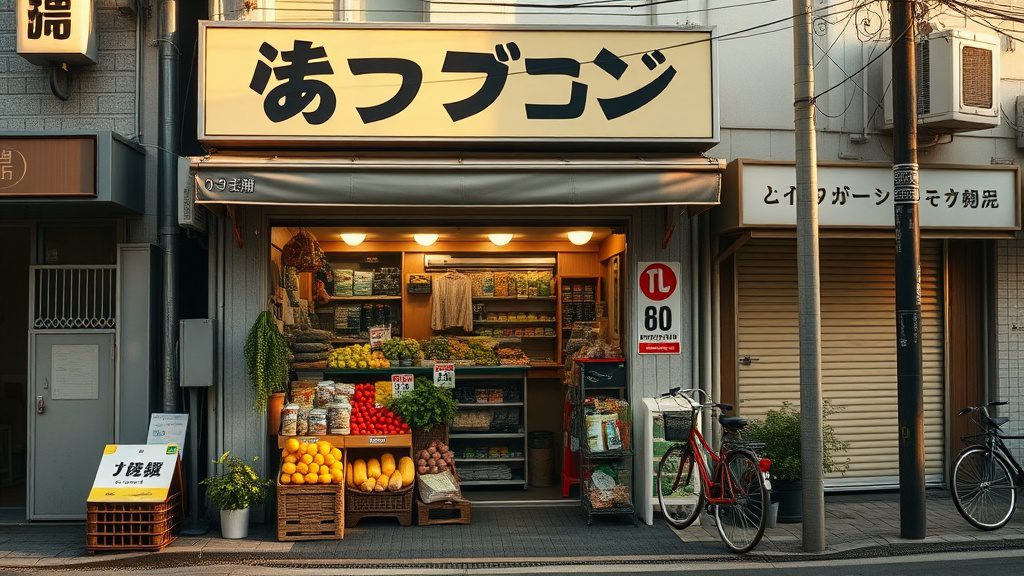
People ask me what it costs to live in Otaru. I tell them the number and they think I’m lying.
I’m not lying. The math is just different here. It’s different in a way that makes you realize how much of what you’ve been paying in rent or mortgage or “cost of living” back home was essentially a tax on geography. A toll for the privilege of existing in a place where everyone else also wants to exist.
Otaru is a place people visit. It is not yet a place where everyone is scrambling to live. That gap — between desirability and demand — is where the numbers get interesting.
Let me walk through my actual monthly costs.
Housing: The Number That Breaks People’s Brains
If you own your house outright — and at Otaru prices, you can — your monthly housing cost is property tax plus insurance. That’s it. No mortgage. No rent. No landlord. No HOA.
Property tax on a cheap house in Otaru runs about ¥5,000 to ¥7,000 per month when you average it across the year. Insurance adds another ¥3,000 to ¥5,000 depending on your coverage. Total monthly housing cost: ¥8,000 to ¥12,000. That’s $55 to $80 a month.
Eighty dollars a month for housing.
The median rent for a one-bedroom apartment in the United States is somewhere north of $1,500. In cities like New York, San Francisco, Boston — double or triple that. A mortgage payment on a median-priced US home is around $2,500/month before property tax and insurance.
I pay less per month for my house than most Americans pay for their phone bill and streaming subscriptions combined.
Groceries: Eating Well for Less Than You’d Expect
Otaru is a port city. The seafood comes off the boats and goes to the markets and then it goes to your kitchen. The supply chain is about four steps shorter than what you’d find at a Whole Foods in Denver, and the price reflects it.
Monthly grocery budget for one person eating well: ¥30,000 to ¥50,000, or about $200 to $350. A couple can eat comfortably for ¥50,000 to ¥70,000 if you’re not wasteful.
Rice is cheap. Vegetables are seasonal and local. Tofu costs almost nothing. Fish — fresh, good fish, the kind of fish that would cost $30 a plate at a restaurant in Portland — is a Tuesday night dinner ingredient here.
Seicomart deserves its own paragraph. It’s Hokkaido’s homegrown convenience store chain, and if you’re used to thinking of convenience stores as overpriced junk food dispensaries, recalibrate. Seicomart sells fresh onigiri made in-store, hot katsu sandwiches, bento boxes, milk, eggs, produce, and wine. It is genuinely cheaper than the supermarket for a lot of basics. Hokkaido people are loyal to Seicomart the way Texans are loyal to Buc-ee’s, except Seicomart actually makes sense as a place to do regular shopping.
7-Eleven exists in Otaru too. It’s fine. But Seicomart is better and cheaper for daily life.
Utilities: The One Category That Has a Catch
Here’s where I have to be honest about winter.
For most of the year, utilities are reasonable. Electricity runs ¥8,000 to ¥15,000/month depending on how much you use air conditioning in summer (which in Otaru isn’t much — it doesn’t get that hot). City gas or propane costs ¥5,000 to ¥10,000. Water is ¥3,000 to ¥5,000.
Then winter arrives.
Otaru gets serious snow. Meters of it. And the houses, especially the older ones, are not insulated the way a house in Minnesota would be. Kerosene heating is standard — you’ll have a kerosene fan heater or stove, and from November through March, you’re burning through fuel. Budget an additional ¥15,000 to ¥25,000 per month for heating kerosene during winter.
Total utilities across the year: ¥20,000 to ¥55,000 per month ($140 to $380), with winter being significantly more expensive than summer. Averaged across twelve months, figure around ¥30,000 to ¥35,000 ($210 to $240) as a realistic monthly average.
This is the biggest variable in the Otaru cost-of-living equation, and I won’t pretend otherwise. Winter heating is real money. But even at its peak, your total utility bill in January is less than the average American’s utility bill plus their car payment.
Internet and Phone: Fast and Cheap
Japan’s internet is fast and cheap. NTT Flet’s Hikari or similar fiber service runs ¥4,000 to ¥5,000/month for speeds that would cost $80 to $100 in the US. I get reliable, fast fiber. No data caps. No throttling games. It works.
Mobile phone service is where Japan has gotten genuinely competitive in the last few years. The major carriers (docomo, au, SoftBank) are expensive, like carriers everywhere. But the MVNO market — budget carriers using the same networks — is excellent. IIJmio, Rakuten Mobile, and a dozen others offer plans with plenty of data for ¥1,000 to ¥3,000/month. I pay about ¥2,000/month for more data than I use.
Compare that to the $80 to $100 most Americans pay for phone service.
Transportation: You Might Not Need a Car
Otaru is a small city stretched along the coast between mountains and ocean. If you live near JR Otaru station or one of the stops along the line, you can get around by train, bus, and walking.
The train to Sapporo takes about 35 minutes on the rapid service. A monthly commuter pass (teikiken) costs around ¥16,000 if you’re going to Sapporo regularly. Individual tickets are around ¥750 each way.
Owning a car in Japan is more expensive than you’d think. There’s the purchase price, sure, but then there’s mandatory insurance (jibaiseki), optional insurance (nin’i), the biennial vehicle inspection (shaken) which can run ¥60,000 to ¥100,000 depending on the car, gas, and parking (even at your own house, you technically need a registered parking space). Budget ¥30,000 to ¥50,000/month all-in for car ownership.
My suggestion: don’t buy a car unless you need one. If you live in central Otaru, you probably don’t. If you bought a house up in the hills or in one of the outer neighborhoods, you probably do. Make this part of your property search criteria.
Healthcare: The System That Works
If you’re a resident of Japan — and property ownership doesn’t automatically make you one, but a proper visa does — you’ll be enrolled in National Health Insurance (NHI). Premiums are based on your income from the previous year. For low-income residents or people just arriving, premiums can be as low as ¥2,000 to ¥5,000/month.
The system covers 70% of medical costs. You pay 30% out of pocket. A typical doctor visit might cost you ¥1,500 ($10). Prescription medications are similarly subsidized.
I’ve been to the doctor in Otaru. I walked in, showed my insurance card, waited about twenty minutes, saw the doctor, got a prescription, and walked out having paid less than the copay for a single doctor visit under most American insurance plans. No prior authorization. No surprise bills three months later. No negotiation with an insurance company about whether my doctor is “in network.”
The quality of care is good. The system is functional. It’s not perfect — mental health services are limited, English-speaking doctors are rare outside Sapporo — but for basic and even moderately complex healthcare, it works and it’s affordable.
The Total
Here’s the monthly breakdown for a single person living in their own house in Otaru:
- Housing (tax + insurance): ¥8,000–12,000
- Groceries: ¥30,000–50,000
- Utilities (annual average): ¥30,000–35,000
- Internet: ¥4,000–5,000
- Phone: ¥1,000–3,000
- Transportation (no car): ¥5,000–16,000
- Healthcare: ¥2,000–5,000
- Miscellaneous (household supplies, clothing, entertainment): ¥10,000–20,000
Total: ¥90,000 to ¥146,000/month — roughly $630 to $1,020.
If you’re a couple, add maybe 40% for groceries and healthcare. You’re still under $1,400/month for two people.
Call it ¥100,000 to ¥200,000/month for a comfortable life, depending on your habits. That’s $700 to $1,400.
The Comparison That Matters
The average American household spends over $6,000 per month. Median individual spending in US cities runs $3,500 to $5,000+ when you factor in rent or mortgage, car payment, insurance, healthcare premiums, groceries, and utilities.
In Otaru, owning your home outright, I spend about $800/month. Less in summer. More in winter. But averaged out, about $800.
That’s not poverty-level living. I eat fresh seafood. I have fiber internet. I take the train to Sapporo when I want a bigger city. I have healthcare. I live in a house, not a room.
The difference isn’t about deprivation. The difference is that I’m not paying $2,000/month for the privilege of having a roof, and I’m not paying $500/month to keep a car running so I can drive to a job that pays the money I need for the roof and the car.
Remove those two line items — which is what owning a cheap house in a walkable Japanese city lets you do — and the arithmetic of daily life changes completely. Your burn rate drops to a level where part-time remote work, freelancing, modest savings, or even a small pension becomes enough. More than enough.
That’s the real reason I bought a house in Otaru. Not because the canal is pretty, though it is. Not because the sushi is good, though it is. Because $800/month is a number that gives you your time back.
And time, at 54, is the thing I’m least willing to waste.