

Stepping Away From the Tox of Walled Gardens
I deleted Instagram, Facebook, X, LinkedIn, and YouTube off my phone. Not the accounts. The apps. That may sound like a not very important thing to have done, but I think it is very important. Here’s why.
I didn’t do it because I had a new sudden moral awakening about surveillance capitalism, though that’s real and worth its own article. I did it because, multiple times, I watched myself pick up my phone to check one thing and twenty minutes later (or more) I emerged having absorbed nothing, produced nothing, and sometimes not even done the thing I started – or worse not even remembering what that was. That’s not a willpower or a memory issue. That’s the product working exactly as designed. The infinite scroll, the variable reward, the notification badge, the autoplay, the dopamine flooding my brain from videos, shorts, notification, and the feed itself – none of that is an accident or a side effect. It’s the actual business model. You are not the customer. Your attention and the way you use these apps is the product, and the apps are built by people who are extremely good at extracting providing product for the people who pay them.
Knowing that doesn’t make you immune to it. I’ve been aware of this for thirty years. I’ve been writing books about it, writing articles about it, and building platforms and I still got caught in the loop. So I did the only thing that actually works against a system engineered by behavioral psychologists with unlimited budgets working for business psychopaths: I removed the mechanism.
Giving up or letting go
I’ve asked myself whether what I’m doing is giving up or letting go. They look similar from outside. Giving up is walking away from the burden. Letting go is deciding what’s actually useful in the pack versus what you’ve just been carrying out of habit.
I haven’t walked away from any of it. I’m still on Instagram, still on Facebook, still publishing video that technically lands on YouTube. What I’ve done is stop letting the platforms set the terms. I’m not managing five feeds anymore. I’m running a small number of deliberate channels and letting the rest exist as passive, low-effort satellites which in some cases have legitimate functions.
The actual setup
Here’s what my situation looks like in practice, because “step away from social media” is useless advice without explaining how I’ve walked away from the apps and started using the online versions less.
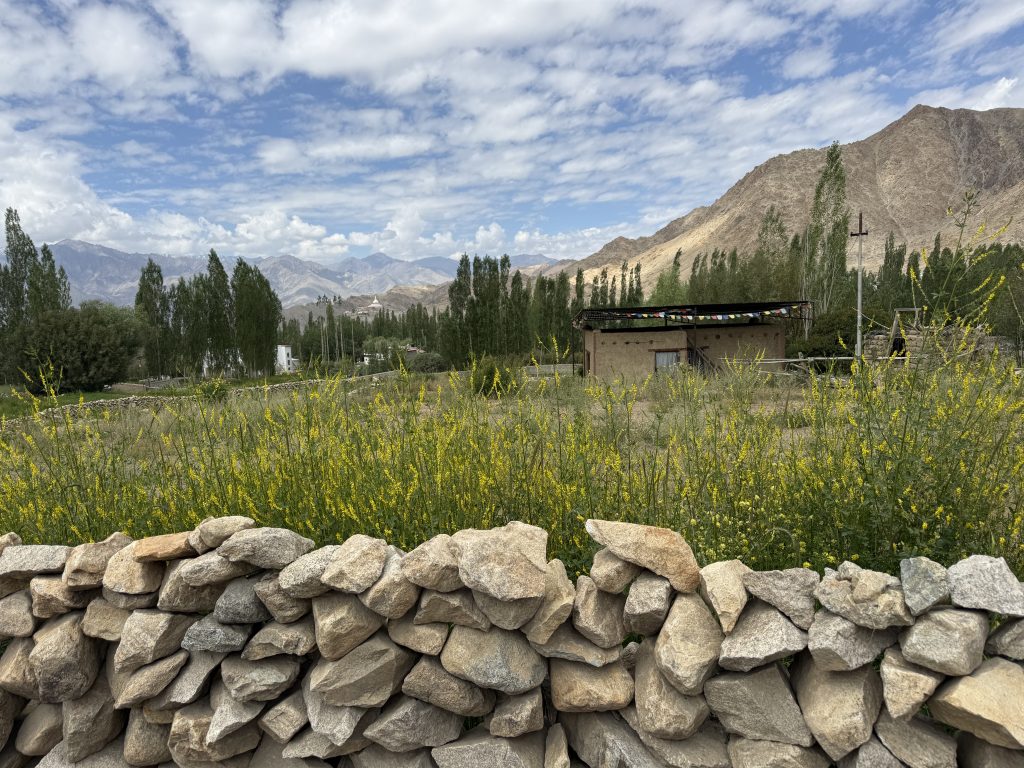
Instagram still gets my photos, but only the ones that capture a feeling about a place with no caption explaining it. No context, no thread, no engagement bait. Just the image. Those auto-share to Facebook so I never have to open Facebook to post there. I like sharing them, regardless if anyone sees them.
Pixelfed and PeerTube exist purely as a bridge for video and photos so I can post to Xcrol without needing to host storage myself. They’re plumbing, not destinations. Plus, they are federated media, which is far less toxic than the ‘gram or YouTube. I built Xcrol intentionally to not display giant corporate walled garden links. Pixelfed and Peertube are both federated.
After trying a bit of a book marketing push (that didn’t work), I made some decisions recently. LinkedIn gets nothing anymore. Facebook gets nothing directly, only the auto-shared photos. On the rare occasion I see something on Facebook or Instagram that is actually from a friend and the kind of real life update I want to see, I may comment. But Meta doesn’t put that stuff at the top of feeds anymore and I refuse to scroll, so that’s rare. Substack Notes gets nothing. I have decided to stop feeding platforms that want daily performance in exchange for reach that was almost 100% fake anyway.The saddest part is that when I stopped, no one reached out and said “What happened? Where did you go?”
For messaging, I kept WhatsApp, Instagram DMs, Line, WeChat, and Signal, because messaging is genuinely useful and none of it involves a feed designed to hold me hostage. A DM thread with a friend is not the same category of thing as an algorithmic timeline, even if they live in the same app.
The newsletter and blog are where my actual work happens. Video goes out through the Substack newsletter and blog functions for reach, and it auto-publishes to YouTube as a side effect. Virtually nobody watches it there, and I’ve made peace with that, because I’m not making it for YouTube’s algorithm. YouTube is just where it lands, not where I’m performing. It’s there if someone wants to see it. Like the Insta photo posts.
Facebook still earns its keep for groups and for travel logistics, the kind of hyperlocal, practical information that genuinely only lives there. I’m not pretending it has no use. It has a narrow use, and I’ve narrowed my involvement to match it. X is even narrower. Once in a while there is a current event or news story that is only on X. That’s all I use it for.
Couchsurfing I’m dropping entirely. It’s not a social media site, but it was something else that I really loved for a long time. It stopped being really useful years ago and I kept paying for it out of nostalgia more than function. Though I will say that even in recent years, I’ve made some great friends through Couchsurfing. That’s worth naming too: sometimes stepping away isn’t about addiction, it’s just admitting a tool went stale and you kept it out of habit or what it used to be.
My actual center of gravity online is Indignified.com/blog for the thinking I want to develop, the things I see in the world, and the things I think might help friends. My weekly columns on Indignified.substack.com are there for the reach that matters – people who signed up for it. Xcrol, the social platform I built, is there for the daily updates, comments, and conversation inside The Village groups. Everything else is scaffolding around those three things.
Tox and Rox
Baoist principles come into this too. You can’t just remove a Tox and expect the hole to stay empty. It won’t. A vacuum in a habit loop gets filled by something, usually the same Tox in a different shape, or by nothing at all, which just produces restlessness until you cave. The move that actually works is removing the Tox and replacing it with a Rox in the same slot.
I didn’t just delete the apps and hope. I moved the behaviors they served into places built on my own terms. The urge to share a moment became an Instagram photo with no explanation instead of a status update fishing for reactions. The urge to think out loud became a blog post that lives forever on my blog instead of a Notes thread nobody reads twice. The urge to connect became messaging apps instead of feed-scrolling as a substitute for actual contact. Same underlying needs, completely different container, and the difference in how it feels afterward is remarkable. It’s not marginally better. It’s infinitely better, because a Rox doesn’t leave you depleted the way a Tox does. It leaves you with something made. Something done.
That’s the actual test I’d offer anyone trying this. Don’t ask what you’re giving up. Ask what’s replacing it. If the answer is nothing, you’re setting yourself up to fail, because the itch doesn’t go away just because you deleted an icon. If the answer is a Rox, something built on terms you chose instead of terms engineered to hold your attention hostage, the whole thing gets easier almost immediately.
So What is this?
This isn’t a clean break. I still have accounts on every platform I supposedly walked away from. The apps are just gone from my phone, which means the daily friction of habit is gone, which turns out to be most of the battle. I check things when I choose to, from a browser, on my terms, instead of getting pulled in by a badge every time I unlock the screen. And here’s something funny, the platforms want you to use the apps so they build friction into the web versions – which works perfect for me.
I haven’t abandoned the tools. I’ve stopped letting the tools decide what I do with my attention. The walled gardens still exist. I’ve just stopped using the authorized gate. Instead, I broke down the garden walls and I visit, on my terms. I spend the rest of my time building things in places I actually own.