
What Your Rupee Actually Does
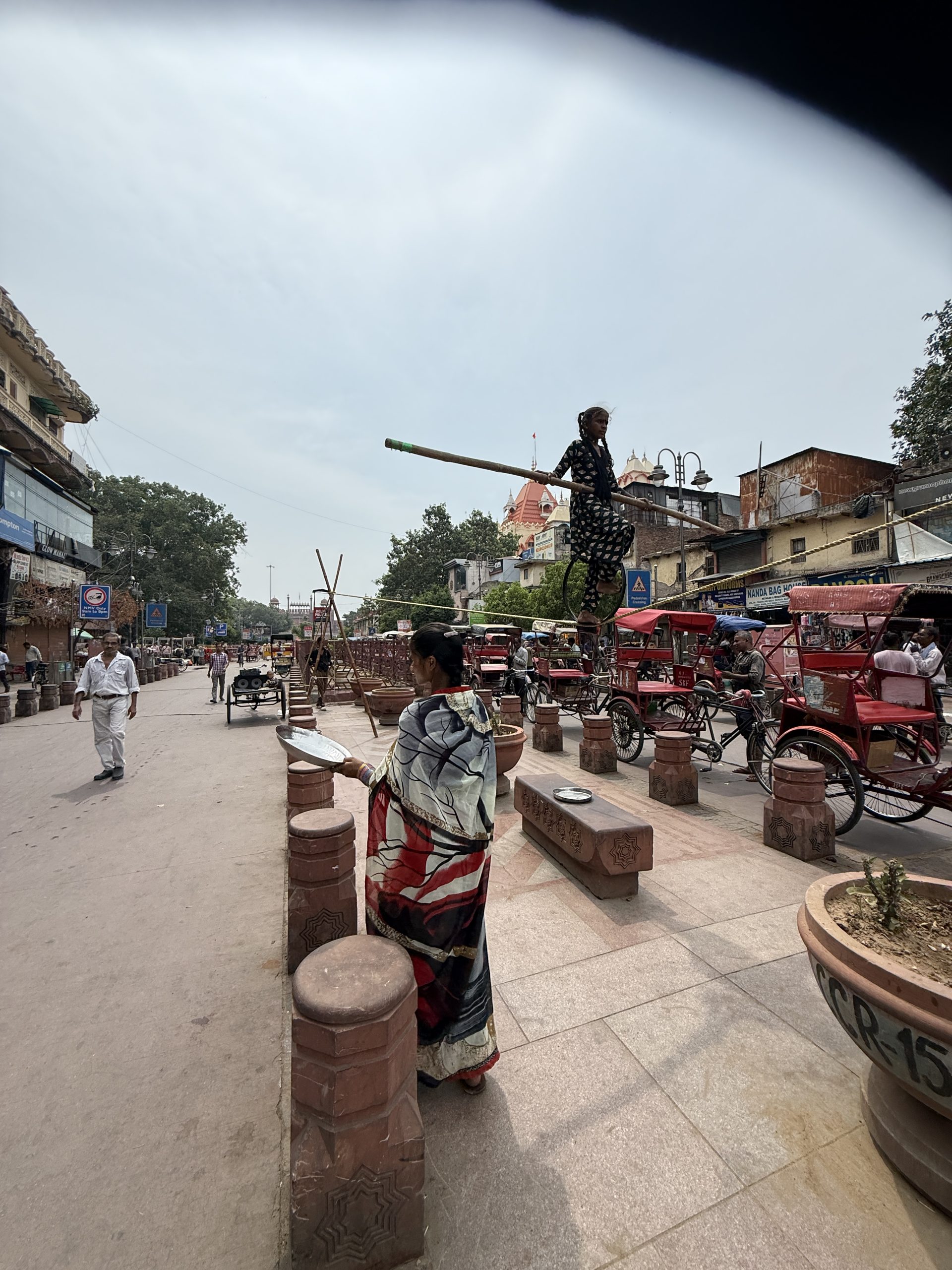
The first time a kid taps on your car window at a red light in Delhi, something in you wants to hand over whatever’s in your pocket. The second time, and the tenth, you start noticing the pattern. Same intersections. Same choreography. A woman with a baby on one hip and a drum in the other hand. A boy who ducks between cars like he’s done it ten thousand times, because he has.
Everyone I’ve met here, drivers, hotel staff, other writers, said the same thing before I even asked: don’t give them cash. It sounded harsh the first time. It doesn’t anymore.
The scale of it
India’s begging population runs well over 400,000 people, and the informal economy built around it is enormous, some sites have estimated at more than a lakh and a half crore rupees a year but I’ve read that that number is exaggerated. Not to mention it’s a number that doesn’t make sense to most of my readers, so let’s say instead $1 billion or more. That’s not exaggerated. Probably understated. . That’s not chaos. That’s a business with territory, hierarchy, and shift schedules. Gang leaders divide cities into zones and place people at the spots where sympathy converts fastest into cash: temples, train stations, and traffic signals.
The kids are the sharpest edge of it. Something like 60,000 children go missing across India every year, and a meaningful share of them get pulled into begging networks. The money they collect isn’t theirs. It goes up to a handler, and if the day’s take falls short, the punishment is real. Some parents, too poor to see another option, rent their own children to begging operations for a few hundred rupees a day. Other families get tricked entirely, promised a job for their kid somewhere, and never see them again.
The part that’s hardest to sit with is the mutilation. It isn’t folklore. In 2006 an Indian news channel ran an undercover investigation and caught doctors on camera agreeing to amputate a child’s limb for the begging trade, for a few hundred dollars a procedure. A disabled child earns more sympathy, which means more money, which means the economics favor maiming kids on purpose. Infants get rented out too, sometimes sedated so they stay limp and drowsy in a woman’s arms at a signal, because a listless baby pulls harder on a stranger’s conscience than an alert one.
The women with the drums
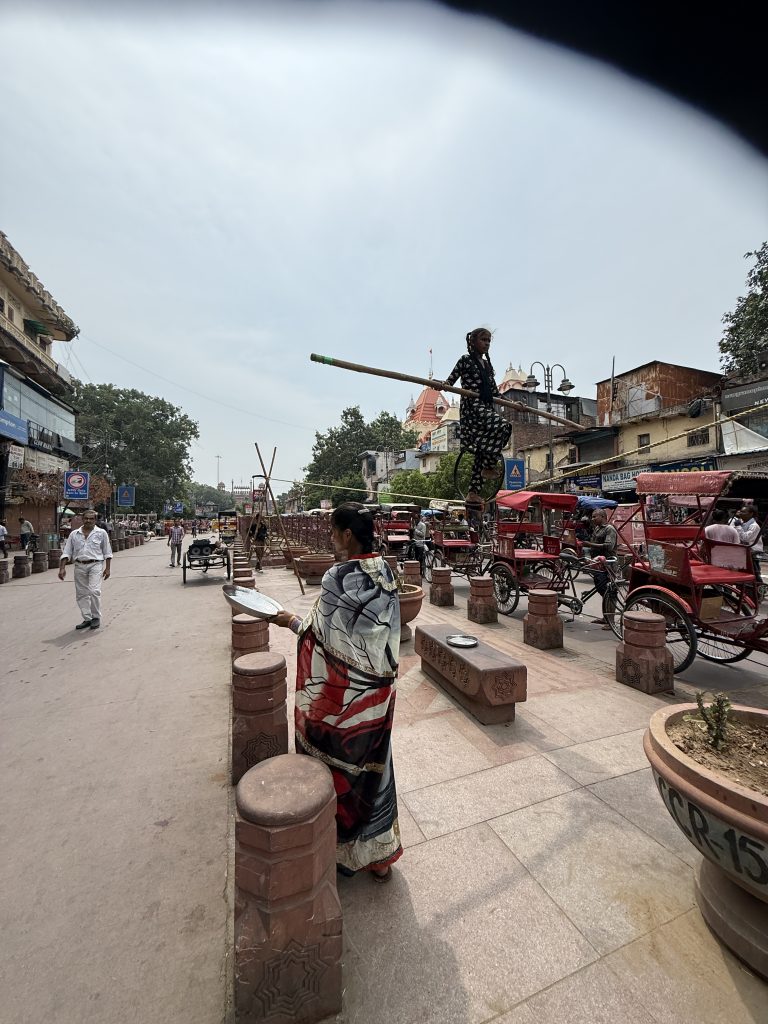
The women working intersections with a dafli or a small hand drum are usually from nomadic or denotified tribal communities, groups that got pushed out of settled land and formal work generations ago, some of them still carrying the legal residue of colonial-era laws that classified entire communities as “born criminals.” Some of what you’re seeing is a genuine, old itinerant tradition of music and performance for survival money, not mafia-run. Some of it isn’t. From the back seat of an auto there’s no way to tell the difference, which is exactly why the blanket advice exists: don’t hand out cash to any of it.
Legally, begging itself was criminalized for decades under a 1959 law that let authorities imprison beggars for up to ten years. The Delhi High Court struck parts of that law down in 2018, ruling that begging is often the last resort of someone with no other option left. What that ruling didn’t fix is enforcement. Police can still round up the person begging. Nobody’s rounding up the man collecting from six children at the end of the day.
The langar, and why it’s different
Walk two minutes from Connaught Place into Gurdwara Bangla Sahib and you’ll find the other end of this story. The langar there runs twenty four hours a day, every day of the year, and feeds anywhere from 30,000 to over 100,000 people depending on the day, all of it free, all of it cooked and served by volunteers. Rich, poor, tourist, local, Sikh or not, everyone sits on the same floor and eats the same dal, roti, and sabzi off the same steel plates. Nobody checks your religion at the door. Nobody checks your bank balance either.
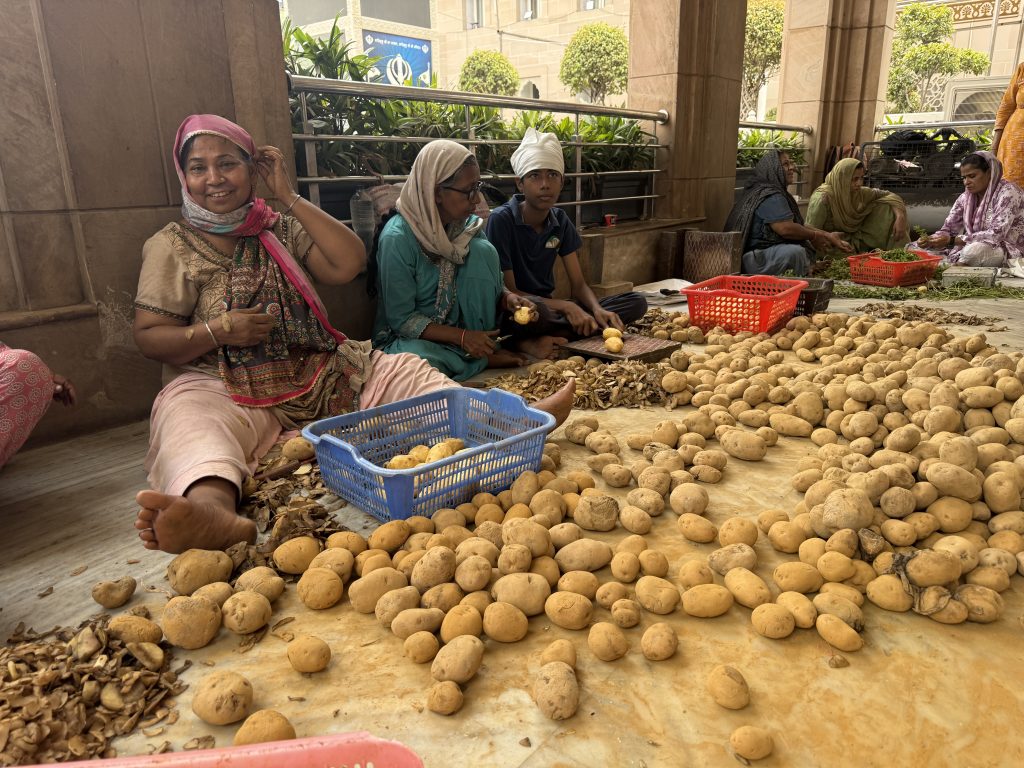
Guru Nanak started the practice five hundred years ago specifically to break caste and class apart at the most basic human level, the shared meal. The kitchen at Bangla Sahib runs through around 1,600 kg of flour, 1,200 kg of rice, and 700 to 800 kg of lentils on an ordinary day, cooked by professional cooks and a rotating army of sevadars who show up because service, not charity, is the point. It’s one of the most functional pieces of the social safety net in this entire city, and it was built by a religion, not a government program.
If you want to see it and possibly help for an afternoon, you can just show up. Cover your head, take off your shoes, and ask a volunteer where they need hands. Chopping vegetables and rolling roti doesn’t require Punjabi or Sikh background, just a willingness to sit on the floor and work.
Where the money should actually go
The uncomfortable truth about street giving is that redirecting it doesn’t mean doing nothing. It means being deliberate about where it lands.
Salaam Baalak Trust (salaambaalaktrust.com) is the organization I’d point anyone to first. It started in 1988 out of a contact point at New Delhi railway station with three staff and about twenty children, and now runs shelter homes across the city, rescuing kids straight off the platforms and streets, feeding and housing them, getting them into school. They also run a two hour City Walk through Old Delhi led by young adults who used to live on the street themselves, which is a genuinely good way to understand this whole subject with someone who lived it, rather than from a car window. You can donate directly through their site, and international donors have UK and US tax-deductible routes through Friends of SBT and GlobalGiving.
Childline India (childlineindia.org, or dial 1098 from any phone in India) is the national emergency helpline for children in distress, free, 24 hours, and it’s the number to call if you see a child in a situation that looks wrong: very young kids begging alone, the same child at the same signal every single day, visible injuries that don’t add up, or an adult clearly collecting money from several children at once. They aim to respond within the hour. You don’t need proof, just a location and a description.
Robin Hood Army (robinhoodarmy.com) started under a Delhi flyover in Hauz Khas in 2014 and now redistributes surplus restaurant and event food to people who need it, entirely through volunteers, with zero overhead eaten by administration. If you’re here longer term or run any kind of food business, this is the lowest friction way to make a dent.
None of this means walking past a kid at a signal feels good. It won’t. But the honest version of helping in Delhi looks less like a coin through a car window and more like a donation that reaches a shelter, a call to a helpline, or an afternoon spent rolling roti in a kitchen that’s been feeding this city for five centuries without asking anyone what they believe.