
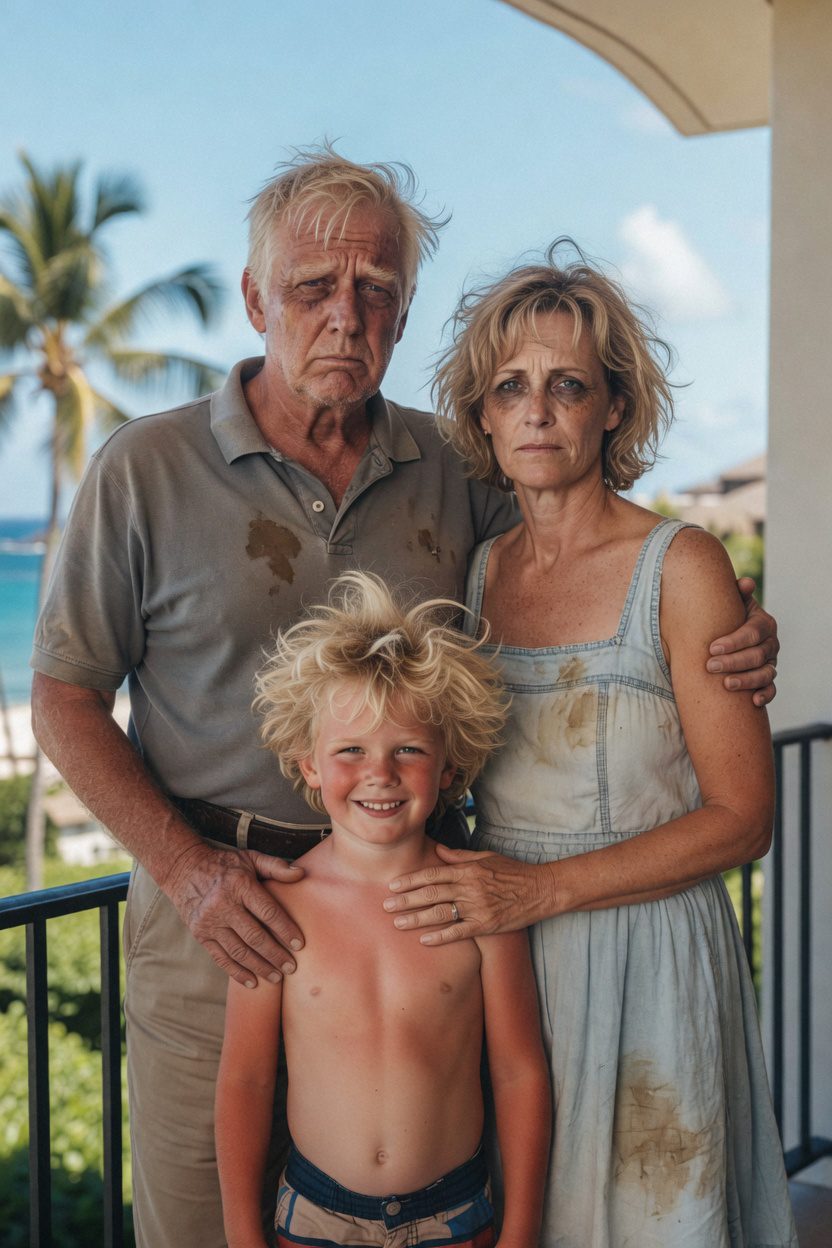
Fred, Mary and Little Donnie arrived almost a decade ago. Here is how they have progressed.
The Price of Paradise: One Family’s Nine-Year Fight to Stay Afloat in Honolulu
When Fred and Mary Thompson packed up their lives in Arizona and flew to Honolulu in January 2017 with their six-year-old son, Little Donnie, they believed they were chasing the ultimate American dream: sunshine, beaches, and a fresh start in one of the world’s most beautiful places. Fred had landed a job as a hotel maintenance technician; Mary found work in retail at a Waikiki souvenir shop. Both started at $17 an hour—solid money compared to what they’d left behind. Donnie enrolled in first grade at a public elementary school near their two-bedroom apartment in Kalihi. Rent was $2,100 a month. Groceries for the three of them ran about $650–$750. Gas hovered around $3.20 a gallon. Life felt doable.
“We thought we’d made it,” Mary recalled recently, sitting at their kitchen table while Donnie, now a lanky 15-year-old high-school sophomore, finished homework nearby. “The first year, we even treated ourselves to McDonald’s once a week and a Starbucks run on payday. It felt like we were winning.”
But the aloha spirit came with a hidden bill—one that would grow faster than their paychecks.
Hawaii’s cost of living has climbed relentlessly since 2017. Honolulu’s overall inflation outpaced the national average in many years, driven by imported food, energy, and a chronic housing shortage. The Thompsons’ story mirrors that of thousands of working families who arrived around the same time: modest wage gains that never quite caught up to soaring rents, grocery prices, and everyday expenses.
Fred and Mary received the kinds of raises typical for their industries. Fred’s hotel union contract brought steady 3–4% annual bumps plus occasional cost-of-living adjustments. By 2020 he was at $19.50 an hour. Mary’s retail job followed a similar path, hitting $18.75 by the end of 2019. The pandemic hit hard—Fred’s hours were cut in 2020—but tourism roared back. Promotions and the state’s phased minimum-wage increases (from $10.10 in 2018 to $14 in 2024 and $16 in early 2026) created ripple effects even for workers already above the floor. By 2026, Fred earns $26.50 an hour; Mary makes $24.80 at a bigger big-box store after switching roles. Together, before taxes, they gross roughly $106,000 a year—above the 2017 median household income but still stretched thin in 2026 Honolulu.
The numbers tell the squeeze.
Rent for their two-bedroom apartment has climbed to $2,850 a month in 2026—a 36% jump since 2017. Groceries now routinely top $1,300–$1,500 a month. A gallon of milk costs $7–$8; a dozen eggs can hit $8 on a bad week; chicken breast runs $8–$10 a pound. Gas prices, always volatile in the islands, spiked above $5.50 in 2022 and still average $4.80–$5.20 today. The family’s 10-year-old Honda Civic eats up $180–$220 a month just to commute to work and school.
Fast-food treats that once felt affordable have become rare luxuries. A McDonald’s Big Mac combo that cost about $8–$9 in 2017 now runs $14–$16 in Honolulu—one of the priciest markets in the country. Mary laughs when she remembers the last time they stopped at Starbucks: “A couple of lattes and a cake pop came to $22. We looked at each other and just drove away.”
Donnie’s school costs have crept up too. Public education is free, but supplies, field trips, sports fees, and bus passes add $80–$120 a month. “He’s growing like a weed,” Fred says. “New shoes, new backpacks, school lunches up 25% since 2017. It adds up.”
The family has adapted. They shop at Costco on the weekends, cook big batches of rice and chicken, and rarely eat out. Fred picked up weekend handyman gigs when overtime dried up. Mary sells handmade leis on Etsy. They’ve stayed in the same apartment for nine years, turning down bigger places because moving costs and higher rents would be impossible. Vacations? A day trip to the North Shore is their big splurge.
Yet they stay. “The beaches, the culture, Donnie growing up with the ocean and the mountains—it’s worth it,” Mary says. Donnie, who barely remembers Arizona, shrugs: “I like it here. My friends are here. But I hear my parents talk about how expensive everything is. I want to go to college, but I don’t know how we’ll swing it.”
Economists note that Hawaii’s living wage for a family of three in Honolulu now exceeds $50 an hour combined in many calculations—far above what the Thompsons clear after taxes and deductions. Median household income has risen, but so has the gap between what families earn and what they need for a comfortable life.
Fred and Mary aren’t bitter. They consider themselves lucky to have steady jobs and good health. But they worry about the future. “We came here for a better life for Donnie,” Fred says, looking out at the distant Diamond Head from their small lanai. “Now we just hope we can keep him here. If our landlord decided to end our tenancy, we’d be cooked.”
As Honolulu’s skyline keeps rising and tourism booms, families like the Thompsons quietly balance the books every month, proving that paradise isn’t just expensive—it demands constant hustle. For now, the Thompsons are still here, still chasing that aloha dream—one careful dollar at a time.
(~CD note: We arrived at the same time as the Thompsons. Our landlords ended tenancy twice, once illegally during covid, another time to sell into the hot housing market post covid. Jobs didn't work out the same way for us. We divorced. I'm probably happier than Fred. I can't afford to live in Hawaii any longer.)