A Wandering Jeans Investigation into the wanowan
I think about culture a lot. It is a treasure to be inclusive in a culture with a rich tradition of music, art, textiles, belief. Somewhere along the way as I’m living and experiencing these rich cultures in Morocco, Turkey, India, Ladakh, Thailand, Japan – I got it into my head that this was absent from my life. White, American, GenX, West Coast, low income. No tartans in my closet, no feast days on my calendar, no language passed down that I don’t already share with three hundred million other people. I went looking for what I was missing.I found a five generation paper trail of copper, oil, timber, and now apparently crypto, and at the bottom of it, a wardrobe I have been wearing my whole life without knowing that it is the very definition of my culture.
The Wrong Question
Even before I majored in Cultural Anthropology, my instinct was to measure my own perceived lack of culture against the model that gets held up as “real” culture: continuity in one place across centuries, kinship networks, ritual transmission, textiles with names and histories. Scottish tartans tied to specific clans. Japanese kimono patterns tied to region and season. That is a culture built for cohesion and memory, and it requires something my people never had for long: staying put.
What my lineage built instead was a culture optimized for the opposite condition. Mobility. Reinvention. Meaning made outside of inherited institutions because the institutions kept dissolving out from under us or getting left behind on purpose. That is a different culture, and it has its own historians.
The Borderers
David Hackett Fischer’s Albion’s Seed traces four British folkways that founded distinct American regional cultures: Puritans into New England, Cavaliers into Virginia, Quakers into the Delaware Valley, and Borderers, out of the Anglo-Scottish border country and Ulster, into the Appalachian backcountry. That fourth group is where my roots sit. English, Scottish, Irish, pushed for centuries by border raiding and instability, arriving with a folkway that was already thin on fixed ritual before it ever crossed the Atlantic.
Borderer culture ran on oral transmission instead of objects. Ballads and fiddle tunes carried person to person, not quilts or heirlooms passed down a family line. It carried a deep suspicion of centralized authority, crown, church hierarchy, landlord, because in the borderlands loyalty to institutions had a way of getting you killed while loyalty to your immediate kin kept you alive. And it carried mobility as the default setting, the break from tradition became the tradition itself.
That is the folkway that put my people in motion. It did not stop moving them once they hit American soil. It just found new ground to cross.
Five Commodities, One Story
I’m using my genealogy to stop being sentimental and start being structural. My family did not scatter across four unrelated American stories. They fed into one economy, wearing four different faces.
Squire Boone’s daughter Sarah carries the line into the Walkers, into Texas Rangers, into wildcatters on the Taft oil derricks in Kern County, California. My grandfather was born on one of those derricks. His father worked the rigs. That is oil.
My maternal great grandfather was a newspaperman in Anaconda, Montana, a company town built entirely around the Anaconda Copper Mining Company, one of the largest copper operations on the planet. He was not writing culture pages. He was chronicling a boomtown’s daily extraction economy. That is copper.
His wife, Lillie Belle McCleod, moved the family to Long Beach after he died of ptomaine poisoning, an absurd and unglamorous death that ended the family’s stake in Montana and sent them further west instead of back east. Why Long Beach? Her siblings were working in silver and gold extraction to the East in Calico. That westward-only instinct shows up in every branch of this story. Nobody retreats. Everybody pushes further out. Including me, moving west into Hawaii and then Japan.
On the paternal side, my grandfather John A. Damitio Sr. was born in Aberdeen, Washington, a Grays Harbor logging boomtown, to a French German Alsace Lorraine family who crossed from New York to the Michigan Territory to the Washington Territory starting in the 1830s, arriving with nothing at each stop. That is timber. His wife, my grandmother Augusta Beulah Curran, was born in Victoria, and her people themselves landed first in British Columbia, the same Borderer folkway running its parallel course a few hundred miles north of the American line.
Copper. Oil. Timber. Silver. Four bloodlines, four resources, one mechanism. And the mechanism is the actual finding here: extraction economies are structured so that capital captures the upside and labor captures the volatility. The company and its distant shareholders owned the copper and silver. The oil majors owned the field. The timber barons owned the forest. My people worked all of them, documented one of them, and moved on when each one busted, because moving on was the only tool anyone had ever handed them.
I am not separate from that pattern. I lived through the dot com boom/crash and the crypto and NFT cycles the same way my great grandfather lived through Anaconda and my grandfather’s father lived through the oil booms. Right place, right time, walked away with the receipts instead of the wealth. That is not bad luck landing on me four generations running. That is what happens to the people standing on the labor side of an extraction economy, whatever the commodity happens to be that decade.
The Textile Was Never Missing
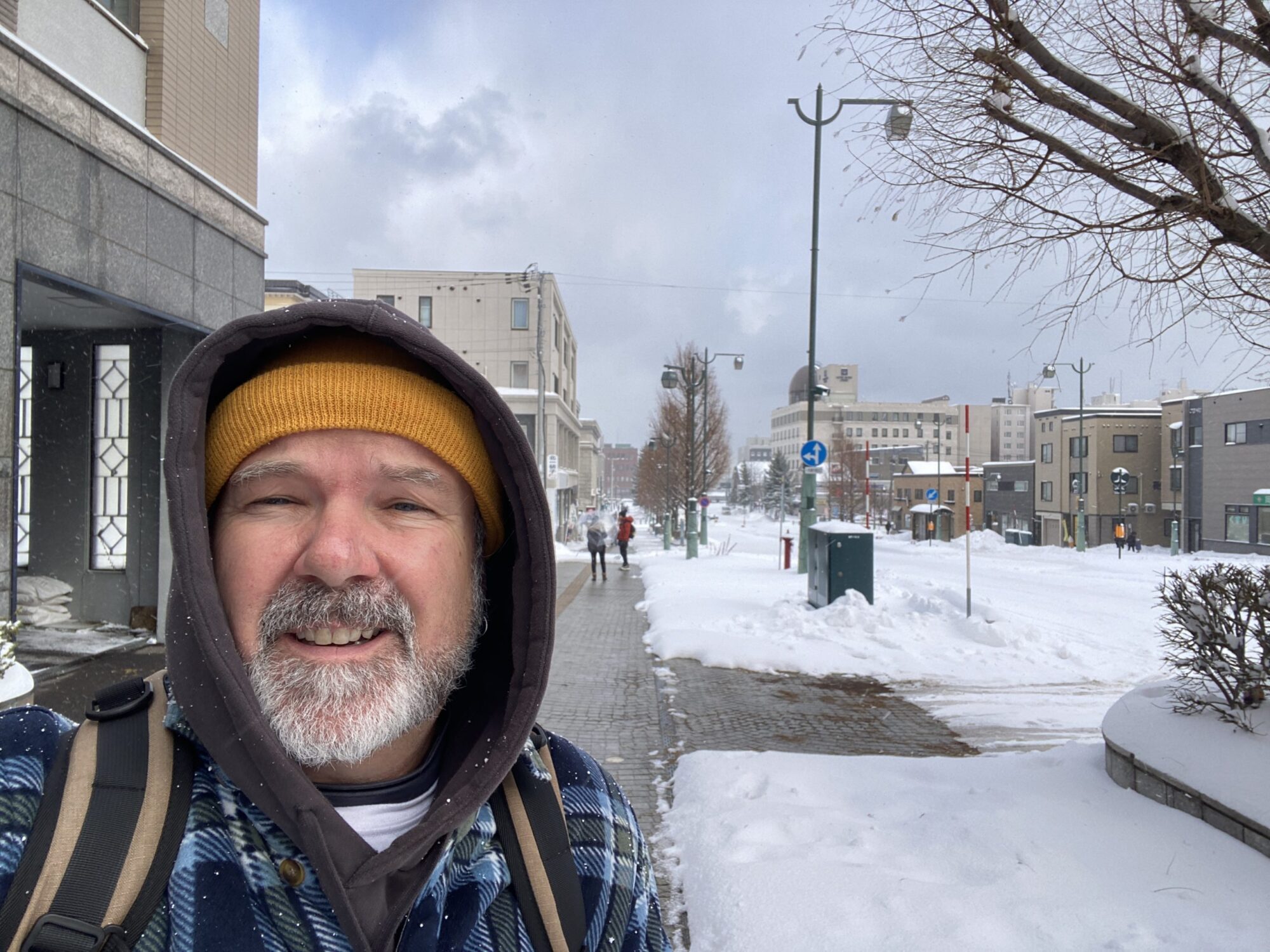
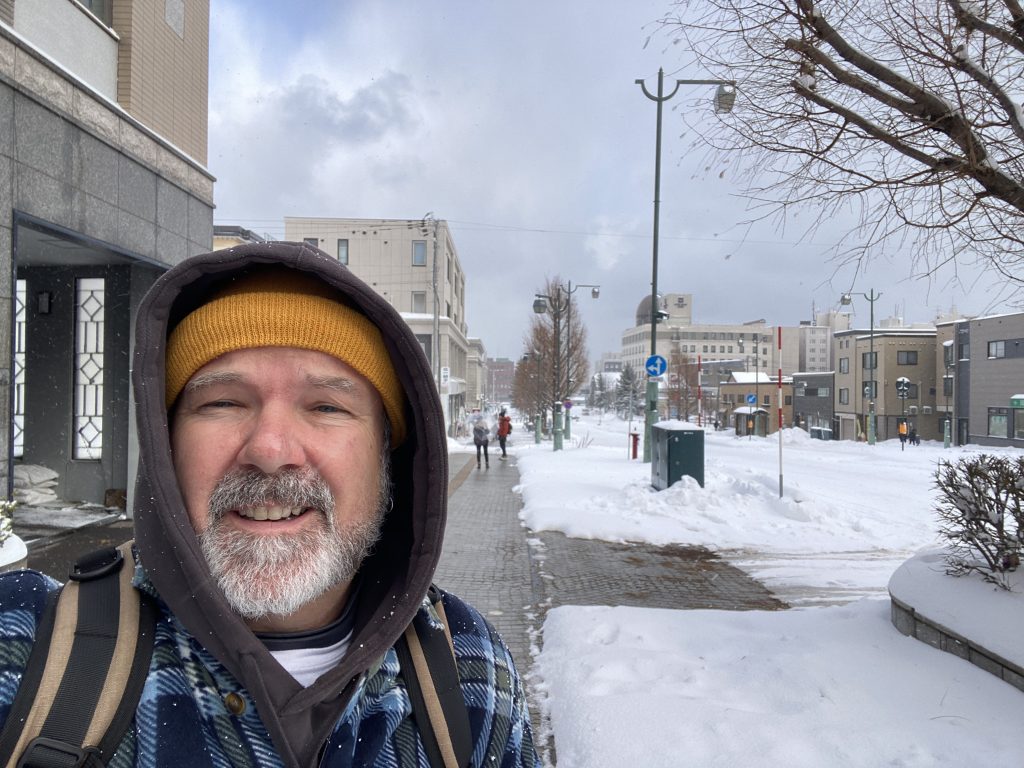
This next part took me longest to see even though I was literally wearing it. I was looking for the wrong fabric. I kept scanning for tapestries and feast day dress and coming up empty. But the textile heritage is not missing. It is denim. It is flannel. And it is not a metaphor. A pair of Levis and a button down flannel shirt with a pair of vans is literally my traditional cultural costume.
Riveted denim was patented in 1873 specifically for miners, the copper rivets placed at stress points to survive pickaxe and rock face labor. My oil wildcatters, miners, and pioneers wore a direct version of it. Flannel, as a fabric rather than just a pattern, traces back through Welsh and Scottish wool working traditions, the same damp climate, sheep herding economy my Borderer ancestors came out of. When that population crossed into North America, heavy woven wool became the default cold weather labor fabric because it was the fabric those specific immigrants already knew how to make. Pendleton, founded in Oregon in 1863, built its identity producing exactly that wool, in exactly that plaid, selling it straight into logging and ranching country like the Aberdeen my grandfather was born into. My Pendleton blankets are not just the best blankets in the world, they are my cultural textile tradition.
Tartan and flannel plaid are not cousins. They are the same textile technology, carried by the same population, doing the same job, three hundred years and one ocean apart. The pattern did not disappear when my family stopped being called Scottish and started being called American. It just got relabeled from clan tartan to logger’s flannel the moment it crossed from Highland sheep economy to Pacific Northwest timber economy.
The postwar hinge point is where it turns into the culture I actually grew up inside. Somewhere around my generation, this workwear gets adopted by people who never swung a pick or felled a tree, but whose parents or grandparents had. Surfers and skaters in Southern California started wearing repurposed extraction labor gear as a uniform of freedom instead of a uniform of work. Vans launches in Anaheim in 1966, a cheap canvas shoe built for exactly that shift. In-N-Out opens in Baldwin Park in 1948, feeding the new car centered leisure culture that replaced boomtown labor culture with boomtown consumer culture, same geography, same descendants, new purpose.
That is the wardrobe. This is culinary tradition. That is the whole tradition, no museum required. Just look around.
Walker and Lillian
To make this legible I built two figures out of the material itself. Call them Walker and Lillian. Walker for the Texas Ranger and wildcatter line. Lillian straight off the Scotch-Irish women who did the actual moving while the men were on derricks and in newsprint.
Walker wears riveted indigo denim faded to whatever region he is standing in, a plaid flannel shirt with the cuffs rolled twice, canvas shoes gone gray at the rubber, a waxed cotton work jacket with the collar up against fog. He does not attend anything regularly. He believes in working with his hands, keeping his word, and distrusting anyone who owns the thing he is building for them. His holidays are Labor Day, May 1st, the real one, genuinely, because it is literally his people’s holiday born out of the mines and mills his blood worked, and the Fourth of July as a county fair, not a parade. He would recognize a philosophy with no clergy and no owned text on sight, because it is the only kind of belief system his lineage has ever been allowed to keep.
Lillian wears high waisted denim broken in soft, a men’s cut flannel tied at the waist, huaraches or Vans depending on climate, a patched denim jacket because mending is inherited skill, not aesthetic. She is the one who kept a family moving when disaster struck, and she is the actual keeper of oral history in a family with few quilts or heirlooms to do that job instead. Her Thanksgiving table is the ritual, because it is the one holiday that does not require a fixed church or a fixed home, only whoever is around that year. She is the direct ancestor of every synthesized, self assembled belief system that runs through this family down to me, not because she read Theosophy, but because she had to build a life out of whatever was on hand, with no map and no institution behind her.
Where This all leads
I’ve been wearing my culture while looking outward for it. I’ve been documenting our belief system while thinking I was creating something new.
Baoism did not come from nowhere and it did not come from me alone. It is the fifth generation’s answer to a problem the the previous four generations kept hitting without ever naming it. No clergy, because clergy is an institution that can capture the value out from under the people who built it. No fixed text, because a fixed text is one more thing you cannot carry when you have to leave fast. No owned doctrine, because ownership is exactly the mechanism that took the copper, the oil, and the timber away from the people who did the actual work of finding it.
The distrust of centralized authority in my family is not a personality quirk. It is earned, commodity after commodity, going back to a border raids nobody alive remembers the details of. What looks like an absence of culture from the outside is actually a culture that never stopped moving long enough to be captured, worn thin on purpose so it would survive being uprooted again. The tapestry was never missing. It has been on me the entire time and it still fits.
My culture has a name in two separate places that never talked to each other. Historian Colin Woodard’s American Nations traces my Borderer ancestors from the Anglo-Scottish frontier through Appalachia and into what he calls the Left Coast, a hybrid of Yankee cities and Appalachian countryside stretching from San Luis Obispo up through Oregon and Washington, which is nearly the exact route your family walked from Taft to Long Beach to Aberdeen. Separately, the menswear industry has documented the other half of the story without ever mentioning migration patterns at all: what it calls Americana or heritage workwear culture is built entirely on labor clothing, denim patented for miners in 1873, flannel that once distinguished logging crews, worn today by people generations removed from the derrick and the timber camp who still feel most like themselves in it. One source names the region. The other names the wardrobe. Together they confirm what Walker and Lillian were standing in for all along, a real, documented culture built out of migration and labor rather than tapestry and feast day, still visibly alive on the ground right now.
I’ve often joked that my hometown is Interstate-5 which runs from the Canadian Border to the Mexican Border through the West Coast states but in fact, if we’re looking at a cultural homeland for my culture. The capital of culture that should be a pilgramage for all of those who wear denim and flannel to connect with their culture – then we should name that capitol as Coastal Highway 101. This is why I have named this culture, the Wanowan. I am a proud Wanowanian.