
Everyone wants to know the purchase price. That’s the wrong number.
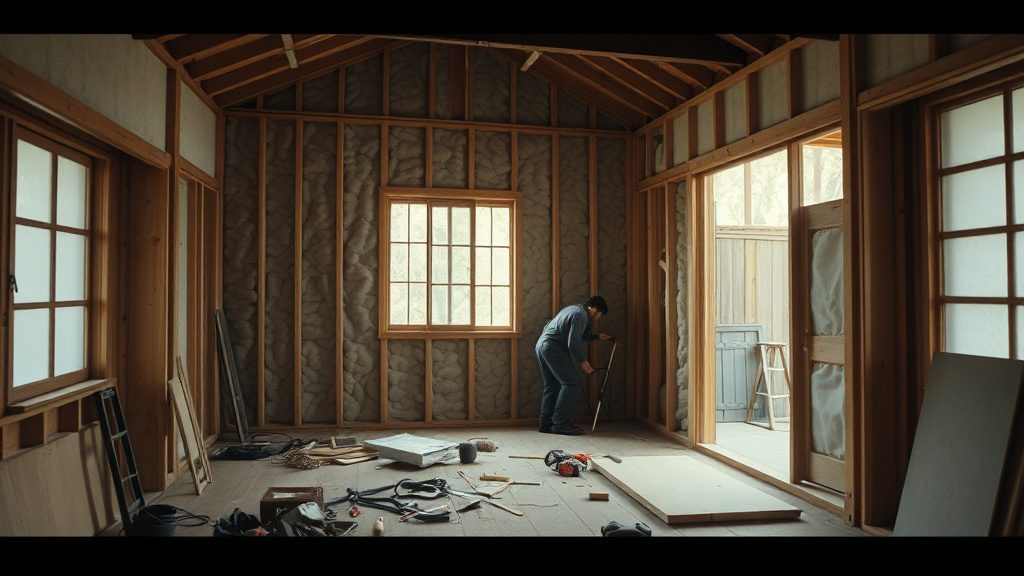
The right number is the total cost — purchase plus renovation — and in Japan, especially in Hokkaido, renovation is where the real spending happens. A house that costs ¥3 million ($20,000) might need another ¥3-8 million to bring it up to the standard where you’d actually want to live through a winter. That ¥3 million “deal” is really a ¥6-11 million project.
I’m going to walk through what specific renovation work actually costs in Hokkaido, based on contractor quotes, other foreign buyers’ experiences, and the numbers I’ve encountered firsthand in Otaru. Every number here is a range because Japan is not a flat market — what a contractor in central Sapporo charges for a kitchen remodel is different from what a two-man outfit in Yoichi charges for the same work. Geography, access, materials, and timing all move the needle.
These prices are in Japanese yen with approximate USD conversions at roughly ¥145/$1.
Roofing: ¥800,000-2,000,000 ($5,500-$14,000)
Hokkaido roofing is different from the rest of Japan. Down in Honshu, you’ll see ceramic tile roofs everywhere — those heavy, traditional tiles that look gorgeous and cost accordingly. In Hokkaido, most residential roofs are galvanized steel or tin. The reason is practical: tile roofs hold snow. Steel roofs shed it. In a place that gets five to six meters of cumulative snowfall per winter, shedding snow is a survival feature, not an aesthetic choice.
This works in your favor on cost. A full steel roof replacement on a typical Otaru house runs ¥800,000 to ¥1,200,000 for a straightforward job — tear off the old sheeting, inspect and repair the underlayment, install new steel panels. If the roof structure underneath is rotted or compromised (common in houses that have been vacant with a leaking roof), the price climbs toward ¥1,500,000-2,000,000 because now you’re replacing rafters and sheathing, not just the surface.
Partial repairs — patching sections, resealing seams, replacing flashing — can run ¥100,000-300,000 and buy you a few more years. Whether that’s smart depends on the roof’s overall condition. Patching a roof that’s going to need full replacement in two years is expensive procrastination.
Kitchen: ¥500,000-1,500,000 ($3,500-$10,000)
Japanese kitchens operate on a different model than Western ones. The standard is the “system kitchen” (システムキッチン) — a pre-fabricated modular unit that includes the sink, countertop, storage cabinets, and sometimes a built-in stove and range hood, all manufactured as a single integrated piece. You order it from a catalog, a truck delivers it, and installers bolt it into place.
This is dramatically cheaper than the Western approach of custom cabinetry, individually sourced countertops, and a general contractor assembling everything on-site. A basic system kitchen from a manufacturer like LIXIL, Takara Standard, or Cleanup runs ¥300,000-600,000 for the unit itself, with installation adding another ¥100,000-300,000.
A high-end system kitchen with better countertops, more storage, and integrated appliances can push toward ¥1,500,000 installed, but that’s a nice kitchen by any standard. Most akiya buyers in the ¥3-5 million purchase range are installing mid-range units in the ¥500,000-800,000 total range and ending up with something that functions better than what they replaced.
One thing to note: Japanese kitchen layouts are typically compact. If you want to blow out a wall and create an American-style open kitchen, you’re now in structural modification territory and the costs jump significantly.
Bathroom / Unit Bath: ¥600,000-1,200,000 ($4,000-$8,000)
The Japanese bathroom is one of those things that throws Western buyers the first time they see it. The entire room is a waterproof pod — floor, walls, ceiling, tub, drain — manufactured as a single sealed unit and dropped into the house during construction. This is called a “unit bath” (ユニットバス), and it’s been the standard in Japanese residential construction since the 1960s.
Replacing one is closer to replacing an appliance than doing a bathroom renovation. The old unit gets demolished and removed, plumbing connections get adapted if needed, and the new unit gets installed. A standard 1616-size (1.6m x 1.6m) unit bath replacement runs ¥600,000-900,000 fully installed. A larger size or a unit with upgraded features — automatic bath filling, built-in drying/heating fan, nicer finishes — pushes toward ¥1,000,000-1,200,000.
Compare this to a Western bathroom renovation where you’re tiling walls, waterproofing a shower, installing a separate tub, dealing with subfloor moisture barriers — easily $15,000-25,000 in the US for a similar scope. The unit bath approach isn’t glamorous, but it’s efficient, reliably waterproof, and fast to install. Most unit bath replacements take two to three days.
Tatami: ¥5,000-15,000 per mat ($35-$100)
Tatami replacement is the most accessible renovation in a Japanese house. The mats are modular — sized to a standard roughly 90cm x 180cm — and they lift right out.
There are three levels of tatami work:
Omote-gae (表替え): replacing just the surface rush weaving while keeping the existing straw core. This is the cheapest option, ¥5,000-8,000 per mat, and it works when the mats are yellowed or stained but the core is still firm and level.
Uragaeshi (裏返し): flipping the rush surface to expose the underside, which is less worn. Even cheaper, around ¥3,000-5,000 per mat, but only works if the mats haven’t been flipped before and the underside is in decent condition.
Full replacement (新調): new core, new surface. ¥10,000-15,000 per mat. Necessary when the mats are soft, uneven, or smell musty — which is most mats in a house that’s been vacant for years.
A standard 6-mat room (about 10 square meters) runs ¥30,000-90,000 for full replacement. A house with four tatami rooms might cost ¥120,000-360,000 to re-mat entirely. In the context of a full renovation, it’s a rounding error, but it makes an immediate visible difference.
Insulation: ¥500,000-1,500,000 ($3,500-$10,000)
This one matters more in Hokkaido than anywhere else in Japan. Houses built before the early 1990s often have insulation that ranges from inadequate to functionally absent. Thin fiberglass batts compressed into wall cavities, no ceiling insulation, no vapor barrier. In a Hokkaido winter, this means your kerosene heater is fighting physics, and physics is winning.
Modern insulation retrofit typically means spray foam — polyurethane foam injected or sprayed into wall cavities and ceiling spaces. It’s the most effective option for existing houses because it seals air gaps that batt insulation misses. A full spray foam retrofit of walls and ceiling runs ¥800,000-1,500,000 depending on house size and access difficulty.
A partial approach — insulating only the rooms you actually heat — can cut costs to ¥300,000-500,000. Some buyers insulate the main living areas and seal off unused rooms during winter. It’s a practical compromise that works if you don’t need the whole house heated.
Windows are the other half of the insulation equation. Single-pane windows in a Hokkaido house are an energy hemorrhage. Replacing them with double-pane or even triple-pane costs ¥30,000-80,000 per window, and a typical house has fifteen to twenty windows. That’s ¥450,000-1,600,000 for windows alone. Some buyers install interior secondary glazing (内窓) over existing windows instead, which runs about 60% of the cost of full replacement and avoids the labor of removing the old frames.
Plumbing: ¥300,000-800,000 ($2,000-$5,500)
A full repipe — replacing all water supply and drain lines in the house — runs ¥300,000-800,000 depending on house size, pipe accessibility, and whether you’re switching from old galvanized steel to modern PEX or CPVC.
Older Otaru houses often have galvanized steel water supply pipes. These corrode from the inside over decades, restricting flow and eventually leaking. If you turn on a faucet and the water comes out rusty or at low pressure, you’re looking at a repipe.
Drain lines are a separate issue. Clay or cast-iron drain pipes can crack, shift, or become root-infiltrated. Camera inspection of the drain lines (¥20,000-40,000) is money well spent before you commit to a property — discovering that the main drain line has collapsed after you’ve already bought the house is an expensive surprise.
Hot water in Japan typically comes from a tankless gas or kerosene water heater mounted on the exterior wall. Replacement units run ¥100,000-250,000 installed.
Electrical: ¥500,000-1,000,000 ($3,500-$7,000)
Older Japanese houses run on 30-amp service, which was adequate when the biggest load was a rice cooker and some lights. Modern Japanese houses run 60-100 amp service. If you’re adding air conditioning units, a large water heater, or any kind of workshop equipment, you’ll need a panel upgrade.
Panel upgrade alone: ¥100,000-200,000. Full rewiring of the house — new panel, new circuits, new outlets — runs ¥500,000-1,000,000. Partial rewiring of specific rooms or circuits falls somewhere in between.
Electrical work in Japan requires a licensed electrician (電気工事士). This is not DIY territory. The licensing is strict, and inspections happen. Don’t cut corners here — the insurance implications alone make it not worth the risk.
Exterior: ¥500,000-1,500,000 ($3,500-$10,000)
Exterior paint or siding replacement on a typical Otaru house runs ¥500,000-1,000,000 for paint on existing siding, or ¥800,000-1,500,000 for new siding installation. Hokkaido weather is hard on exterior surfaces — the freeze-thaw cycle eats paint, and the combination of heavy snow and salt air in a port city like Otaru accelerates deterioration.
This is partly cosmetic, but not entirely. Compromised exterior surfaces let moisture into the wall cavity, which leads to rot, mold, and insulation failure. If the paint is peeling and the wood underneath feels soft when you press it, the siding isn’t just ugly — it’s failing.
Flooring: ¥100,000-300,000 per room ($700-$2,000)
Converting a tatami room to hardwood or laminate flooring runs ¥100,000-300,000 per room, depending on size, material choice, and whether the subfloor needs work. This includes removing the tatami and its frame, leveling the subfloor, and installing the new surface.
Many foreign buyers convert some rooms to flooring while keeping one or two tatami rooms. It’s a reasonable compromise — tatami rooms are genuinely pleasant to use, and keeping a few preserves the character of the house while giving you the hard-surface floors that furniture and Western lifestyles work better on.
The Full Picture: Gut Renovation
A complete gut renovation of a small Otaru house — everything above, done properly — runs ¥3,000,000-8,000,000 ($20,000-$55,000). The low end assumes a structurally sound house that needs updated systems and finishes. The high end involves structural repair, seismic reinforcement, and full modernization of every system.
Add the purchase price and you’re looking at a total project cost of ¥6-13 million ($40,000-$90,000) for a fully renovated house in a Japanese port city with train access to Sapporo. That’s still less than a down payment on a median American house. The value proposition holds, even after renovation — it just isn’t as absurd as the purchase price alone makes it look.
Finding Contractors
This is where the language barrier becomes concrete. Most Hokkaido contractors operate in Japanese. Their websites are in Japanese, their quotes are in Japanese, their on-site communication is in Japanese.
Options for non-Japanese-speaking buyers:
Bilingual renovation companies. A small but growing number of companies in the Sapporo/Otaru area serve foreign buyers specifically. They handle translation, project management, and contractor coordination. You pay a premium for this — probably 15-25% above what a Japanese-speaking buyer would pay going direct — but you get communication and accountability.
Your real estate agent’s network. The agent who sold you the house often knows contractors they’ve worked with on previous akiya transactions. This is referral-based, which in Japan carries real weight. A contractor recommended by an agent is less likely to ghost you mid-project.
Municipal support. Some Hokkaido municipalities have renovation support programs that include contractor referrals and, in some cases, subsidies. Otaru’s city office and the Hokkaido akiya bank are starting points.
Labor costs in Hokkaido are lower than Tokyo but higher than rural Tohoku or Shikoku. The labor pool is also smaller — Hokkaido has fewer people generally, and fewer contractors specifically. During peak renovation season (spring and early fall), good contractors are booked months in advance. Plan early.
What You Can DIY
Japan’s building codes are strict and specific about what requires licensed professionals.
Requires a license: electrical work, gas plumbing, structural modifications, anything affecting load-bearing walls. Don’t try it. The fines are real, and if something goes wrong, your insurance is void.
Fair game for DIY: interior painting, wallpapering, garden work, tatami replacement (if you can figure out the sizing), cosmetic repairs, cleaning, and general non-structural maintenance.
The DIY culture in Japan is growing — home centers like Komeri and Homac carry everything you’d find at a Home Depot — but it’s still less established than in the US or Europe. Japanese homeowners historically hired professionals for almost everything. As a foreigner doing your own cosmetic work on a cheap akiya, you won’t be doing anything illegal, but you might get some curious looks from the neighbors.
The Rule of Thumb
Budget the purchase price again for renovation. If you buy a house for ¥3 million, plan on spending another ¥3 million to make it comfortable. Some houses need less. Some need much more. But ¥3M plus ¥3M gets most buyers into a house they’re happy to live in through a Hokkaido winter.
That’s ¥6 million total. About $41,000. For a renovated house in a country with universal healthcare, fiber-optic internet, and trains that run on time.
The purchase price gets the attention. The renovation budget determines whether you actually enjoy living there.