
Series: Buying Cheap Property in Otaru, Hokkaido, Japan — Article 9 of 30
When I tell people what I pay in annual property tax on my house in Otaru, they assume I’m leaving something out. There must be a homeowner’s association fee, or a special assessment, or some other line item I’m forgetting. There isn’t. The property tax on a cheap akiya in Japan is just genuinely, almost absurdly low compared to what Americans and Canadians are used to paying.
But the system that produces those low numbers is different enough from Western property tax that it’s worth understanding properly. The math isn’t complicated. The terminology is.
Two Taxes, One Bill
Japan levies two annual taxes on real property:
Fixed Asset Tax (固定資産税, kotei shisan zei): 1.4% of the assessed value. Every municipality in Japan charges this. It’s the main one.
City Planning Tax (都市計画税, toshi keikaku zei): Up to 0.3% of the assessed value. This applies to properties within designated urbanization zones. Most properties in Otaru proper fall within these zones. Rural properties outside the planning area may not pay this tax at all.
Combined maximum rate: 1.7% of assessed value. On paper, that might sound comparable to property tax rates in many US states. In practice, it produces dramatically lower bills because of how Japan calculates “assessed value.”
Assessed Value Is Not Market Value
This is the critical distinction that makes Japanese property tax so favorable for akiya buyers.
The assessed value — 評価額, hyōkagaku — is determined by the municipality, not the market. It’s recalculated every three years based on government standards, and it typically lands at 50-70% of what the property would actually sell for.
For akiya, the gap is often even wider. Old wooden houses depreciate aggressively in the Japanese tax system. A house that’s been standing for 22 years or more may have a building assessment near zero — the government considers the wooden structure fully depreciated. You’re essentially paying tax on the land value only, with a token amount for whatever remaining structural value the assessors assign.
So when I say the combined tax rate is 1.7%, that 1.7% is being applied to a number that might be half or a third of what you paid for the property.
A concrete example: say you buy a house in Otaru for ¥3 million. The city’s assessment might value the land at ¥1.2 million and the building at ¥300,000, for a total assessed value of ¥1.5 million. Your annual tax at the full 1.7% rate would be ¥25,500. That’s about $170 at recent exchange rates.
The Residential Land Reduction
It gets better. Japan offers a substantial reduction on property tax for residential land — specifically, land with a residential structure on it.
For residential plots under 200 square meters (about 2,150 square feet), the taxable value of the land is reduced to one-sixth of the standard assessed value for Fixed Asset Tax purposes, and one-third for City Planning Tax.
Most akiya lots in Otaru fall under 200 square meters. So that ¥1.2 million land assessment? For Fixed Asset Tax, it’s treated as ¥200,000. For City Planning Tax, ¥400,000.
Run the numbers on the same ¥3 million house:
| Component | Assessed Value | After Reduction | Fixed Asset Tax (1.4%) | City Planning Tax (0.3%) |
|---|---|---|---|---|
| Land | ¥1,200,000 | ¥200,000 (FAT) / ¥400,000 (CPT) | ¥2,800 | ¥1,200 |
| Building | ¥300,000 | ¥300,000 (no reduction) | ¥4,200 | ¥900 |
| Total | ¥7,000 | ¥2,100 |
Combined annual tax: ¥9,100. About $60.
That’s a real number. I’m not cherry-picking. For a fully depreciated building on a small residential lot in Otaru, annual property taxes can be genuinely negligible.
Now, not every akiya will be this cheap to hold. A larger lot, a newer building, or a better location will produce higher assessments. A realistic range for modest akiya in Otaru is ¥30,000 to ¥80,000 per year in combined property taxes. Call it $200-$550.
For Comparison
The median annual property tax payment in the United States is roughly $2,700. In Oregon, where I’ve also owned property, a comparable small house might generate a tax bill of $3,000-$5,000 per year. In New Jersey or Connecticut, the same house could easily top $6,000-$8,000.
In Otaru, you might pay less in a decade of property taxes than a single year’s bill in parts of the US. This isn’t an exaggeration for effect. It’s arithmetic.
This is one of the underappreciated advantages of cheap Japanese property. The purchase price is low, yes. But the carrying cost is also low. You can own a house in Otaru for years, visit it a few times annually, and the total tax burden doesn’t accumulate into anything threatening.
When the Bill Arrives and How to Pay
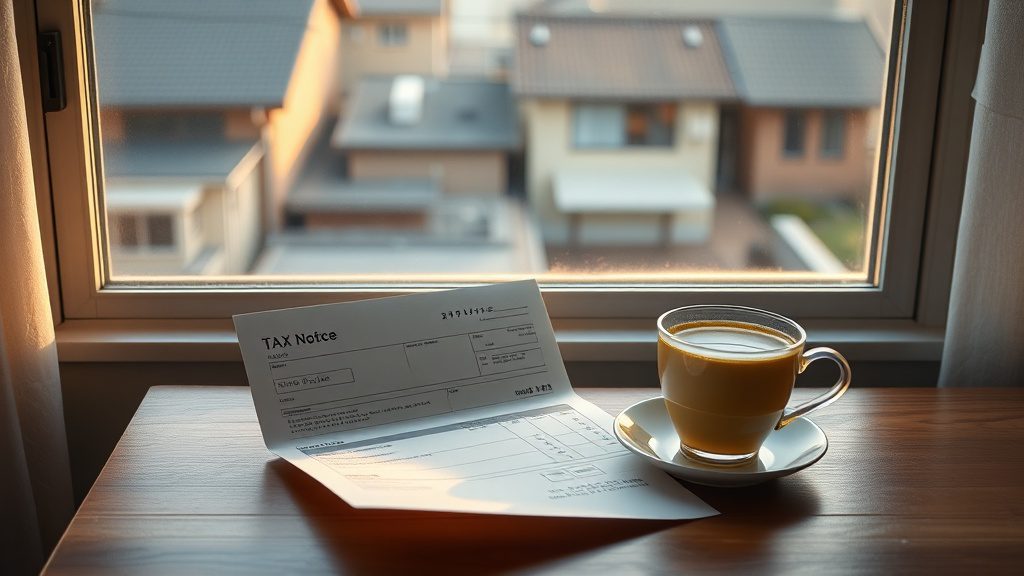
The property tax bill (納税通知書) arrives in April or May, addressed to whoever owned the property as of January 1st of that year. This matters for timing: if you buy a property in March, the seller was the owner on January 1st and is technically liable for that year’s tax. In practice, the buyer and seller usually prorate the tax at closing — you’ll reimburse the seller for the portion of the year after the transfer date.
Payment can be made in a lump sum or in four quarterly installments. Most people pay at convenience stores (konbini) using the payment slips included with the bill. You can also set up automatic bank withdrawal (口座振替) if you have a Japanese bank account, or pay via credit card through some municipality portals — though Otaru’s online payment options are more limited than Tokyo’s.
If You’re Not Living in Japan
Absentee owners face a practical problem: the tax bill arrives at the property address, in Japanese, and needs to be paid within a deadline. If you’re in Portland or Chiang Mai when the bill shows up, you might not even know it arrived.
The solution is appointing a tax payment agent — 納税管理人, nōzei kanrinin. This is a person in Japan who receives your tax notices and either forwards them to you or pays them on your behalf. It can be a friend, a property management company, or your real estate agent if they offer that service. You register this arrangement with the local tax office using a simple form.
I’d call this mandatory for anyone who isn’t living in their Japanese property full-time. Missing a tax payment isn’t catastrophic — there are late fees, not seizures — but it creates unnecessary complications, and the late fees compound.
Building Depreciation: The 22-Year Clock
Japanese tax assessment depreciates wooden residential buildings over 22 years. After 22 years, the building’s assessed value reaches a floor — not exactly zero, but close. Steel-reinforced concrete (RC) buildings depreciate over 47 years.
Most akiya are old wooden houses. If the house was built in 1990, its building assessment in 2026 has already hit the depreciation floor. You’re essentially paying property tax on bare land value, with a nominal amount for the structure.
This is a tax-assessment reality, not a physical one. A well-maintained wooden house in Japan can last 50, 60, 80 years or more. The tax system just considers it worthless after 22. This works heavily in the akiya buyer’s favor — you get a functional structure while paying taxes as if it barely exists.
There’s an important corollary here. If you demolish the old house and leave the lot vacant, you lose the residential land reduction. Your land tax could increase by up to six times. This is actually one reason so many akiya exist in the first place — owners keep deteriorating houses standing because tearing them down would spike their tax bill. For you as a buyer, it means think carefully before demolishing. Even a structure you don’t plan to live in might be worth keeping for its tax benefit, at least until you’re ready to build something new.
The Reassessment Cycle
Assessed values are recalculated every three years by the municipality. The most recent reassessment cycle was 2024, with the next coming in 2027. Land values in Otaru have been relatively stable — modest declines in some areas, slight increases near the canal and tourist district. Unless something dramatic changes in the local economy, your tax bill won’t swing wildly from one cycle to the next.
You can view your property’s assessed value on the tax bill itself, or by requesting a copy of the assessment register (固定資産課税台帳) from the city’s tax office. This is public information for property owners and is worth reviewing after each reassessment, if only to confirm nothing unexpected has changed.
The Bottom Line
Annual property taxes on a modest akiya in Otaru: ¥30,000-80,000. Two hundred to five hundred and fifty dollars a year. Less than most Americans pay per month.
This is one of the structural advantages that makes cheap Japanese property viable as a long-term hold. You don’t need rental income to justify the carrying cost. You don’t need to be living there twelve months a year to make the economics work. The tax system, almost by accident, makes part-time ownership of rural and semi-rural property remarkably inexpensive.
Whether the rest of the ownership experience is equally gentle — maintenance, snow, insurance, the occasional plumbing emergency — is a different story. But on the tax front, Japan is about as forgiving as it gets.