
What Happened: The Jeju 4·3 Incident (1947–1954)
The Jeju 4·3 Peace Park in Bonggae-dong, Jeju City, stands as a quiet but powerful memorial to one of the most devastating massacres in modern Korean history — a tragedy enabled and facilitated by the United States during its military occupation of southern Korea. Spanning nearly 36 hectares, the park includes the Peace Memorial Hall with exhibits and survivor testimonies, memorial tablets listing thousands of victims, monuments, an altar for the dead, and peaceful walking paths through the Forest of Peace. Entry is free, and it serves as both remembrance and a call for truth and reconciliation.
Yet the full story, particularly America’s central role, remains largely unknown outside Korea.
The Jeju 4·3 Incident: A Massacre Under U.S. Watch
Following Korea’s liberation from Japanese colonial rule in 1945, the peninsula was divided at the 38th parallel, with the southern half placed under the United States Army Military Government in Korea (USAMGIK). On Jeju Island, strong opposition to U.S.-backed separate elections in the south — seen as a permanent division of the country — led to growing unrest.
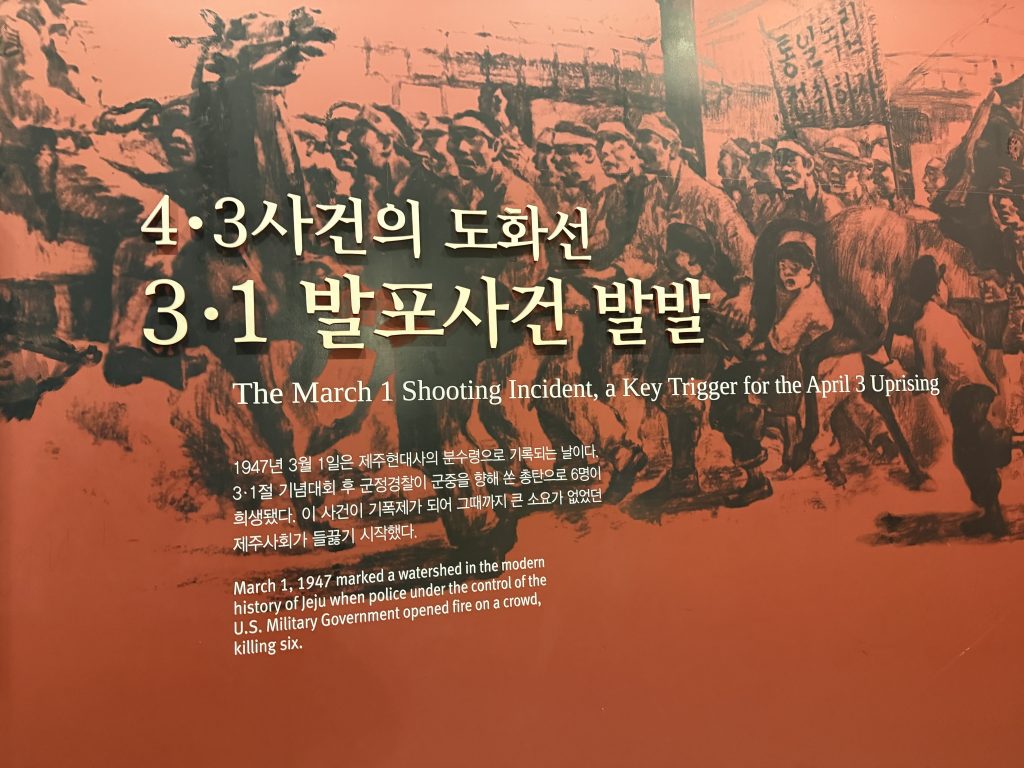
A peaceful protest on March 1, 1947, turned deadly when police (under U.S. authority) fired on crowds, killing several. Tensions escalated until April 3, 1948, when armed guerrillas (mostly linked to the South Korean Labor Party) attacked police stations and right-wing groups. What began as resistance to oppression and national division triggered a ferocious counterinsurgency.
Under USAMGIK authority, Korean police, right-wing youth groups (notably the Northwest Youth Association), and later South Korean forces launched scorched-earth campaigns. Villages were burned, civilians massacred, and suspected “leftists” — along with countless innocents — targeted indiscriminately. The violence dragged on until the early 1950s.
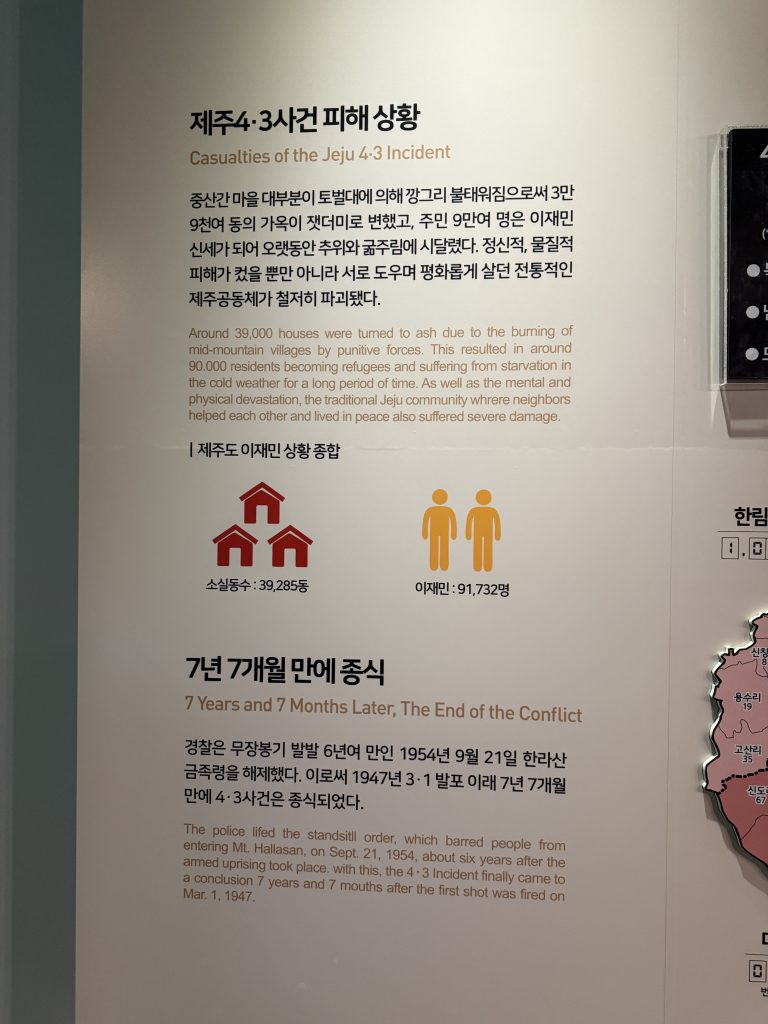
Official South Korean investigations estimate 14,000–30,000 dead or missing — roughly 10% of Jeju’s population at the time. Women, children, and the elderly formed a large share of victims. Hundreds of villages were destroyed.
America’s Direct Complicity: Command, Knowledge, and Propaganda
This was not a distant Korean affair. It occurred under full U.S. military government control. USAMGIK directed security policy, provided weapons, logistics, intelligence, and naval support (including destroyers for blockades). American officers, including Colonel Rothwell H. Brown, held command authority over forces on the island into August 1948. U.S. advisors knew of — and documented — the mass killings, rapes, torture, and village burnings but prioritized anti-communist stability for the May 10 elections over civilian lives.
Jeju was repeatedly labeled a “red island” by U.S. officials, with estimates claiming 70–90% of the population was communist or sympathetic. This ideological framing justified a campaign of “cleansing” the island of “Reds.”
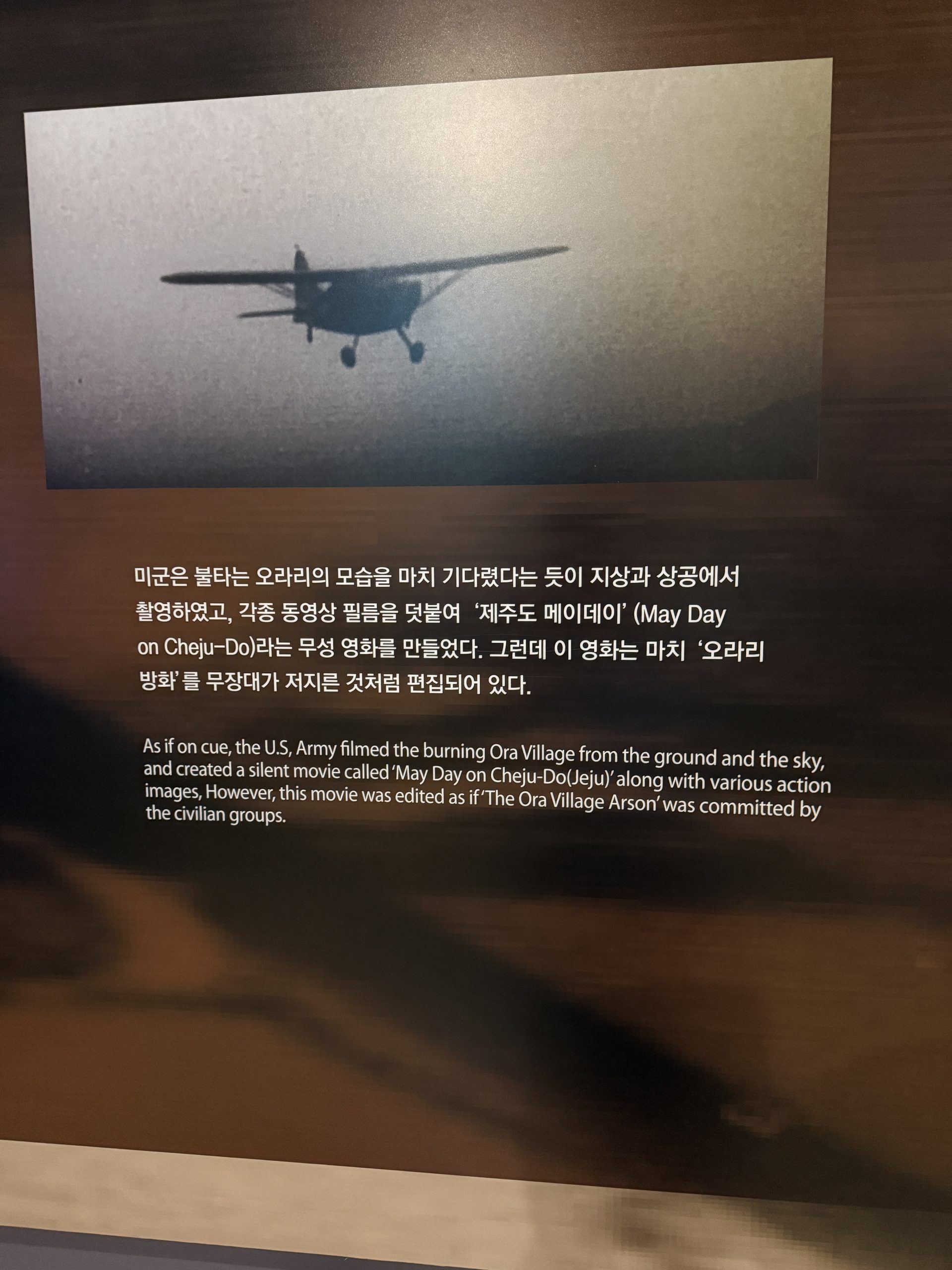
A particularly damning piece of evidence is the U.S. Army Signal Corps documentary May Day in Korea, Cheju-do, 1948. On May 1, 1948 — shortly after a fragile peace agreement — right-wing forces burned Ora-ri village. U.S. military cameramen filmed the arson from the ground and from reconnaissance planes. The resulting propaganda film portrayed the destruction and subsequent “police actions” as justified responses to communist guerrillas, helping legitimize further repression while shifting blame. In reality, the arson was carried out by right-wing elements to sabotage peace efforts.
U.S. reports described punitive operations as “reasonably successful” even while noting indiscriminate civilian deaths. Spotter aircraft and naval assets aided the campaigns. The official Jeju 4·3 Investigation Report concludes that USAMGIK and the U.S. Korean Military Advisory Group share responsibility for the events.
Critics, scholars (including Bruce Cumings), and victim advocates describe this as active complicity in atrocities — mass killings on a scale that qualifies as crimes against humanity in a peacetime context, driven by Cold War priorities to secure a divided, anti-communist South Korea.
The Peace Park and the Demand for Full Accountability
The Jeju 4·3 Peace Park, established after South Korea’s 2000 Special Law and opened in 2008, promotes remembrance, education on human rights, and reconciliation. It documents the events through photos, artifacts, and testimonies, without whitewashing the history.
South Korea has issued presidential apologies and reparations. Victim families and activists continue pressing the United States for formal acknowledgment and an apology — something the U.S. has avoided, offering only vague references to a “terrible tragedy.”
Why This Matters
The Jeju 4·3 massacre was not an isolated Korean tragedy. It was an early Cold War operation in which American strategic goals — containing communism and establishing a reliable southern state — overrode basic human protections. The “May Day” film and “red island” rhetoric reveal how propaganda and ideology enabled mass death.
Visiting the Peace Park today offers more than somber reflection. Just like visiting Hiroshima in Japan brings to light the U.S. crimes against humanity. It confronts a suppressed history and underscores the human cost of unaccountable power. In an era of ongoing global conflicts, the lessons of Jeju remain urgent: truth, remembrance, and accountability are essential to any claim of justice or peace.
If you’re in Jeju, the park is worth your time — a powerful counterpoint to the island’s natural beauty and a reminder that some war crimes, even decades old, still demand recognition.
May Day, America. May Day.