
Less than a used car. Sometimes less than a very used car.
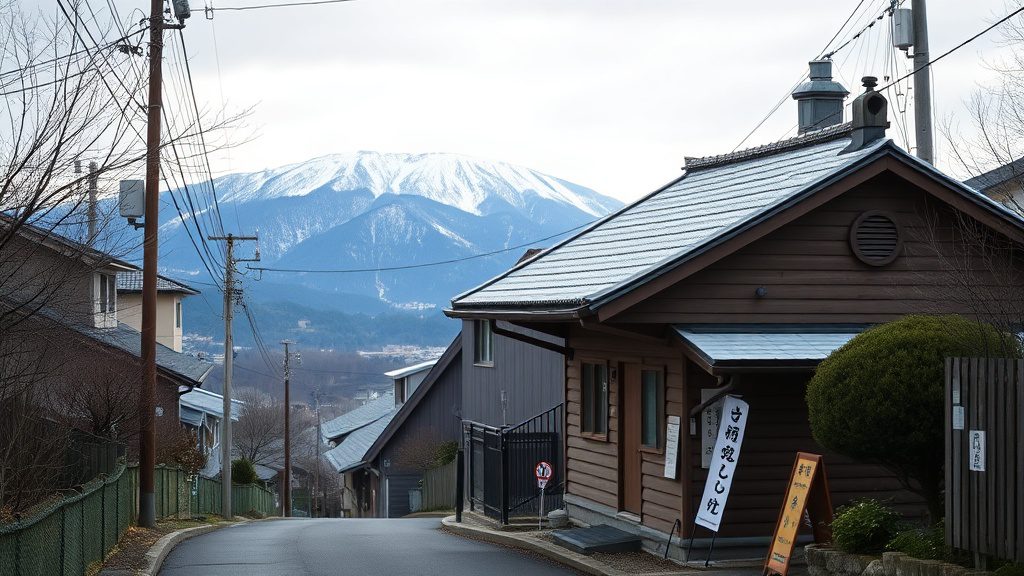
I bought my house in Otaru for under $30,000. That number is real, not a hook. It’s a three-bedroom wood-frame house on its own lot in a residential neighborhood thirty-five minutes by train from Sapporo, the fifth-largest city in Japan. The median home price in the United States is around $420,000. My Otaru house cost less than a 10% down payment on an American median.
But that number doesn’t tell the full story. Cheap is relative, and the purchase price is only the beginning of what you’ll spend. Here’s what property in Otaru actually costs, what you get at each price level, and where the real expenses hide.
The Price Spectrum
Property listings in Otaru span an enormous range. The numbers below use a rough conversion of ¥145 to $1 USD, which has been in the ballpark for the past couple of years. Currency fluctuates — a year ago it was closer to ¥160. Check the rate when you’re actually buying.
Under ¥1 million (under ~$7,000)
These exist. You’ll find them on akiya bank listings and occasionally on mainstream Japanese real estate sites like Suumo or Homes.co.jp. At this price, you’re usually looking at one of two things:
Land only. The structure has already been demolished or is slated for demolition. You’re buying a vacant lot. Land in residential Otaru neighborhoods can go this cheap when the lot is small, oddly shaped, or on a steep hillside with difficult access.
Structure requiring demolition. The house is still standing but nobody’s pretending it’s livable. Roof collapsed, foundation failing, decades of vacancy with no maintenance. You’d buy this for the land and budget ¥1-3 million more for demolition before you could do anything with it. Demolition costs in Hokkaido run roughly ¥10,000-20,000 per tsubo (3.3 square meters) depending on the structure, access, and asbestos situation.
Occasionally a technically livable house appears under ¥1 million. When it does, the listing will have been sitting for months, and the jusetsu (important matters explanation) will reveal why — drainage problems, no road access qualifying for rebuilding rights, or a location so remote within the city that even Japanese bargain hunters passed.
¥1-5 million ($7,000-$35,000)
This is the sweet spot for foreign akiya buyers, and it’s the range I bought in.
At this level you can find houses that are genuinely livable — or livable with manageable renovation. Think: 30-50 year old wooden houses, 3-4 bedrooms (or the Japanese equivalent in tatami rooms), small yards, residential neighborhoods. The structure stands, the roof holds water out, the plumbing functions, the electrical hasn’t been condemned.
“Livable” in this range means Japanese livable, which is a lower bar than most Westerners expect. Single-pane windows. Minimal insulation. A kerosene heater as the primary heat source. Tatami that’s seen better decades. A kitchen designed around a two-burner gas stove and a countertop the size of a cutting board. A bathroom where the shower, tub, and everything else occupy the same four-foot-square waterproof room.
None of this is broken. It’s how the house was built. Whether you renovate depends on your tolerance and your budget.
You’ll also find houses in this range that have been partially updated — maybe a new roof five years ago, or a renovated kitchen — where the owner died, the heirs don’t want it, and the estate is clearing inventory. These are the finds that make the search worthwhile.
¥5-15 million ($35,000-$100,000)
Here the inventory opens up. Renovated houses, newer construction (meaning 1990s-2000s instead of 1970s), better neighborhoods, closer to train stations, bigger lots.
A house at ¥10 million in Otaru might be a fully renovated 4LDK (four rooms plus living/dining/kitchen) with modern insulation, double-pane windows, a system kitchen, and a proper parking space. In most of the developed world, this house would cost $300,000 minimum. In Otaru, it costs the same as a year’s rent in a mid-tier American city.
This range also includes some houses with commercial potential — large enough or well-located enough to operate as a guesthouse, small café, or share house. Not every property qualifies for commercial use (zoning matters), but the ones that do are in this bracket.
¥15 million+ ($100,000+)
Above ¥15 million, you’re in Otaru’s premium market — canal district properties, waterfront locations, renovated historical buildings, or large lots in prime residential areas near Minami-Otaru or Otaru-Chikko stations.
These are still astonishingly cheap by global standards. A canal-adjacent property at ¥20 million ($138,000) would be a seven-figure listing in any comparable waterfront town in North America or Europe. But for the purposes of this series — buying cheap property — we’re mostly talking about the ranges below this.
How Otaru Compares
Some context on what these numbers mean relative to other markets:
- Median US home price (2025): ~$420,000
- Median Tokyo apartment (23 wards): ¥60 million+ (~$414,000) and climbing fast
- Median Sapporo apartment: ~¥25 million (~$172,000)
- Median Otaru house: depends radically on condition and location, but ¥5-10 million for something livable gets you into the middle of the market
The gap between Tokyo and Otaru is wider than the gap between San Francisco and rural Mississippi. You’re buying in a developed country with bullet trains, universal healthcare, fiber-optic internet, and one of the lowest crime rates on Earth — for prices that wouldn’t cover a parking space in Shibuya.
Why Is It This Cheap?
Four factors, all structural and none of them temporary:
Demographic decline. Otaru’s population peaked around 190,000 in the 1960s. Today it’s roughly 105,000 and falling by about 2,000 people per year. Fewer people means less demand for housing. Less demand means lower prices. The math is simple and relentless.
Cultural preference for new construction. Japanese homebuyers overwhelmingly prefer new-built houses. In most Western countries, a well-maintained 50-year-old house is a perfectly normal purchase. In Japan, it’s considered old, depreciated, and undesirable. Wooden houses are expected to be demolished and rebuilt every 30-ish years. A 30-year-old house in Japan isn’t just “used” — it’s architecturally end-of-life by local standards. The land retains value; the structure depreciates to zero. This cultural equation makes used houses dramatically cheaper than Western expectations would predict.
Inheritance refusal. When a property owner dies in Japan, heirs can legally refuse the inheritance — and many do, especially for rural or suburban houses they have no intention of living in. Inheriting a house means inheriting its tax obligations, maintenance costs, and eventual demolition liability. Heirs in Tokyo or Osaka look at a vacant house in Otaru and do the math: it costs money to own it, money to maintain it, and money to demolish it. Refusing is free. So they refuse, and the house sits.
Distance from Tokyo. Japan’s economy, culture, and population all gravity toward Tokyo. Properties gain value as they approach the capital and lose value as they recede from it. Otaru is about as far from Tokyo as you can get on the main islands — a 90-minute flight to New Chitose, then a train to Otaru. For domestic Japanese buyers, Hokkaido already feels remote. Otaru, 35 minutes past Sapporo, is remote plus one.
None of these factors are going to reverse. Japan’s population is projected to fall below 100 million by 2050. The cultural preference for new builds shows no sign of changing. Hokkaido will remain Hokkaido.
This is not a market that’s cheap because of a temporary downturn. It’s cheap because of permanent structural conditions.
The Catch: Purchase Price Is Not Total Cost
Here’s where the honest part of the guide earns its keep.
You can buy a house in Otaru for ¥3 million. Great. But if that house needs a new roof (¥1-2 million), insulation retrofit (¥1-3 million), kitchen and bathroom renovation (¥1-2 million), and foundation repair (¥500,000-2 million), you’ve just turned a $20,000 purchase into an $80,000 project.
Renovation costs in Hokkaido run slightly higher than the Japanese average because of cold-climate requirements — insulation, double-pane windows, snow-load-rated roofing, freeze-resistant plumbing. A contractor in Kanto might quote less for the same work, but the Kanto version won’t survive a Hokkaido winter.
The rule of thumb I’ve heard from other foreign buyers in Hokkaido: budget renovation costs at 1x to 3x the purchase price for a livable akiya. A ¥3 million house might need ¥3-9 million in work to bring it to a standard most Westerners would consider comfortable. Not all houses need maximum renovation, but going in expecting zero additional cost is a setup for regret.
I’ll cover renovation specifics in a later article in this series. For now, the key point: when you see a house listed at ¥2 million and think “that’s $14,000 for a house in Japan,” you’re right about the purchase price and probably wrong about the total investment.
Where to Find Listings
Three main channels for finding cheap Otaru property:
Municipal akiya banks. Otaru, like most Japanese cities with high vacancy rates, maintains an akiya bank — a free listing service for vacant properties whose owners want to sell. These listings tend to be the cheapest, because the owners are often elderly, absentee, or estates in the process of clearing inherited property. The downside: most municipal akiya banks are Japanese-language only, and the listings can be sparse or outdated.
Akiya-focused platforms for foreigners. Sites like Akiya & Inaka and similar English-language platforms aggregate akiya listings and sometimes add translation, inspection photos, and buyer support. Prices may be slightly higher (the middleman has to eat), but the accessibility is worth it if you don’t read Japanese.
Standard Japanese real estate sites. Suumo, Homes.co.jp, At Home, and Yahoo! Real Estate list Otaru properties alongside everything else in Japan. These require Japanese reading ability or a good translation tool, but the inventory is much larger than akiya-specific platforms. Search for 小樽市 (Otaru-shi) and filter by price.
Real estate agents. A local Otaru agent can access listings that don’t appear on any website, including properties where the owner hasn’t formally listed but is open to selling. Finding an agent willing to handle cheap akiya transactions is its own challenge — the commission on a ¥3 million sale barely covers the paperwork — but they exist. More on this in a later article.
What I Knew Going In
When I bought my house in Otaru, I wasn’t under any illusions about what I was getting. The price told me what the Japanese market thought the house was worth, and the Japanese market is honest. A house that costs less than a Honda Civic is priced that way for reasons.
I knew it would need work. I knew the systems were old. I knew Hokkaido winters would test everything the structure had left. I also knew that a house in a port city thirty-five minutes from a major metro, in a country with some of the best public infrastructure on Earth, for less than a single month’s mortgage payment in most American cities, was an opportunity that made mathematical sense even after renovation costs.
That math still works. Whether it works for you depends on what you’re willing to take on, what you’re willing to spend beyond the purchase price, and whether the gap between Japanese property values and the rest of the developed world looks like a warning or an invitation.
For me, it looked like an invitation. Still does.