
In early January 2024, I was living in Hawaii and doing the math on houses I couldn’t afford. Hawaii was off the table — I’d been living there, I have a daughter there, and the median home price was somewhere north of $1,500,000 on Oahu. Oregon wasn’t much better for what I wanted. I was a self-employed writer with income from books and buy/sell investments, and the US housing market had decided I didn’t exist.
So I started looking at other countries.
I’d lived overseas before. A lot. Morocco, Turkey, Indonesia, England, and a VW bus through most of the U.S. West Coast. The idea of buying property in another country didn’t feel exotic. It felt like the next obvious move that just hadn’t occurred to me yet.
Finding the House
In February 2024, I discovered an akiya marketplace — one of the growing number of English-language sites that curate Japan’s abandoned house listings for foreign buyers. I paid $15 for consultation access and spent an hour on a call with the American and Canadian owners of the site. They walked me through the basics: where to look, what price ranges were realistic, what to watch out for.
I told them I wanted Hokkaido. Specifically, I wanted Otaru – for some reasons that aren’t important here. The canal district. The train to Sapporo. The seafood markets on Sakaimachi Street. Winter that means something.
They had properties to show me. Listings under 5 million yen. Some under 3 million. Houses that would cost more to demolish than to buy.
I zeroed in on one.
The Advice I Ignored
Here’s where the story stops sounding like a real estate course and starts sounding like my actual life.
The consultants — the experienced foreign buyers who ran the marketplace — declined to facilitate the purchase themselves. They connected me with their own real estate advisor instead. This person had been through the process, knew the pitfalls, understood what akiya renovation actually costs in Hokkaido.
His advice was direct: “This is a terrible idea and you shouldn’t do it.”
He wasn’t being dramatic. He’d looked at the property. He’d seen the price. He’d done the renovation math. His professional opinion was that I’d spend more fixing the house than I’d paid for it, and that the total investment wouldn’t be recoverable in a market where new houses cost barely more than renovated old ones.
I heard him out. Then I asked for a referral to someone who would actually help me buy it.
The Agent
He connected me with a Tokyo-based real estate agent who was building a practice serving foreign buyers. She spoke fluent English, understood the akiya market, and was willing to work with a buyer who wanted to spend less than $30,000 on a house in Hokkaido. Her fees were reasonable. More importantly, she didn’t try to talk me out of it. She just laid out what the process would look like and asked if I was ready.
I was.
The Viewing
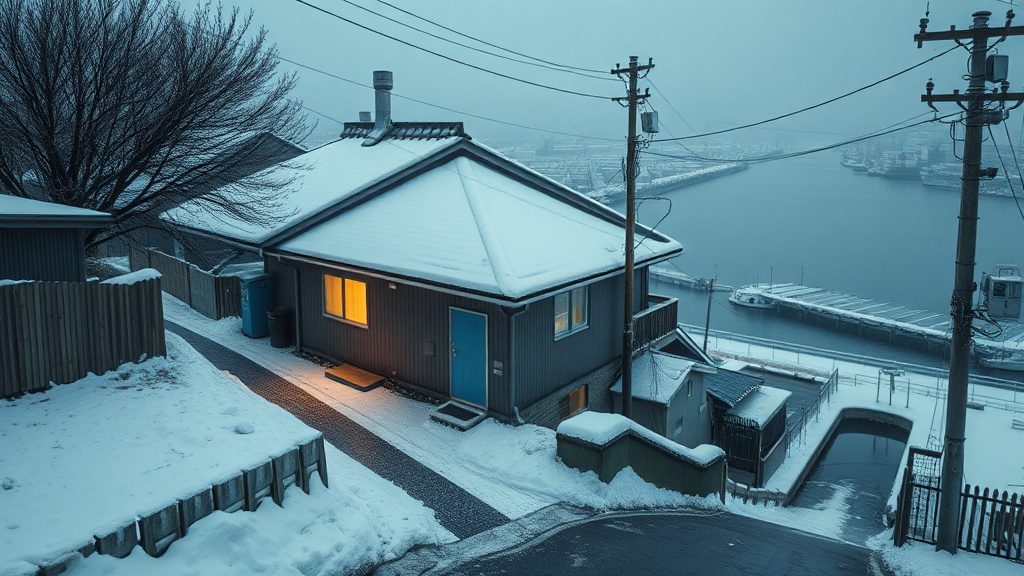
I flew to Otaru in winter. This was deliberate in the sense that I wanted to see the house in its worst conditions, and stupid in the sense that I couldn’t actually see half the house because of snow.
The walkthrough was brief. Snow covered the yard, the foundation walls, the lower portion of the exterior. The roof was white. The garden, presumably, was somewhere under three feet of packed snow. I could see the interior — the rooms, the walls, the tatami, the kitchen, the bathroom. I could feel that the house was cold, which in Hokkaido in February is like observing that the ocean is wet.
I did not hire an inspector. I did not crawl under the house. I did not check the roof. I did not run the plumbing because the pipes were winterized.
Was this smart? No. I’ve said so in previous articles in this series. A proper inspection would have cost 50,000 to 100,000 yen and would have told me things I instead had to discover over the following months with a flashlight and growing concern. But I was there, the house was there, and I had already decided.
The Decision
The price was under $30,000. In US housing terms, that’s a used car. In Japanese housing terms, for a detached house with land in a city 35 minutes by train from Sapporo, it was apparently a normal price for a house that old and that far from anyone’s wish list.
I made the offer. The seller accepted. We moved into the purchase agreement, the deposit, the due diligence period that I mostly spent trying to figure out how kerosene heaters work.
The final settlement happened online. I signed documents. The judicial scrivener filed the registration. I paid what was owed. The house became mine.
I named it Satoshi Manor. Partly as a nod to the fact that cryptocurrency proceeds made the purchase possible. Partly because “Satoshi” which is the smallest unit of Bitcoin, also has other meanings. It felt right for the first house I’d ever owned. And I have to admit, it was partly because the name made me laugh, which seemed important for a decision this impractical. It was a cheap house that I was naming Satoshi Manor as if I were some kind of lord.
Why Otaru
My daughter was living in Hawaii. The US Mainland to Hawaii is a five-hour flight, no direct routes from where I was. Japan to Hawaii is eight hours, but Otaru felt closer in the ways that mattered. Same ocean. Cheaper flights from Japan. I could visit more often for less money than I would spending on Mainland-to-Honolulu tickets.
That was the practical reason. The impractical reason was that it felt good. It felt right. I’d been to Japan before and it felt like home. Strangely, I missed it. The trains that run on time. The convenience stores that sell onigiri at 3am. The fact that you can walk home at midnight in any city in the country without checking over your shoulder. The particular quality of silence in a Japanese neighborhood at dawn.
I wanted to live somewhere that felt like it was built for actual human beings. Otaru felt like that.
The Teaching Job
Owning a house in Japan doesn’t let you live in Japan. I covered this in the previous article, but it’s worth repeating because it was the immediate problem I had to solve.
I took a one-year English teaching position. The school was in Sapporo. The work visa it provided gave me legal residency, which let me register at city hall, which let me set up utilities, which let me open a bank account, which let me start living in the house I owned.
There’s a humbling efficiency to the sequence. You buy a house for the price of a decent motorcycle. Then you take a job teaching English so you can legally sleep in it. Then you quit the job. That’s what I did. I don’t really recommend that course.
This doesn’t work with most visas and it wouldn’t have worked with mine except that I did it the right way. I can’t go into that here, but what I’m saying is that you probably can’t replicate what I did.
The short version is that my house was too far away from the school for me to be able to get there without giving away more of my time on the commute than I was comfortable with.
What the House Actually Needed
I didn’t know the full scope of the renovation until the snow melted. Then I could see the exterior. The foundation. The state of the garden. Things that winter had been kind enough to hide. I went into all of that in the Satoshi Manor videos of my first year.
The house needed work. Real work. Insulation, plumbing, electrical updates, interior refinishing, exterior repair. The kind of work that the advisor who told me not to buy was warning me about. None of it was beyond my ability, but as a result this wasn’t some magazine style renovation. It was work I did on a budget without being a skilled craftsman.
I’m not going to pretend the renovation is done, because it isn’t. This is an ongoing project. There are future costs that I haven’t paid yet. Later articles in this series will get into specific costs — what a new roof costs in Hokkaido, what insulation runs per square meter, what a plumber charges to replace frozen pipes that didn’t survive their third decade.
The Bet
I want to be clear about what this story is and what it isn’t.
It is a success story, but not one that you should take inspiration from without careful consideration of your own situation.. I own a house that needs significant investment to avoid future problems. I can’t live in it full time because I no longer have the visa to do so. I took a teaching job to legally live on a property that no sane person would have bought. The renovation has probably already cost more than the purchase price. The advisor who said “don’t do it” may turn out to have been right in a financial sense, but in another sense, it was the best decision I’ve ever made..
It’s a decision story. I was priced out of the country I was born in. I found a place where the math worked differently. I made a bet — on Otaru, on the akiya market, on my ability to figure out things I’ve never done before in a language I barely spoke.
I’m living inside that bet. Two years in, I haven’t lost it yet. The house is standing. The neighborhood is quiet. The train to Sapporo takes 35 minutes. The sushi on Sakaimachi Street is the best I’ve ever had, and I’ve eaten sushi in a lot of places.
I don’t plan to ever sell this house. Plans can change, but I don’t think that one will. That’s why I bought a second akiya. The second house is more of a bet. The first one was more of a need.
Whether the bet pays off depends on questions I can’t answer yet. Will Otaru’s property values hold or rise? Will the renovation costs stay within what I can manage? Will the next ten years of Japan’s demographic trajectory make this house worth more or less than what I put into it?
I don’t know. What I know is that I own two houses, in a city I love, in a country that lets foreigners buy property without restrictions. I paid less than $30,000 for both of them. And every day I am here, I walk in wonder whether it is past the canal, past the old stone warehouses, past the fishing boats coming in with the day’s catch, and I think: the math worked.
The rest I’ll figure out. I always do.