
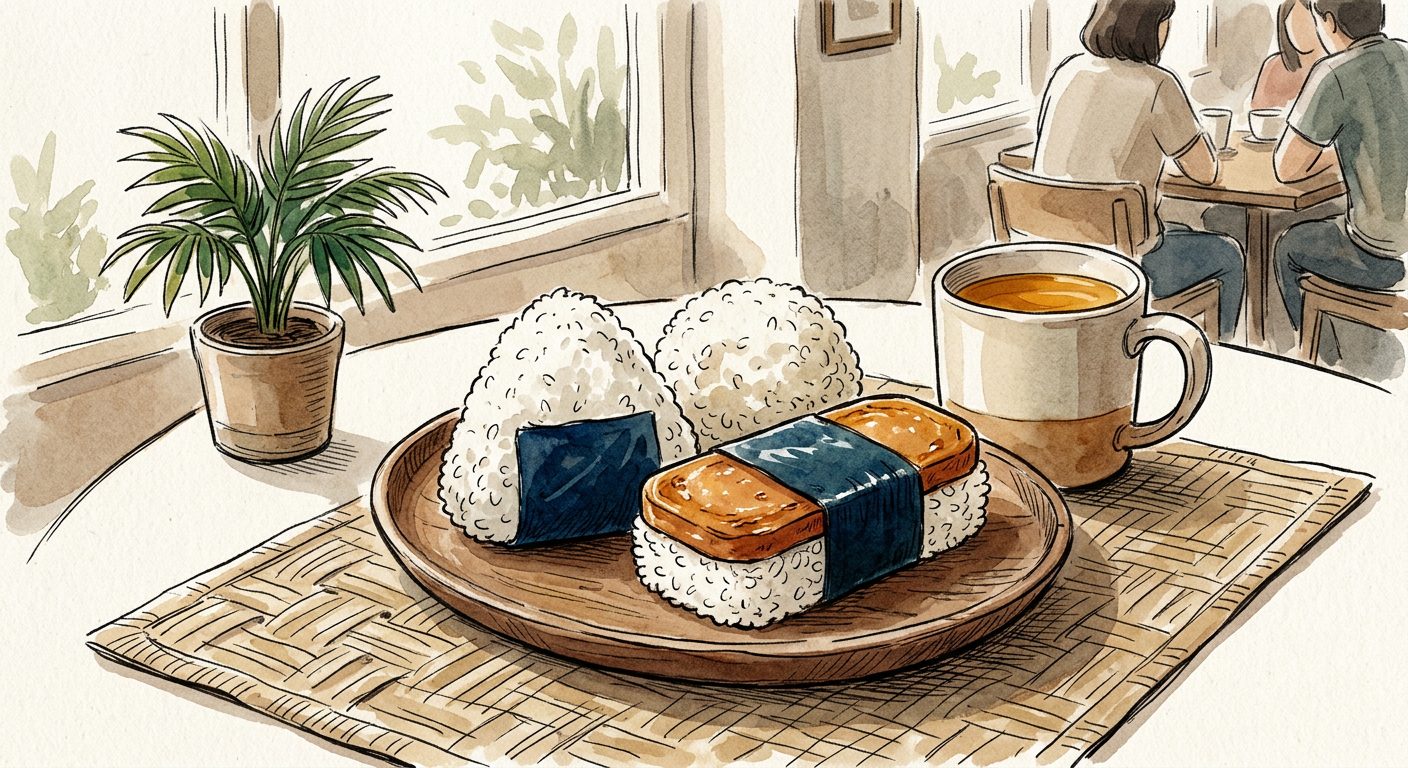
Musubi began in Japan. Long before it became a convenience-store staple or a beachside snack, it was a practical, portable way to carry rice. Formed by hand into triangles, cylinders, or simple mounds and often wrapped in nori, these rice balls—known as onigiri or omusubi—have roots stretching back centuries. Archaeological finds of hand-shaped rice date to the Yayoi period, while written references appear by the Heian era. The word musubi itself comes from the verb musubu, meaning “to tie” or “to bind,” reflecting the act of pressing the grains together. It also carries deeper cultural resonance, connected to ideas of connection, creation, and the generative force found in early Shinto concepts.
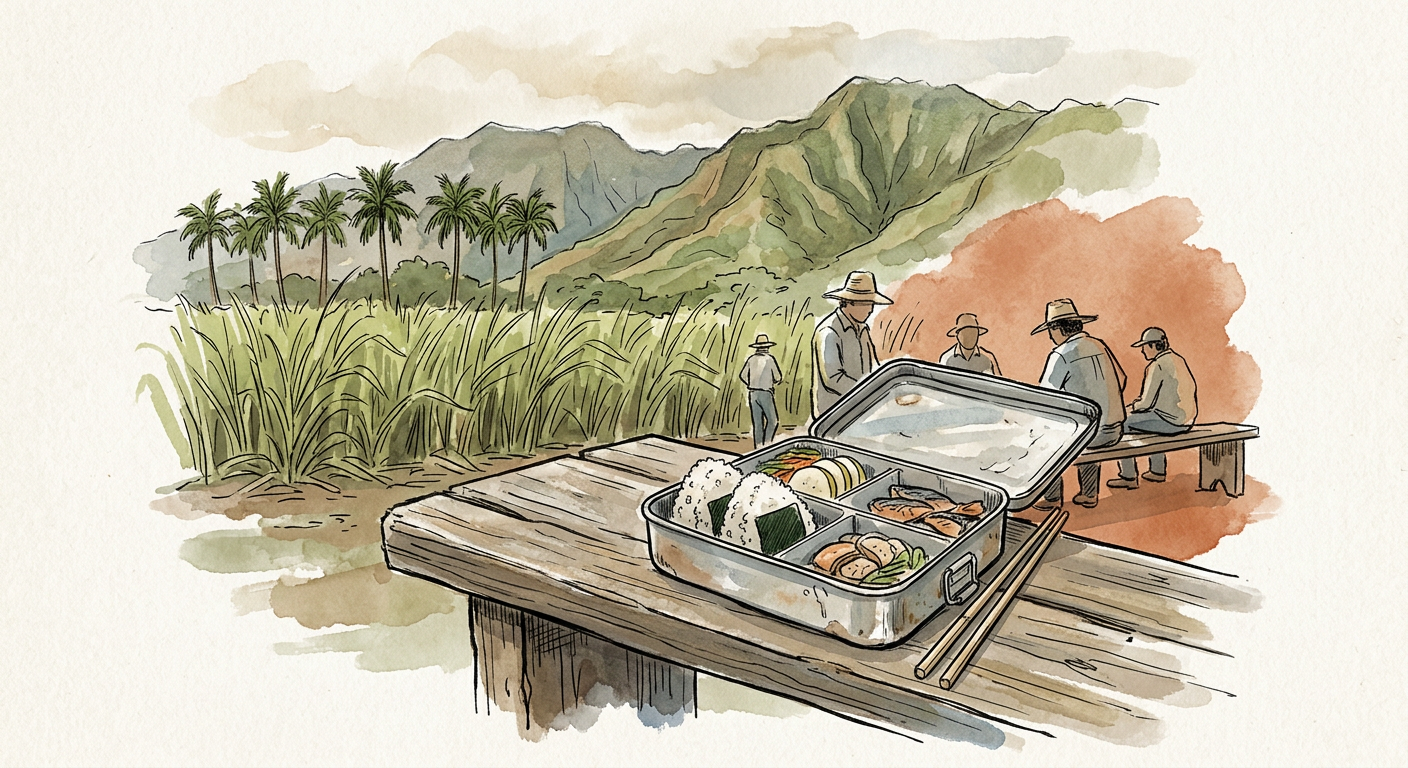
Japanese immigrants carried this tradition across the Pacific in the late 19th and early 20th centuries when they arrived to work Hawaiʻi’s sugar and pineapple plantations. In the islands, the rice ball adapted to new surroundings and ingredients. During and after World War II, Spam—cheap, shelf-stable, and widely available through military channels—became a local staple. Over time, cooks began pairing a seasoned, pan-fried slice of Spam with a block of rice and securing it with a strip of nori. The result was Spam musubi, a distinctly Hawaiian invention that fused Japanese form with American canned meat and island practicality. By the 1980s it had become an everyday icon, sold at gas stations, school lunches, and delis across the islands.
What makes the story especially satisfying is that the circle is now closing. Hawaiian-style musubi has found its way back to Japan. In Otaru, Hokkaido, a small café stands as one quiet example of this return. Omusubi Cafe Lea (オムスビ カフェ レア) opened in April 2023 in the Hanazono neighborhood, near Otaru City Hall. The name “Lea” is Hawaiian for happiness, and the space reflects that spirit with Hawaiian artwork and a warm, unpretentious atmosphere. The menu features carefully made rice balls using high-quality local ingredients—rice from Takikawa, eggs from nearby farms—alongside classics and a few Hawaiian-leaning options, including Spam.
I tried the Spam musubi there. It was better than most I’ve had in Hawaiʻi. The rice was perfectly seasoned and textured, the Spam properly glazed and balanced rather than overly sweet or greasy, and the nori crisp. It felt like a thoughtful evolution rather than a novelty.
Omusubi Cafe Lea
- Address: 北海道小樽市花園2-8-17 エムズフラッツ 1F (Hokkaido, Otaru-shi, Hanazono 2-8-17, M’s Flats 1F)
- Phone: 050-3145-0039 (+81 50-3145-0039)
- Instagram: @omusubi_cafe_lea
- Hours: Typically weekdays (often Mon–Wed & Fri, roughly 11:00–15:00); closed weekends and some Thursdays. They sell out, so check Instagram or call ahead. Takeout is available.
The café is small—only a handful of seats—and run with care. It is one of the places where the journey of musubi comes full circle: a Japanese form that traveled to Hawaiʻi, transformed, and returned home carrying a little of the islands with it. In Otaru, you can taste both the original idea and its Hawaiian chapter in the same bite.