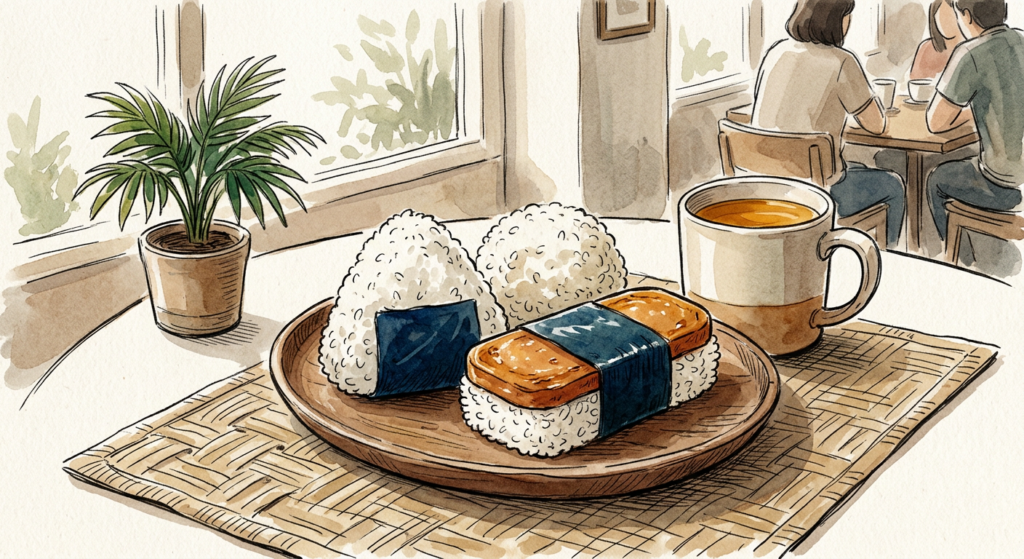
Three hand-pressed rice musubi on a small wooden plate: a classic triangle onigiri wrapped in nori, a round rice ball, and a rectangular Spam musubi with a glazed slice of pan-fried canned meat bound to a block of rice by a strip of nori

From Japan to Hawaiʻi and Back Again: The Full-Circle Journey of Musubi

Musubi began in Japan. Long before it became a convenience-store staple or a beachside snack, it was a practical, portable way to carry rice. Formed by hand into triangles, cylinders, or simple mounds and often wrapped in nori, these rice balls—known as onigiri or omusubi—have roots stretching back centuries. Archaeological finds of hand-shaped rice date …

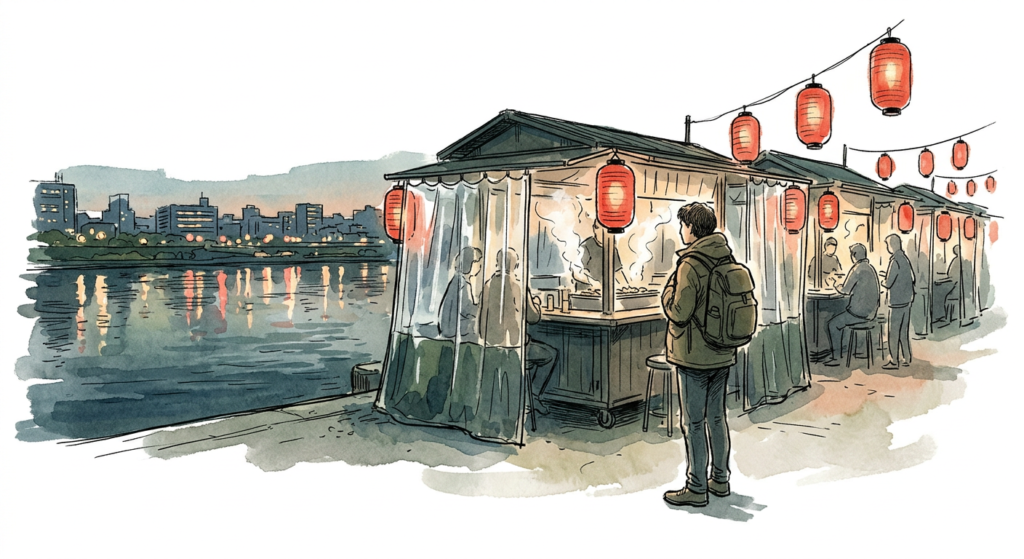
A single traveler standing at dusk beside a riverside row of small Japanese food stalls with red paper lanterns and clear plastic curtains, steam rising, city lights reflecting on the river

Alone in Fukuoka: When the Yatai Look Ordinary and the Real City Food Begins

Your friends cancel. The riverside row of yatai in Nakasu glows with the usual red lanterns and plastic curtains, but somehow the stalls look smaller, more ordinary than the photos promised. The air smells of pork bones and grilled chicken, yet the magic feels distant. You stand there for a minute, wondering if the famous …