
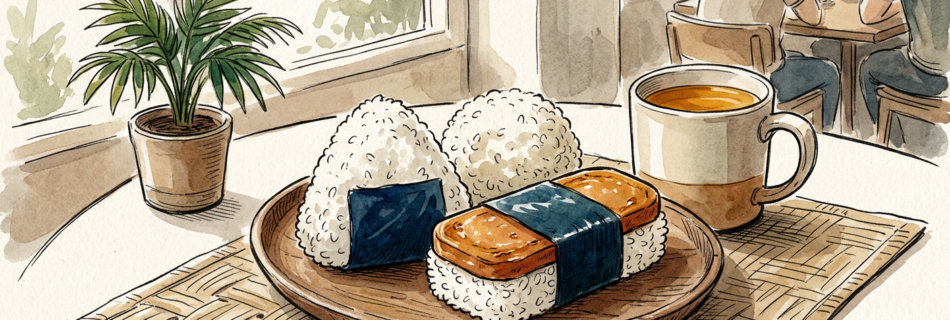
From Japan to Hawaiʻi and Back Again: The Full-Circle Journey of Musubi
Musubi began in Japan. Long before it became a convenience-store staple or a beachside snack, it was a practical, portable way to carry rice. Formed by hand into triangles, cylinders, or simple mounds and often wrapped in nori, these rice balls—known as onigiri or omusubi—have roots stretching back centuries. Archaeological finds of hand-shaped rice date …
Read more “From Japan to Hawaiʻi and Back Again: The Full-Circle Journey of Musubi”