
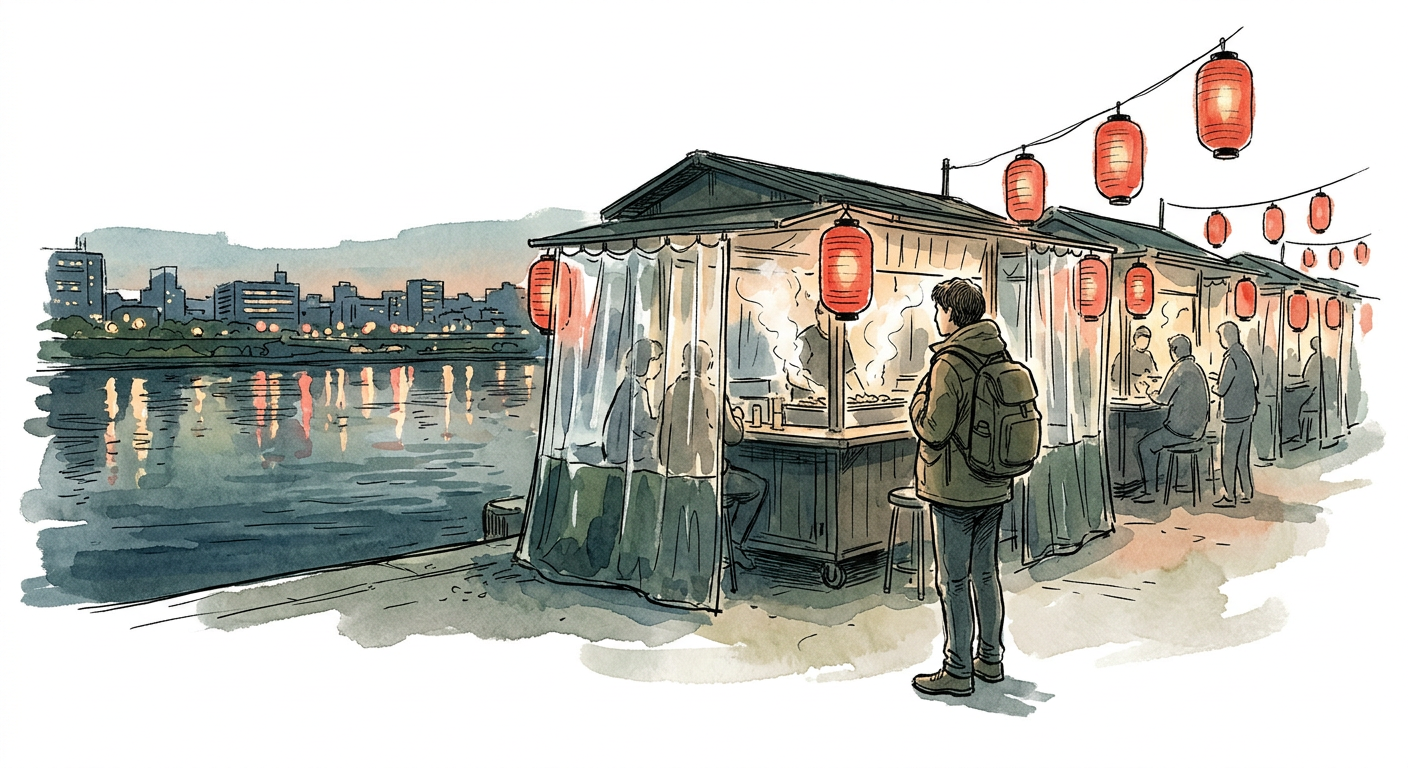
Your friends cancel. The riverside row of yatai in Nakasu glows with the usual red lanterns and plastic curtains, but somehow the stalls look smaller, more ordinary than the photos promised. The air smells of pork bones and grilled chicken, yet the magic feels distant. You stand there for a minute, wondering if the famous Fukuoka street-food experience is going to be a letdown.
It isn’t. You just have to stop looking at the yatai as the main event.
The Yatai Are the Atmosphere, Not the Destination
Fukuoka keeps roughly a hundred licensed yatai — more than the rest of Japan combined. They appear at dusk along the Naka River in Nakasu, on the sidewalks of Tenjin, and in the quieter Nagahama district, then vanish before morning. Each stall seats eight or ten people shoulder-to-shoulder under a tarp. You order ramen, yakitori, hitokuchi gyoza, or oden, drink cold beer, and leave when the next group is waiting.
The scene is photogenic and genuinely social. But if the stalls on any given night look average, that is normal. Many are tourist-oriented, the broth can be inconsistent, and the best versions of Fukuoka’s iconic dishes live in proper shops a short walk away.
Hakata Ramen: The Undisputed King
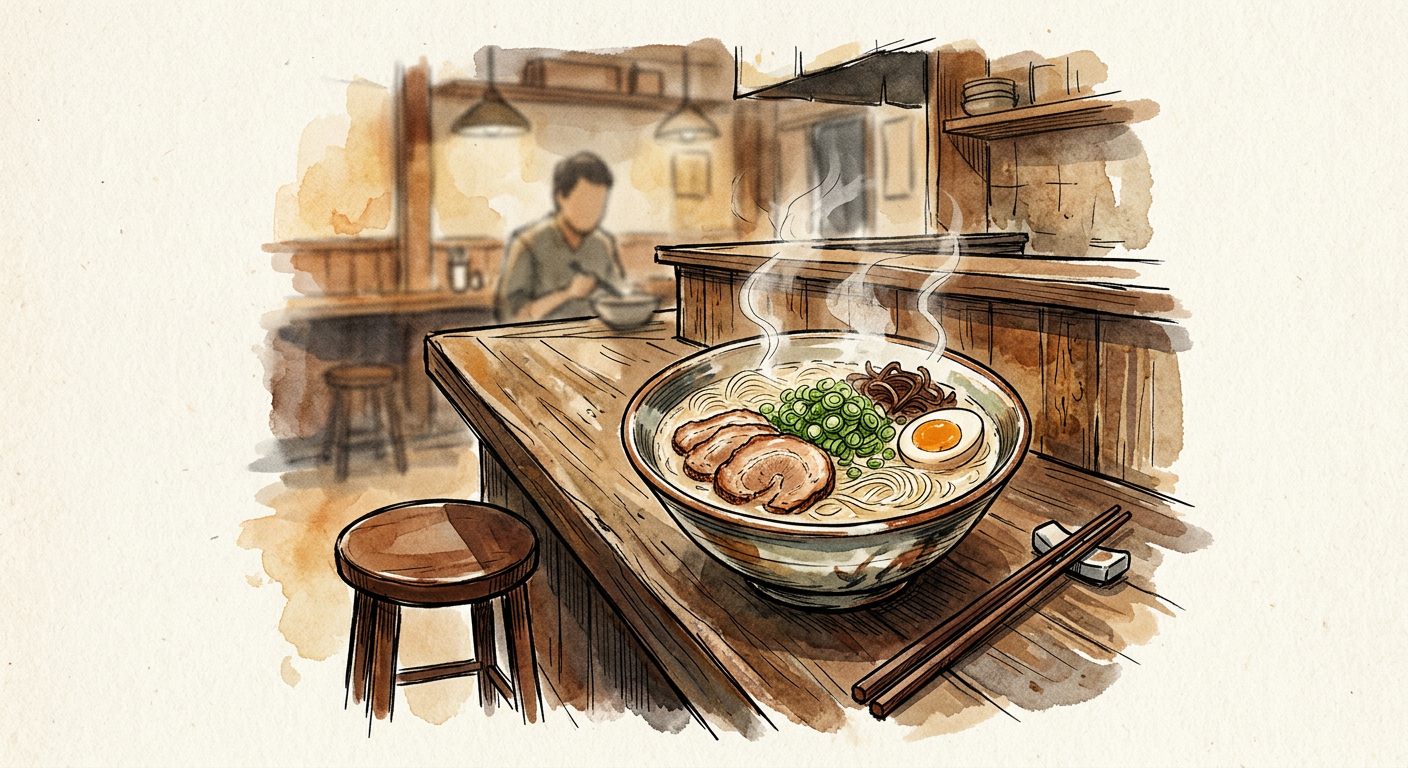
Hakata tonkotsu ramen is the reason most people come here for food. The broth is milky-white from hours of boiling pork bones, the noodles are thin and firm, and the local custom of kaedama (extra noodles) lets you finish every drop of soup. This is not a side dish. It is the city’s defining plate.
Even if you already had a bowl, the range is wide enough to justify another. Ichiran’s private booths let you focus completely on the food. Shin-Shin in Tenjin serves a more balanced, local-favorite version that many residents prefer to the big chains. Hakata Issou near the station makes an almost foamy, ultra-rich broth that some call “ramen cappuccino.” All of them work perfectly for one person. Counter seating is the rule, not the exception.
Motsunabe: The Soul Food That Works Alone
If ramen is the icon, motsunabe is the soul. Beef or pork offal, cabbage, garlic chives, and a soy or miso broth simmer together until the pot becomes richer with every ladle. At the end you add champon noodles or rice to the concentrated soup. It is hearty, slightly funky in the best way, and deeply local.
Many shops still prefer groups of two or more, but several now handle solo diners cleanly. Hakata Motsunabe Maedaya welcomes single servings and has counter seats. Rakutenchi offers lunch sets for one. Yamanaka has a proper solo course that includes a personal pot plus sides. Say “一人でお願いします” and most places will sort you out without fuss.
Mentaiko: The Quiet Local Pride
Fukuoka invented the modern Japanese style of karashi mentaiko — spicy, salted pollock roe. The purest expression is mentaiju: a whole piece of mentaiko laid over hot rice with nori and a house sauce. Ganso Hakata Mentaiju in Nishinakasu does it best. It is lighter than ramen or motsunabe, deeply umami, and completely solo-friendly. You can also find it simply on rice, in pasta, or as a side almost anywhere in the city.
Eating Alone Here Feels Natural
Fukuoka’s food culture was never designed only for groups. Counter seats, paper order forms, and fast turnover mean a single diner is ordinary. The best bowls and pots do not require company. They require appetite and a willingness to walk five or ten minutes past the most photographed stalls.
So the yatai can look ordinary on any given night. That is fine. The real Fukuoka meal is still waiting a short walk away — rich, specific, and perfectly willing to feed one person who showed up after the plans fell through.