
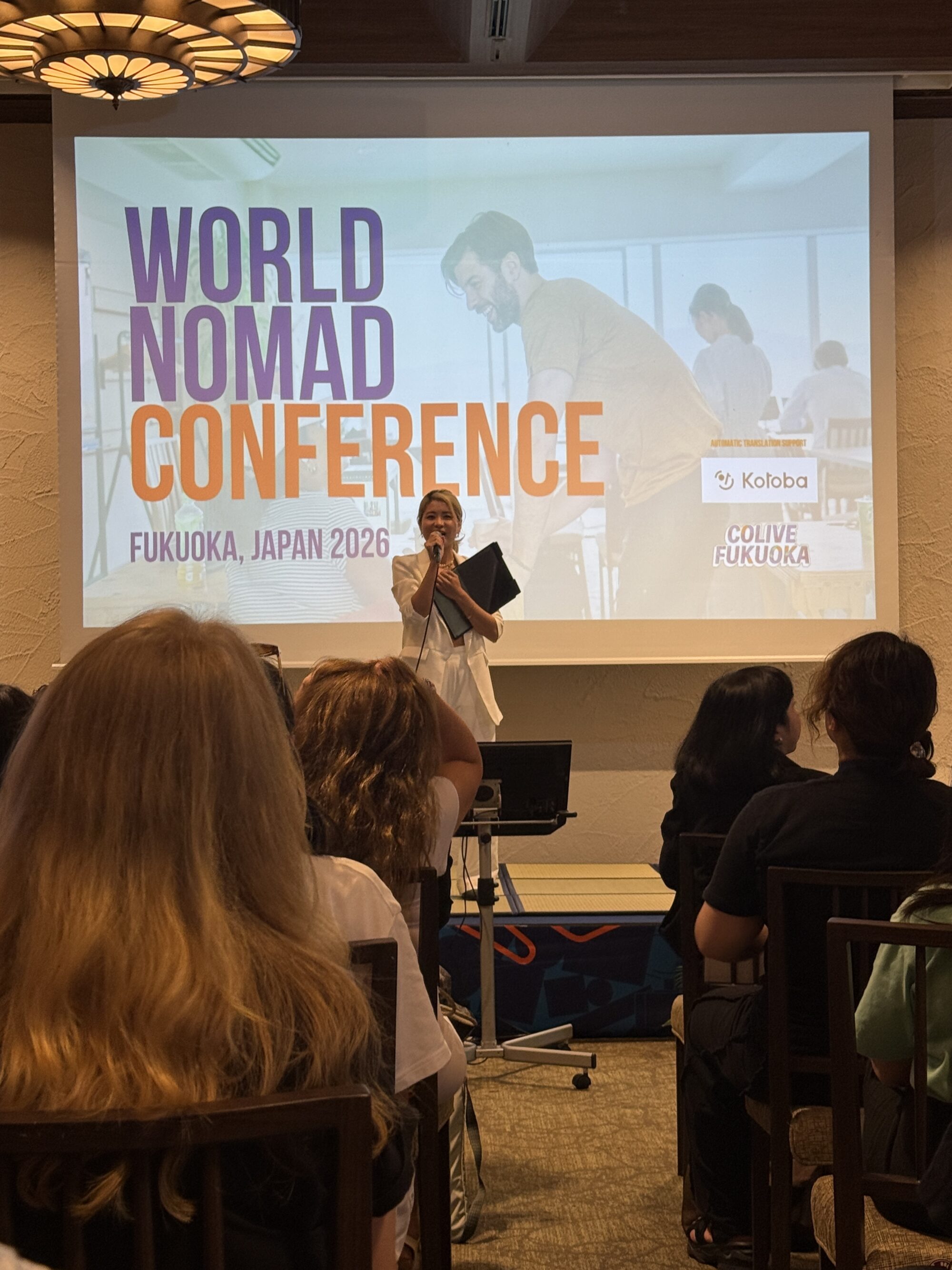
Most cities that court digital nomads do it with a visa page and a coworking map. Fukuoka invites them to a shrine, a seaside conference and ten towns across Kyushu, then asks them to stay a while. The World Nomad Conference, held on 30 September 2026 at The Luigans in Uminonakamichi Seaside Park, opens the fourth edition of Colive Fukuoka, an eleven-day program that runs until 10 October.
What Colive Fukuoka is
Colive Fukuoka began in 2023 as a small gathering organized by yugyo inc., a Fukuoka company founded in September 2022 and led by CEO Ryo Osera. It grew quickly. The 2025 edition drew 496 participants from 57 countries and regions, and nomad voters named it Best Global Nomad Fest in the Nomad Retreats Awards 2025. As of 21 September, 334 people from 44 countries and regions had registered for 2026.
The organizers track what those visitors do once they arrive, and the numbers explain why local governments have signed on. Participants in 2025 stayed an average of 42 days in Japan, 23 of them in Fukuoka City, and spent around ¥530,000 each. That is roughly 2.3 times what the average foreign visitor spends in Japan, where the typical stay is about 9.5 nights.
The conference
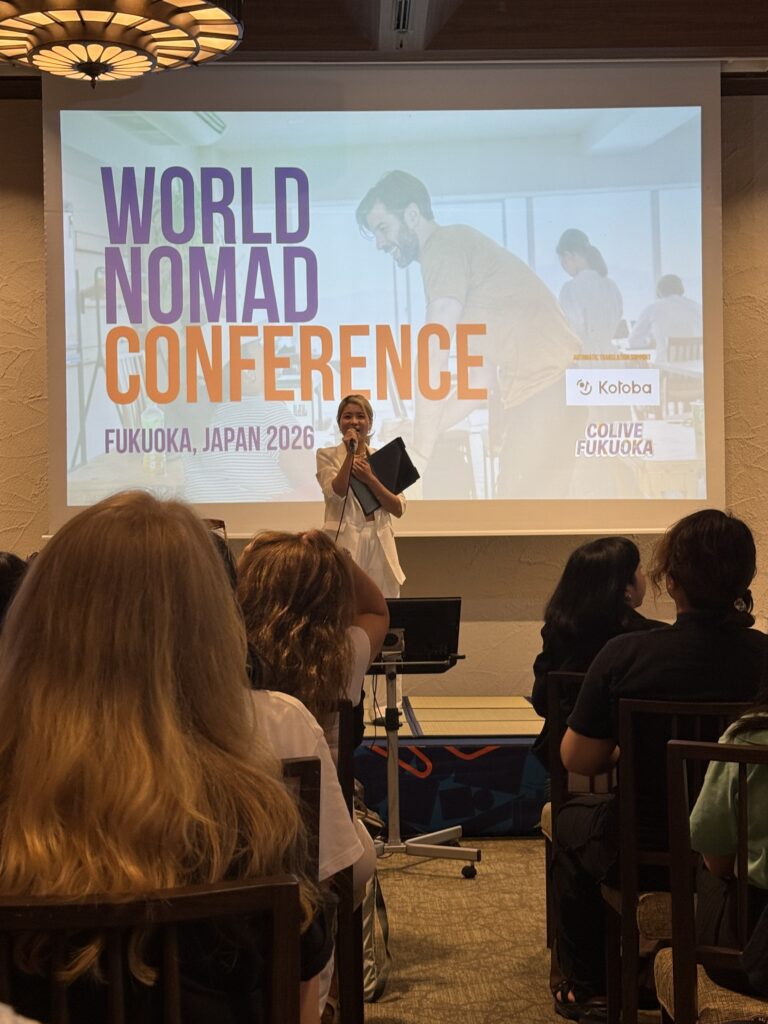 The World Nomad Conference was free with advance registration and ran as a single afternoon, 14:00 to 17:30, in English with automatic multilingual captions. Its question for 2026 was “How can digital nomads create impact for local communities?” The framing matters. Much of the conversation about remote workers in tourist towns has been about rents and crowding. This one starts from the other end: what a place gets back when mobile workers arrive as contributors and stay long enough to be known.
The program moved from policy to practice:
- Keynotes: Ryo Osera on “The Fukuoka Model,” and Tomohiro Oya of Airbnb Japan on global platforms working with regional partners.
- “Where the world stands”: seven five-minute talks from practitioners running nomad programs in other countries, including Holger Mette, Jeong Hyun Cho, Markos Korvesis, John Ho, KK Hsu, Neşen Yücel and Marco Traina.
- “What welcoming looks like on the ground”: case studies from four Japanese places receiving nomads (Kotohira, Shimoda, Kanazawa and Fukuoka), followed by a discussion.
- “What comes next”: Gonçalo Hall, Aleix Rodríguez Brunsoums and Dimitris Tselios.
- Q&A and an unconference facilitated by Akina Shu, with closing remarks from Professor Atsushi Tanaka.
The day is framed by Fukuoka itself. A formal worship ceremony at Shikaumi Shrine on Shikanoshima preceded the talks, a sunset cruise followed them, and the opening party ran into the evening at The Seaside Deck in Saitozaki.
Beyond the first day
The conference is the free front door to a paid program. Standard and Premium passes (listed at €449 and €899) cover the rest:
- Ikigai Academy (1–2 October), where more than 20 speakers, most of them Japanese, take on ikigai, the idea of a reason for living. Alongside the talks: Hakata-goma top spinning from third-generation master Chikushi Juraku, tea ceremony, calligraphy, and sencha and matcha from Kyushu.
- Synapse Festival (2–4 October), a music and art festival.
- Ramen Tech (7–11 October), Fukuoka’s startup festival.
- Two coliving programs: Hoppin Fukuoka, two weeks of shared living with local volunteers, and Fukuoka Builders’ Coliving, which moves between cities from 30 September to 14 October.
The program also reaches well past the city. Participants can base themselves in Yame, Koga, Buzen, Yanagawa, Shingu or Dazaifu in Fukuoka Prefecture, in Ureshino in Saga, or on the Goto Islands and in Nagasaki. That spread is deliberate. The organizers argue that Kyushu should welcome people from abroad differently from Tokyo or Kyoto, by dispersing them across the region instead of concentrating them in a few famous streets.
Why Fukuoka
Japan introduced a digital nomad visa in 2024, allowing eligible remote workers to stay for up to six months. Fukuoka moved early to make itself the obvious place to use it, pairing the city’s startup support with an event that puts newcomers in front of local people from the first day. Whether that model holds as numbers grow is the open question the conference is built around. A nomad who stays 42 days, eats in a neighborhood and learns the name of the woman who runs the tea shop is a different guest from one who stays four nights. The towns in the program are betting on the first kind.