
What It Actually Costs
Kathmandu has a way of making a traveler recalibrate. Landed after weeks in Ladakh’s thin, expensive air, the city’s chaos and its prices both come as a kind of relief. The math here works differently than most places, and the sooner a traveler understands the local logic of money and food, the sooner the trip stops feeling like a series of small negotiations.
The Rupee Reality
The Nepali rupee trades at roughly 151 to 154 per US dollar, and that exchange rate works in a traveler’s favor. A tourist visa on arrival costs about NPR 4,500 for fifteen days, NPR 7,500 for a month, or NPR 18,750 for ninety days, payable in USD cash or by card at Tribhuvan airport. ATMs in Thamel are plentiful and reliable, but they cap withdrawals somewhere between NPR 10,000 and 20,000 per transaction, and each pull carries a fee that is larger than a fee you’d pay at any USA ATM. Small bills matter more here than in most countries. Bus conductors, momo vendors, and taxi drivers rarely have change for a 1,000 rupee note, so breaking large bills at a bigger shop before heading into the alleys of Thamel saves a lot of friction later.
Eating Well, Spending Little
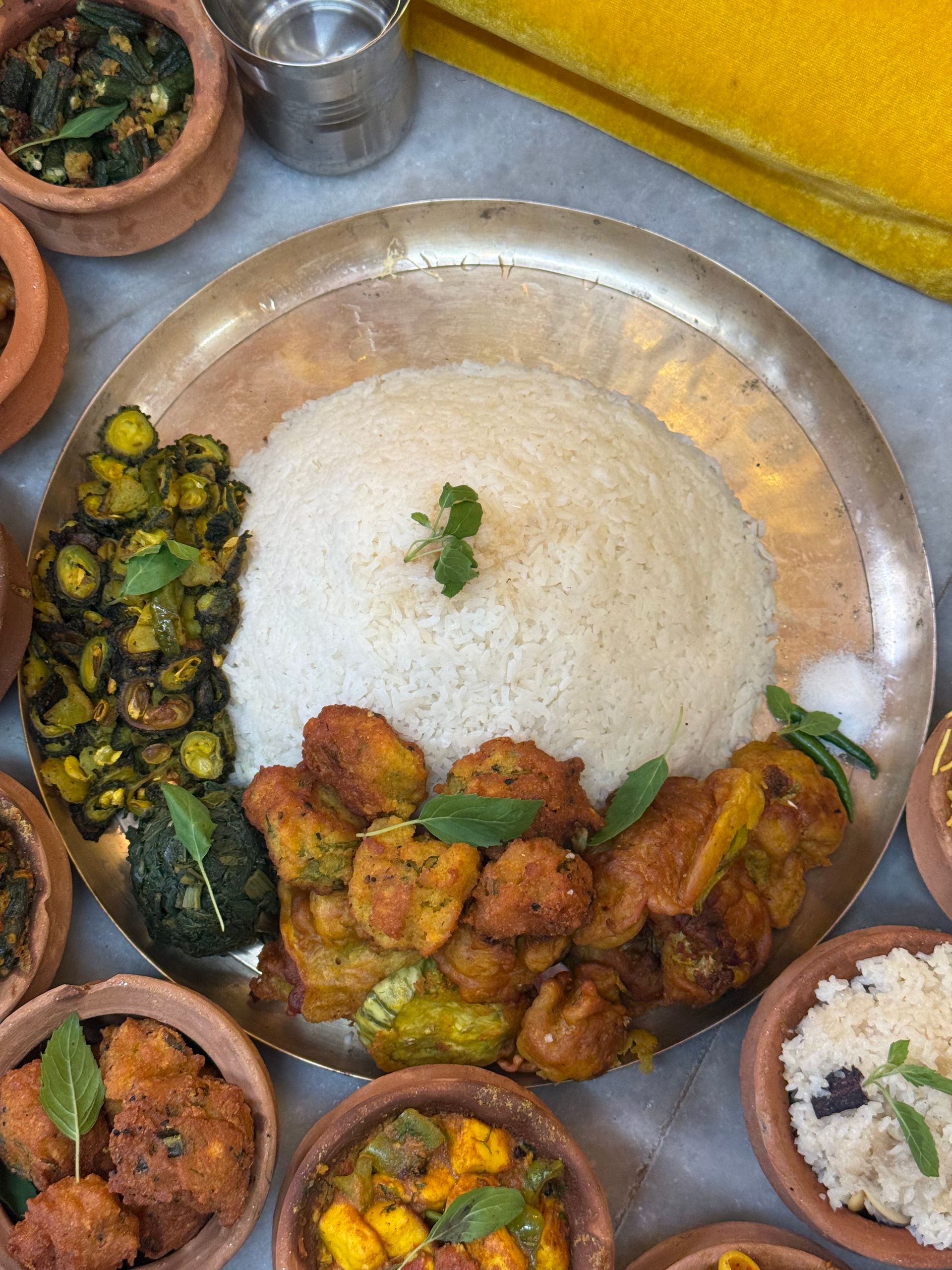
Food is where Nepal rewards a traveler’s patience. Dal bhat remains the backbone of the country’s diet and its budget travel scene: unlimited rice and lentils with a rotating cast of vegetables, served at nearly any local eatery for NPR 225 to 450. It is the kind of meal built for repetition, and after a few days most travelers stop resisting it and start craving it. Momos, the steamed or fried dumplings sold from carts and hole-in-the-wall kitchens across the city, run similarly cheap and are worth trying from at least three different vendors before settling on a favorite.
Step into a proper Thamel restaurant, the kind with laminated menus and rooftop seating, and a meal climbs to NPR 600 to 1,200. Coffee culture has taken hold in tourist zones too. A cappuccino runs about NPR 220, an espresso closer to NPR 155. Budget travelers mixing street food with the occasional café sit comfortably around NPR 3,000 to 3,800 a day for all meals combined.
Water is the one place to spend without hesitation. Tap water is not safe to drink anywhere in Nepal, full stop. A liter bottle from a city shop costs NPR 25 to 40, though the same bottle ordered inside a restaurant can run NPR 100 or more. On trek, prices climb further, sometimes past NPR 500 a bottle at higher elevations where everything has to be carried in. Purification tablets or a filter bottle pay for themselves within a few days and cut down on the mountain of plastic that already piles up along popular trekking routes. In Kathmandu, you can find nice hotels and other places to refill your water bottle if you don’t want to contribute to the massive mountains of plastic that are starting to rival the Himalaya.
The Tipping Question
Tipping in Nepal sits in a gray zone that trips up a lot of first-time visitors. It is not legally required and rarely appears as a line item, but in tourism-facing businesses it is genuinely expected, and skipping it reads as an oversight rather than a choice. In restaurants, rounding up or adding roughly ten percent is standard. Taxis get a round-up, nothing more elaborate.
Trekking staff operate under a different, more structured expectation. Guides typically earn tips in the range of NPR 3,980 to 5,540 per day of trekking, porters somewhat less, and the accepted practice is not to tip daily but to gather the full amount and present it as a lump sum at the end of the trek, ideally in an envelope. It is a small ritual, but it matters. Daily tipping changes the working relationship between client and staff in ways that a single closing gesture does not.
The Interesting Aside
Here is a detail that surprises almost every visitor who thinks about it for more than a second: there is no McDonald’s in Nepal. Not one, not in Kathmandu, not in Pokhara, not anywhere in the country. (Though there was a Nepali restaurant called MC Donalds that recently had to change it’s name).Nepal sits alongside a short list of nations, Bermuda and Bolivia among them, where the golden arches have simply never landed. KFC and Pizza Hut both operate successfully in the capital, proving the market can support international fast food, but McDonald’s has stayed out, likely a combination of a small overall market, a largely vegetarian and spice-forward culinary culture, and the logistical headache of building a supply chain into a mountainous, developing country. Rumors of an eventual opening circulate periodically online, but nothing has materialized. For now, the closest thing to a quick American-style burger in Thamel comes from a local café, not a franchise, and there is something fitting about that. A country this proud of its dal bhat and its momos shouldn’t work hard to make room for a competitor selling something that isn’t good for anyone.