
twenty Rupees, One Cup, Total Destruction
Somewhere on the Yamuna Expressway, between Delhi and Agra, in the kind of darkness that only exists on Indian highways at night, a cup was murdered. There were no streetlights, just the occasional flare of a truck’s high beams and a dhaba glowing up ahead like a campfire. This was where I had my first kulhad chai. It cost less than a quarter. I threw the cup on the ground when I was done. It shattered. Nobody blinked. That’s the whole system working exactly as designed. I should have taken a picture of that…didn’t.
I want to talk about that cup, because it’s a better distillation of how this country thinks than most of the monuments I’ve been dragging myself through.
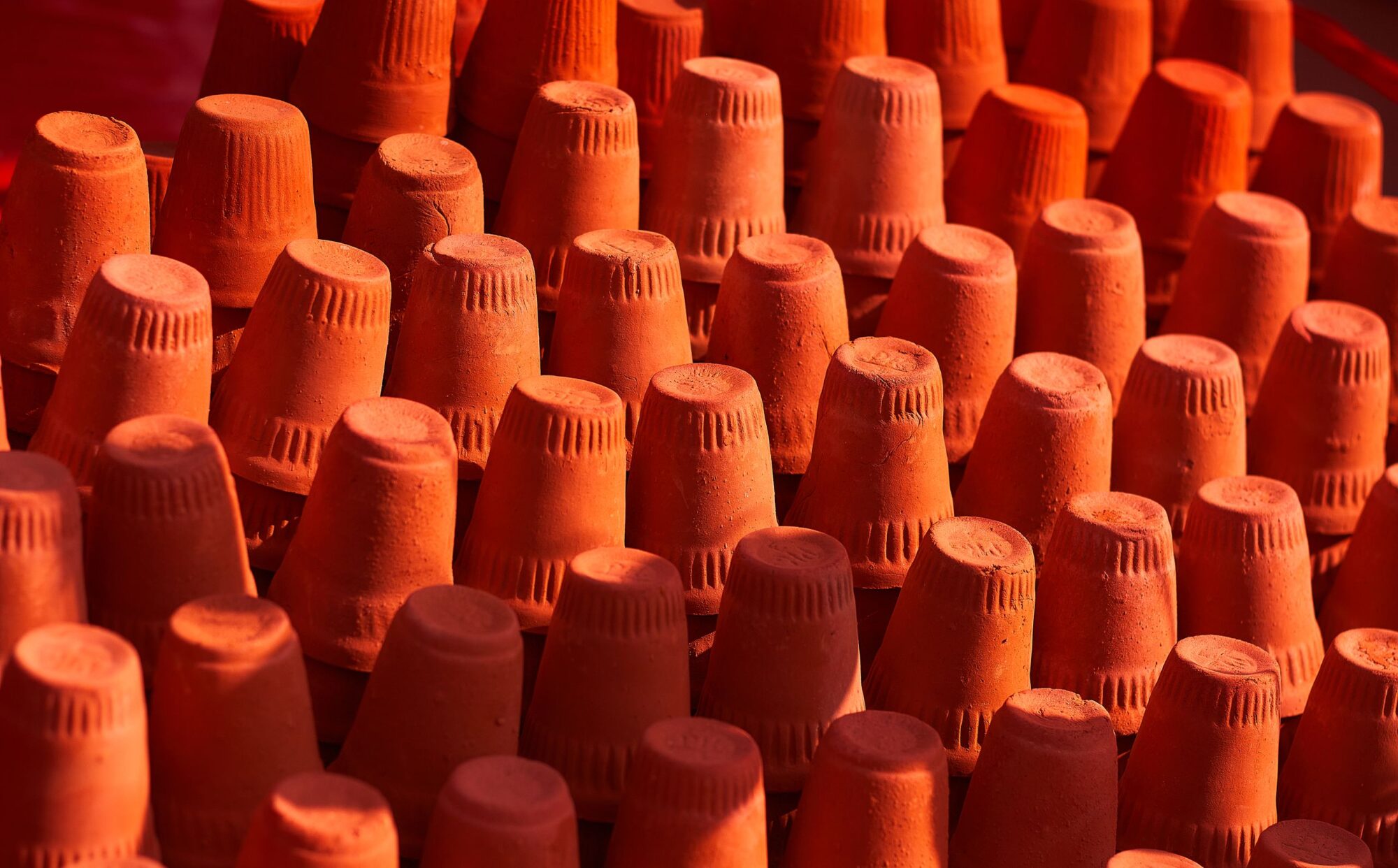
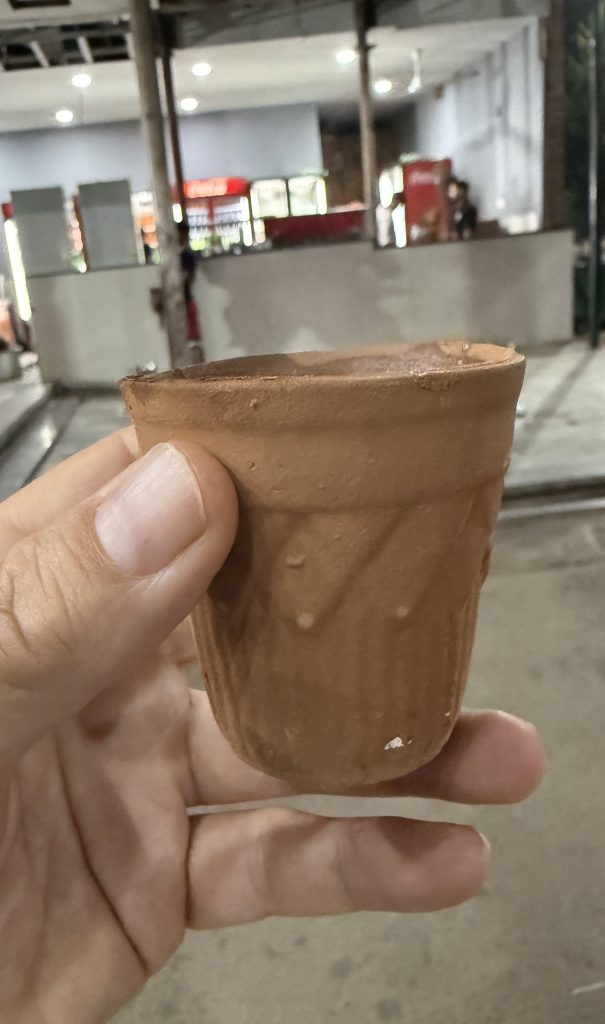
The kulhad is unglazed clay, fired once, used once. No handle, rough enough that you feel the texture on your palm before you feel the heat of the tea. The guy running the stall had two pots going at once, pouring long arcs between them to aerate the mix and filled it and handed it over without ceremony. And that’s the part that took me a second to understand. I kept expecting the ceremony. In Japan, in China, in Korea, in Taiwan – there’s always this deep ceremony of tea. Even in the US, I’ve had enough “artisanal” tea that I assumed the handmade cup was the flourish, the thing designed to make you feel something. It’s not. It’s just a disposable cup. It’s what you use here, the way we’d use a paper cup, except it comes out of the ground and it’s going back into it within the hour.
Turns out this isn’t some boutique revival either. Kulhads trace back to the Indus Valley Civilization, three thousand-plus years before anyone in India was drinking tea. The vessel came first. Chai just moved into it later and never left.
The taste is real, not vibes. Because the clay’s unglazed, the tea actually soaks a few millimeters into the wall and you’re not just drinking chai, you’re drinking chai that briefly became part of a cup that will never exist again. There’s a mineral note under the cardamom and ginger, something earthy that a ceramic mug flattens out entirely. People call it sondhi khushboo which translates roughly as earthy fragrance, and it’s not a metaphor, it’s a chemical fact about porous fired clay meeting hot milk.
Then you finish it and you throw it. This is the part I was so stoked on I forgot to make a video or a picture of it even though it was happening all around me at the truck stop. I think that every kulhad has the same aftermath: a pile of shattered terracotta at the base of the stall, sometimes ankle-deep, evidence of a hundred transactions that all ended the identical way. No one washes these. No one asks if it’s clean. It was fired once in a kiln hot enough to kill anything that might have grown on it, and after that it exists for exactly one purpose and then it’s rubble, and in a few days it’s dust, and eventually it’s just soil again, which is what it was to begin with.
I’ve spent my adult life watching various cultures including the one I come from try to invent “sustainable single-use” as if it’s a new innovation, a clever fix for a problem industrial packaging created. India had it solved before there was an industrial anything. The kulhad isn’t sustainable because someone at a startup got a grant. It’s sustainable because it was never asked to be anything else. It has no afterlife, no recycling stream, no guilt. Use it, break it, walk away. No reduce. No reuse. No recycle. No problem. In fact, problem solved.
There’s an economic layer under this too. A lot of the kulhad-forward chains in India have built their whole model around giving potter communities steady work. These are people whose craft had been getting erased by plastic and paper cups for the last couple decades. So, somewhere behind that pile of shattered clay at the dhaba is an actual person whose day got a little more solvent because I wanted my tea to taste like the ground it came from and I wasn’t too uptight to smash it on the ground afterwards.
None of this required a philosophy. I didn’t get any of it from a menu or a plaque. I got it from a stall at night on a highway, holding a cup that was already halfway to not existing, watching a guy pour two streams of milk and spice into each other to get twenty rupees. Did I think about keeping the cup or getting another as a souvenir? Yeah. I still might but something feels off about that. I mean, it’s not designed to be kept or used again – even as a souvenir.
So I threw mine on the ground with the rest. Felt fun. Felt good. And you know what? It felt right.