
It Was the Right Call.
I was in Greater Kailash, south Delhi, hungry and without a plan. I opened Claude on my phone and typed: I’m near my hotel in GK-1. Where should I eat?
Before I go further, let me explain how this usually goes without AI. I leave the hotel, I walk around, I look for a place with lots of local people in it and if I don’t find one soon enough, I pick whatever turns up which every once in a while is a great meal, but mostly is a miss. I didn’t feel like missing in India. I know I’ll get Delhi Belly at some point, but I’m not trying to rush it. So, I asked Claude.
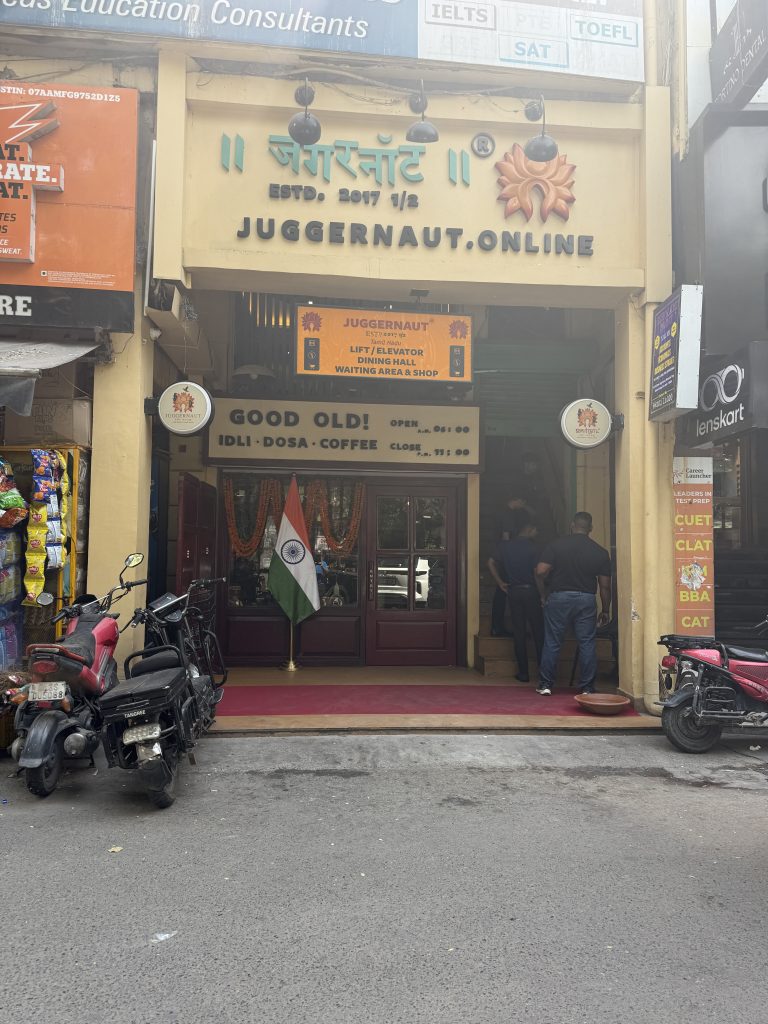
It pulled Juggernaut out of the pack. South Indian place in Kailash Colony Market, 4.4 stars, nearly ten thousand reviews. It told me to order the dahi phuchka, the South Indian thaal, the filter coffee. The gulab jamun had made multiple people write in all caps about it.
I walked over. I was determined to pick my own meal.
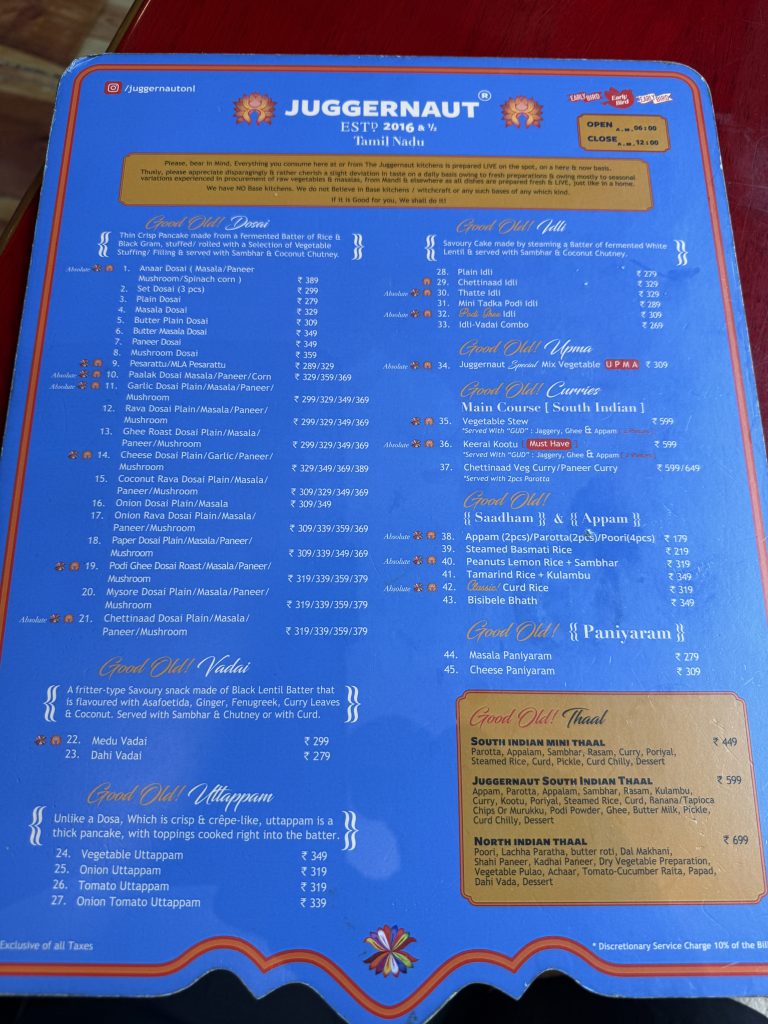
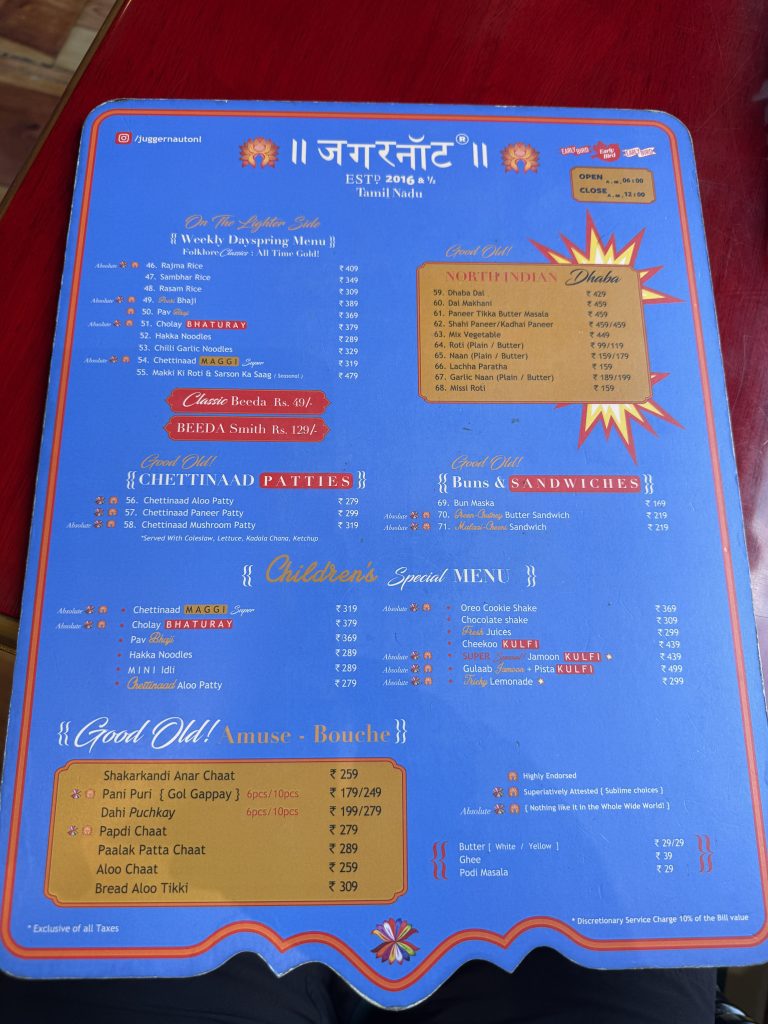
Brass lamps, wooden panels, Carnatic music doing ambiance and mood work in the background. I sat down, got really confused by the menu, then photographed the menu, and sent the photos to Claude. What came back was a full breakdown: every section, every category, which items carried the restaurant’s “Absolute” endorsement and why that mattered. It explained the difference between sambhar and rasam. It told me poriyal was dry-cooked vegetables with mustard seeds, curry leaves, and coconut. Not a gravy.
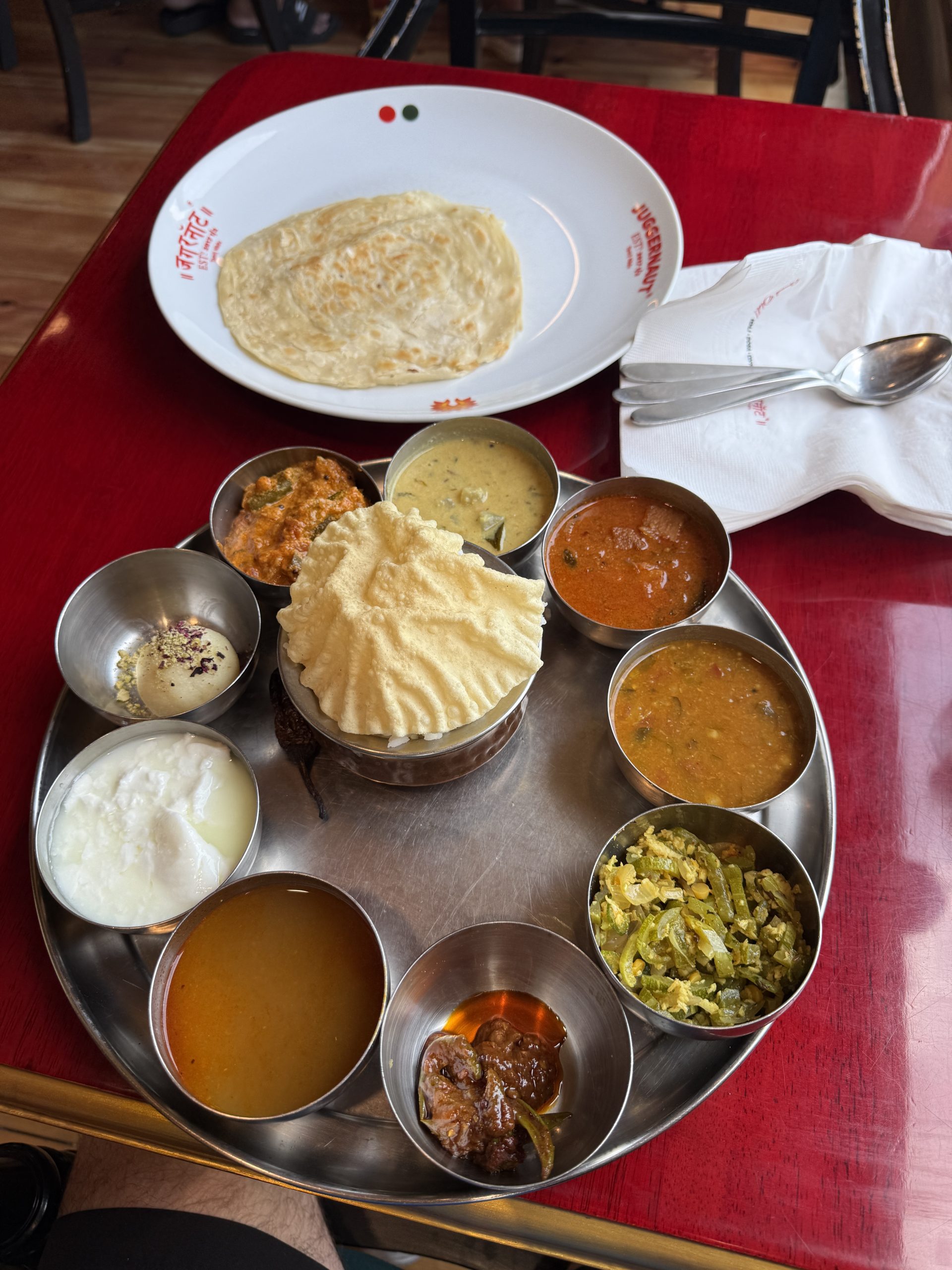
I ordered the South Indian Mini Thaal. ₹449.
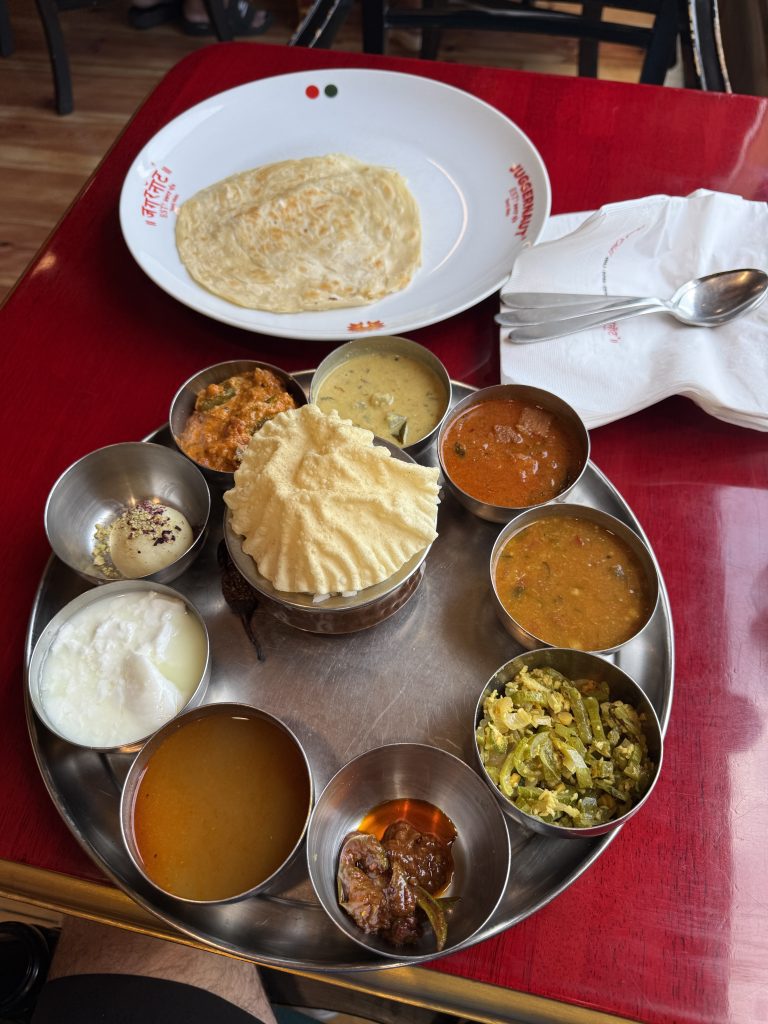
When it arrived I photographed that too. I didn’t know how to eat this. I’ve eaten in a ton of Indian restaurants but I wanted to do this right. It was too good to wing. Walk me through eating this. The response mapped every bowl on the tray, the creamy coconut curry, the sambhar, the rasam, the poriyal of green beans, the small fierce pickle, the curd, the stacked appalam in the center, the kheer with rose petals waiting at the top like it knew it was the finale. Then it gave me the usual sequence: appalam first, rice with sambhar, rice with curry, rice with rasam, pickle sparingly alongside any round, curd rice to close.
Eat with your right hand. Mixing rice and curry with your fingers is traditional and actually works better than a spoon.
I didn’t because I didn’t see a sink to wash my hands in and none of the other guests were eating that way. Maybe it was the time of day. Five years in Morocco, I’m no stranger to eating with my hands..
The rasam was thin and peppery and good for what Delhi heat does to you – it was cooling. The poriyal tasted like something someone’s grandmother made. The pickle was exactly as intense as advertised but I’m finding that my heat tolerance is much higher than Claude or Indians give me credit for. The curd rice – (which seemed more like yogurt than curd) at the end was cooling in a way nothing else on the tray was, a reset. The kheer had rose petals on it and I ate it last and sat there for a while not wanting to leave. Then I drank my mango lassi which I didn’t actually need to order but had anyway.
The water on the table wasn’t free. A bottle was ₹100. That’s about triple the price but still only a buck. None of the other customers were drinking theirs. I should have figured it out.By the time you add a mango lassi, service charge +tip (figured into the bill), and tax, the bill came to ₹1,009. For a full South Indian thaal in a sit-down restaurant in south Delhi, that’s not a number you argue with.
Claude helped me find the place, order the right thing, and understand what I was eating while I was eating it. The experience of actually eating it was mine. This might be one of the best uses I’ve found for AI yet.
That part was worth every rupee.