

Thoughts on Suffering in this world
Suffering doesn’t announce itself as a concept. It’s not something you decide to think about. It’s something that’s already there, sitting under everything, and most days you manage to keep the lid on it. But some mornings the lid doesn’t hold.
I woke up in Delhi with it already loud. I don’t know why. This is the world we live in. Not any one grief but just the general weight of it, the fact of how much suffering exists in the world at any given moment, stacked in every direction, most of it invisible to me and all of it real. And underneath that weight, something else: a sudden, specific pull to go to a Sikh temple. No plan behind it, no research, no itinerary line. Just an impulse strong enough that I got dressed and got in a cab before I’d fully asked myself why.
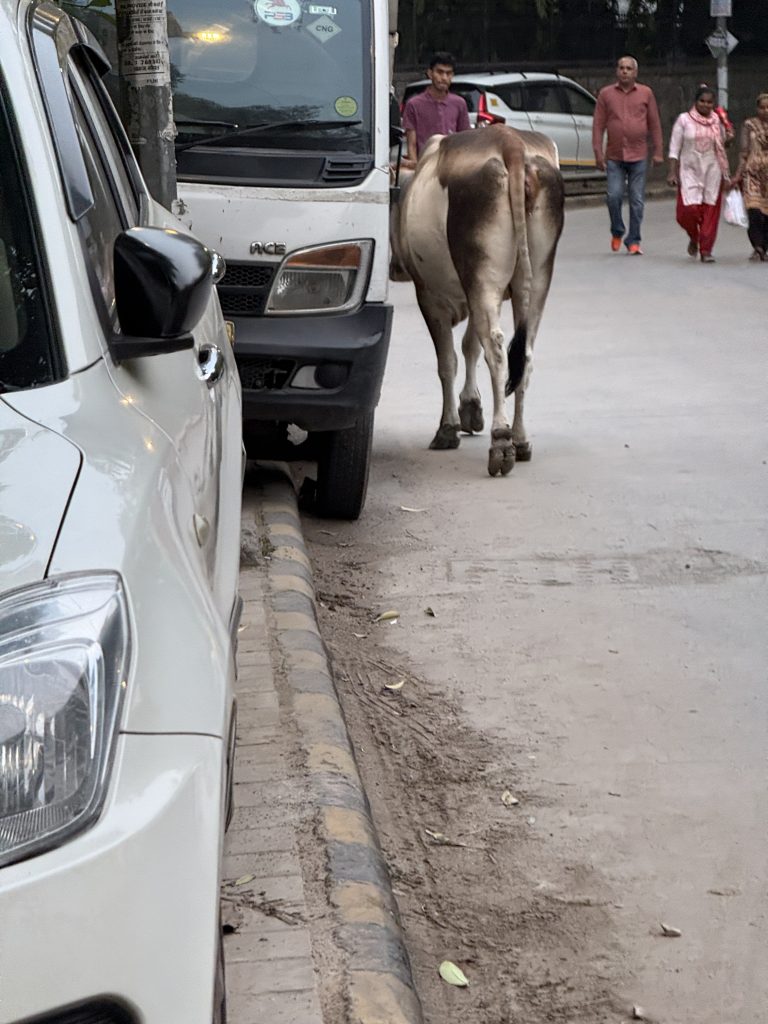
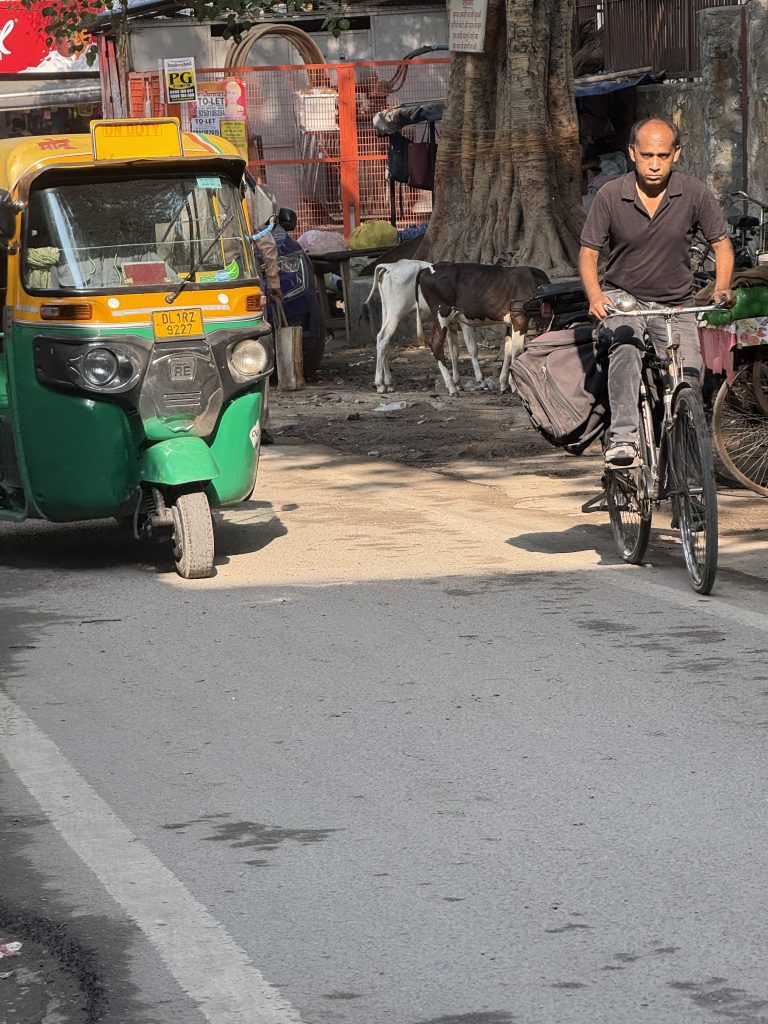
The drive out was the city delivering an answer to the question I hadn’t consciously asked. Delhi doesn’t hide what it is. Out the window: soldiers standing with rifles at intersections like punctuation. Men and women asleep directly on the concrete, no shelter, no separation from the road. Cows moving through traffic with total unconcern, sacred and stray at once. Lines of the very poor waiting for someone, anyone, to hand them food. An old woman begging with her hand out and her eyes somewhere else entirely. The sick. The crippled. Bodies that had been shaped wrong by disease or accident or birth, sitting in the open where the whole city could see them and mostly didn’t. Let me be clear, I’ve made a conscious decision to not take pictures of the suffering. I want to take and share only neutral or happy pictures. If I decide to shoot and share suffering at some point, it will be with the full consent of those engaged in it or with a clear motivation to help them.
And besides, it wasn’t only the hard things, I saw. It was the whole unfiltered range of a place that doesn’t sort its population into what’s comfortable to look at and what isn’t. Everything was just there, at once, uncurated. Smiles next to suffering.That’s Delhi’s honesty…
And underneath all of it, still working on me from the day before, were two lessons I hadn’t finished digesting. At the Taj Mahal, someone had been playing a recitation of sura Yassine just outside the crypt. It’s written inside, and for those who don’t know it’s that long, steady insistence in the Quran that everything ends, that the dead will rise, that nothing about this world is the final word. Impermanence. And later at ISKCON, I’d absorbed something that felt almost like its companion piece: do your work fully, claim the right to try your hardest and then let go of the outcome completely. Ownership of the effort, total release of the result. Both ideas were still sitting in me, when the cab pulled up outside Gurdwara Bangla Sahib.
I knew nothing walking in. No customs, no sequence, no vocabulary for what I was about to do. So I did the only thing available to me in the moment. I watched the Sikhs moving through the space and I followed. Shoes into the counter. Feet washed at the channel. Head covered. I walked through the shallow water at the threshold the way everyone else did, followed the marble path around, put a small donation in when I saw others doing it, and went into the temple itself. I prostrated. I walked clockwise around the sanctum. I prostrated again. Several times, whenever the flow of the room seemed to call for it and then I stepped back out into the light.
That’s when I saw the sarovar properly for the first time. The whole golden dome sitting upside down in it, the water almost too bright to look at directly. And without deciding to, I went down the steps and stepped into it, exactly the way I’d watched other people do as I came out.
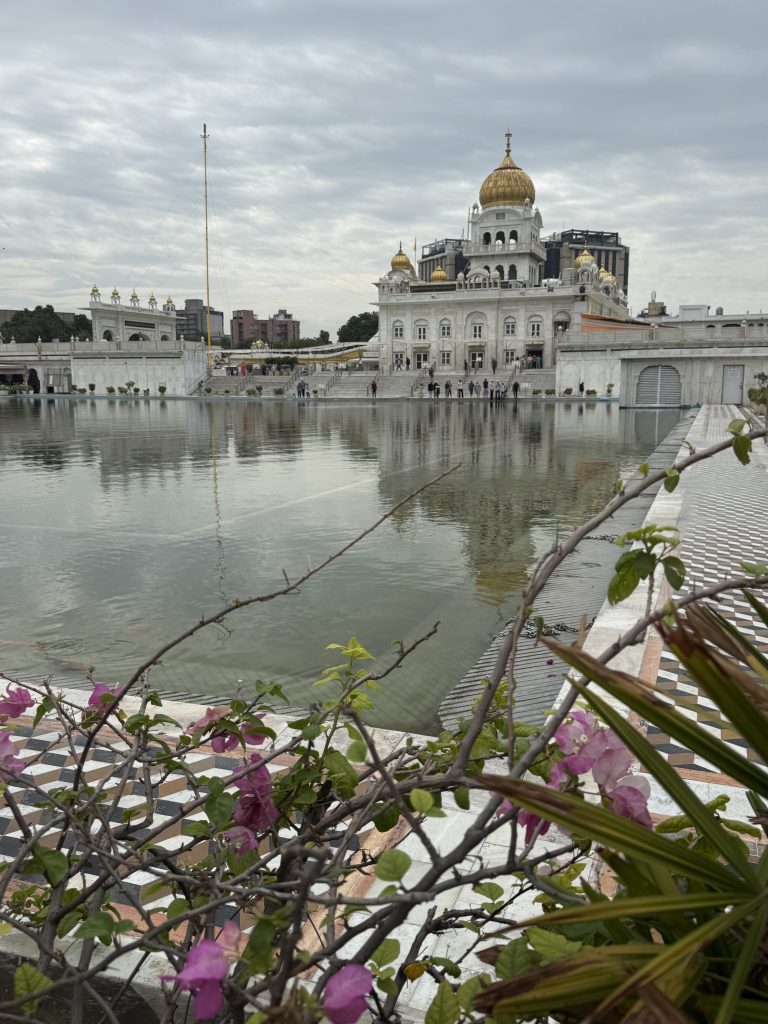
I walked the perimeter of the lake. I went into the small kitchen and ate with a room full of Indians I’d never met and would never see again, sitting on the floor the way everyone else was sitting, eating what everyone else was eating. Afterward I walked the lake again, slower this time, and then just sat. Not doing anything. Looking at the water, at the dome, at the whole strange architecture of feeling that had built up in me since I’d woken up that morning. The suffering, the pull, the drive across the city, the water, all of it sitting together at once without needing to resolve into a single emotion.
And sitting there, it confirmed something I already suspected before I ever walked in: Baoism, as I am building it, has no entry pass. There was no gate at Bangla Sahib that checked my credentials. Nobody asked what I believed before I was allowed to wash my feet. The water didn’t care where I’d come from. That’s the model. That’s the whole model.
At some point an old man approached me. He had a long white beard, a grey Sikh mustache that looked like it had been growing since before I was born and without being asked, he told me the story of the place. The child-guru, the well, the epidemic, the water given freely to whoever needed it, the guru dying of the same disease he’d spent himself curing in others. He told it plainly and afterward we chatted a little about travel, pilgrimages, the places we’d been. It wasn’t a sermon or a conversion attempt, he was just sharing a story he thought I would like to know. That’s exactly what made it land. He left, then I left. We both followed the path. Drank the holy water. Ate the offered sweet.
I was on my way out when a woman stopped me. She motioned me over, a little urgently. She said “This was where foreigners are supposed to check in, learn the process, leave their things properly.” Then she looked down and realized I already had no shoes on. Then she realized I’d come in completely on my own, with no guide, no orientation, and had simply followed the Indian way through the whole thing without anyone telling me how. She seemed genuinely surprised by that. She offered to walk me to the big dining hall, the famous one, the one that feeds thousands a day. I told here I had already eaten and where. She was surprised again. She gave me an English language booklet about Sikhism. I said thank you. I left. No escort necessary.
I collected my shoes. I got back in the cab. And on the ride back through the same city. The same soldiers, the same sleeping bodies, the same cows, the same old women with their hands out but something had shifted, even though nothing outside the window had changed at all.
I keep coming back to how little the Sikh principles I stumbled through that morning ask of a person before they’ll work on them. It’s called Kirat Karni. Honest living is the practice itself, not a precondition for some later spiritual reward. Seva. Service performed without a checkpoint for who deserves it. The langar doesn’t ask your religion before it feeds you. The sarovar doesn’t ask your beliefs before it lets you in. Guru Har Krishan didn’t ask the sick in 1664 whether they were Sikh before he brought them water. He just brought the water, and it killed him, and that’s the entire teaching. No commentary required.
That’s the same floor Baoism is built on. Not a philosophy you have to be initiated into before it’s useful to you. Not a truth claim you have to accept before the practice starts working. Just do what comes natural – wash your feet, walk the path, do the thing you saw the person in front of you do, and see what happens to the weight you walked in carrying. Or in the case of Baoism – identify something bad you are doing, stop doing it, replace it with something good, feel the results and then share that process with someone else. Simple. No priest required. No guide required. The suffering that was heavy on my mind that morning didn’t disappear at Bangla Sahib, but it stopped being only mine to carry alone, and it stopped needing an explanation before I was allowed to sit with it.
That’s what I mean when I say the practice comes first. I didn’t understand the doctrine of Sikhism when I walked into that gurdwara. I still don’t, not really. But I washed, and I walked, and I stepped in the water, and something in me answered anyway.